








AI infrastructure developer 5C Group has secured $605 million in new debt financing led by Brookfield Asset Management, giving the company additional capital to expand a portfolio of large-scale AI data center campuses across North America as demand for high-density compute continues to rise.
5C Group Raises $605M as AI Data Center Buildout Accelerates
The AI infrastructure race is increasingly becoming a race for physical capacity.
As organizations deploy larger models, AI agents and inference workloads, access to GPUs is only one part of the equation. Data center operators also need enormous amounts of power, advanced cooling, high-speed networking and facilities capable of supporting increasingly dense computing clusters.
That is the market 5C Group is targeting.
The company, which develops, builds and operates large-scale AI data center campuses, announced the closing of $605 million in new debt financing led by Brookfield Asset Management.
The financing follows $835 million in equity and debt capital raised by 5C in 2025, alongside additional capital secured before 2025. The company says the combined funding is being used to accelerate the expansion of its AI infrastructure platform across North America.
The latest financing comes as hyperscalers and specialized data center operators compete to secure power and capacity for increasingly demanding AI workloads.
From Data Centers to “AI Factories“
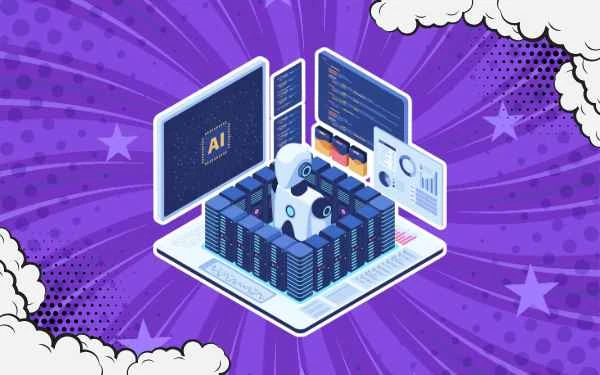
5C describes its facilities as AI factories—large-scale campuses where compute, electricity, cooling, networking, software and operations are designed as an integrated system.
That approach reflects how different AI infrastructure has become from conventional enterprise data centers.
Traditional facilities were largely designed around relatively predictable server densities and cooling requirements. Modern AI clusters can require substantially more power per rack, creating new engineering constraints around electricity distribution, thermal management and physical space.
The rapid adoption of liquid cooling is one example.
As accelerator performance increases, air cooling becomes increasingly difficult to deploy economically at the highest rack densities. Data center developers are therefore designing facilities around liquid-cooling systems and rack architectures that can accommodate future generations of AI accelerators.
For operators such as 5C, the implication is straightforward: a successful AI campus needs to be engineered around the complete computing environment rather than simply providing a building with electricity and connectivity.
Capital Will Support Three Major Development Areas
The new financing will support development across 5C’s priority portfolio.
The company specifically identified its Memphis campus for acquisition and construction funding, while its Ohio and Phoenix campuses are expected to receive additional investment as they reach commercial and investment milestones.
The geographic diversification is strategically significant.
AI data centers increasingly depend on access to large and reliable power supplies, making site selection one of the most important decisions in infrastructure development. Developers are evaluating not only electricity availability but also transmission infrastructure, land, fiber connectivity, permitting, water and proximity to customers.
North America has become a particularly competitive market for those resources.
Technology companies including Microsoft, Amazon and Google are investing heavily in AI computing capacity, while specialist operators are developing infrastructure designed specifically around GPU-intensive workloads.
The Economics of AI Are Increasingly Tied to Infrastructure
The capital intensity of AI infrastructure is changing the economics of the technology industry.
Building a large AI campus requires substantial upfront investment before the facility begins generating revenue. Developers must finance land acquisition, power infrastructure, buildings, cooling systems and networking equipment while customers and technology architectures continue to evolve.
That makes institutional capital increasingly important.
Brookfield’s involvement in 5C illustrates the growing role of infrastructure investors in financing AI capacity. The financing model increasingly resembles investment in other critical infrastructure categories, where long-lived assets are built to support sustained demand.
The challenge is timing.
AI computing requirements are evolving rapidly, and facilities designed today may need to accommodate different GPU architectures, rack configurations and cooling technologies several years from now.
5C says its integrated campus approach is intended to allow infrastructure to adapt as those technologies change.
Power Is Becoming a Strategic AI Resource
The biggest constraint for AI infrastructure may ultimately be electricity rather than computing hardware.
Large GPU clusters can consume enormous quantities of power, while the supporting cooling and networking systems add to the overall load.
That is pushing data center developers toward locations where substantial power capacity can be secured for long-term operations.
The resulting competition is affecting local infrastructure planning across the United States.
Data center projects can bring investment, construction activity and technology jobs, but they can also create pressure on electricity grids and other local resources.
5C’s emphasis on long-term community investment therefore comes alongside a broader industry debate about how AI infrastructure expansion should interact with local economies and energy systems.
A Crowded AI Infrastructure Market
5C is entering an increasingly crowded field.
Large data center operators such as Equinix and Digital Realty operate extensive global infrastructure, while specialist AI data center companies are building facilities specifically optimized for accelerated computing.
Cloud providers are also vertically integrating infrastructure, combining proprietary facilities, networking and custom AI accelerators.
5C’s opportunity is to differentiate through the scale and specialization of its campuses.
The company’s “AI factory” concept emphasizes the integration of infrastructure components around AI workloads rather than treating the data center as a generic hosting environment.
Whether that approach creates a durable advantage will depend on execution, access to power, customer commitments and the ability to keep facilities technologically relevant as AI hardware evolves.
What It Means for Enterprise AI
For enterprise technology teams, the expansion of specialist AI infrastructure providers could ultimately create more options for deploying large-scale workloads.
Organizations with demanding AI training or inference requirements may increasingly have choices beyond conventional public cloud environments, including dedicated capacity and specialized AI campuses.
That could be particularly relevant for companies seeking predictable performance, high-density GPU access or infrastructure tailored to specific AI workloads.
At the same time, enterprises will need to consider more than compute pricing.
Power availability, location, networking performance, security, data governance, cooling architecture and long-term capacity commitments will all become part of AI infrastructure decisions.
The $605 million financing therefore represents more than another data center investment.
It is another signal that the AI infrastructure market is evolving into a major physical infrastructure category—with capital, electricity and specialized facilities becoming as strategically important as models and GPUs.
Market Landscape
The AI data center market is increasingly defined by five infrastructure requirements:
| Trend | Why it matters |
|---|---|
| High-density GPU computing | AI workloads require substantially more compute per rack |
| Liquid cooling | Enables higher-density accelerator deployments |
| Power availability | Determines where large AI campuses can be built |
| High-speed networking | Critical for distributed GPU clusters |
| Flexible architecture | Allows facilities to adapt to rapidly changing AI hardware |
5C’s financing also reflects the growing convergence between AI infrastructure and institutional infrastructure capital. Large campuses require multibillion-dollar development programs, creating opportunities for infrastructure investors alongside traditional technology financing.
Top Insights
- 5C Group secured $605 million in debt financing, giving the AI infrastructure developer additional capital for large-scale data center expansion across North America.
- The company is developing AI factories that integrate compute, power, cooling and networking to accommodate increasingly dense GPU workloads and evolving AI architectures.
- Financing will support Memphis, Ohio and Phoenix campuses, highlighting the importance of regional power availability and infrastructure capacity for AI deployment.
- Brookfield’s investment reflects growing institutional interest in AI data centers as critical digital infrastructure, rather than conventional technology facilities.
- The expansion underscores an emerging enterprise reality: AI capacity increasingly depends on electricity, cooling, networking and physical infrastructure, not GPUs alone.
Power Tomorrow’s Intelligence — Build It with TechEdgeAI