







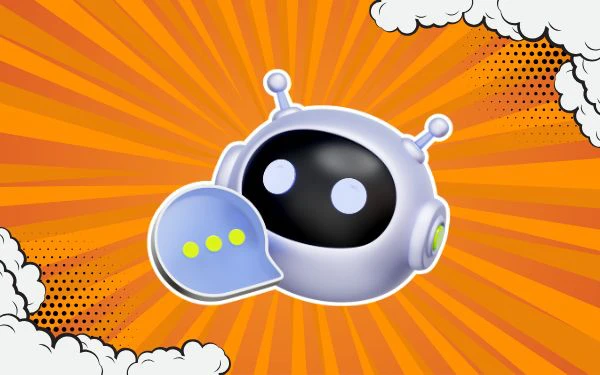
Customer service chatbots are moving beyond rigid scripts as enterprises look to large language models (LLMs) for more contextual, adaptive interactions. transcosmos has launched trans-AI Chat in Indonesia, a generative AI-powered chatbot designed to combine automated customer conversations with human-agent support, while adding tools for follow-up automation, response evaluation and knowledge-base improvement.
transcosmos Brings LLM-Powered Customer Service Automation to Indonesia
The launch reflects a broader shift in enterprise customer service: conversational AI is evolving from a tool that answers predefined questions into an operational layer capable of interpreting intent, maintaining context and supporting more complex customer journeys.
Unlike traditional rule-based chatbots, trans-AI Chat uses large language models to understand conversational context and generate responses dynamically. That distinction matters for organizations managing large volumes of customer interactions, where rigid decision trees can struggle with variations in language, incomplete questions and conversations that move beyond a predefined script.
For businesses in Indonesia, transcosmos is positioning the platform as a flexible customer experience technology that can support industries including banking, telecommunications, retail, FMCG and automotive.
The timing is significant. Gartner reported that 85% of customer service leaders surveyed planned to explore or pilot customer-facing conversational generative AI in 2025, highlighting how quickly the technology has moved from experimentation toward mainstream service operations. Gartner also predicts that at least 70% of customers will use a conversational AI interface to begin their customer-service journey by 2028.
Beyond the chatbot: building a feedback loop around AI
One of the more consequential elements of trans-AI Chat is that the platform is not limited to customer-facing conversation.
Its AI Follow-up Message Automation capability can trigger personalized messages based on earlier interactions. Examples include order-status notifications and product recommendations. For enterprise teams, this moves conversational AI closer to workflow automation, where the system can continue a customer journey rather than simply respond to an incoming question.
The platform also includes AI Evaluation, which monitors generated responses for accuracy and consistency against an organization’s knowledge base.
That function addresses one of the central challenges of enterprise generative AI: deploying a model is relatively straightforward; maintaining reliable, organization-specific answers at scale is harder.
A third capability, Unknown Keyword Detection, identifies questions, phrases and subjects that the AI cannot adequately answer. Organizations can use those signals to identify gaps in their knowledge base and continuously expand the information available to the system.
In effect, trans-AI Chat creates a feedback loop: customer conversations expose gaps, those gaps inform knowledge-base improvements, and the improved knowledge base can subsequently support better AI responses.
That approach is increasingly important as companies move from AI experimentation toward operational deployment. McKinsey’s 2025 State of AI research found that 88% of respondents reported regular AI use in at least one business function, but most organizations were still experimenting or piloting rather than scaling AI enterprise-wide.
Human escalation remains part of the architecture
Perhaps the most important design decision is what happens when AI reaches its limits.
trans-AI Chat can escalate conversations to human agents when a situation requires empathy, complex decision-making or specialized assistance. Conversation history and relevant context are transferred to the agent, reducing the need for customers to explain their situation again.
That human-in-the-loop model contrasts with the idea that generative AI should simply replace customer-service personnel.
Current industry research suggests that customers still want an escape route to human assistance. In an August 2026 Gartner survey of 3,566 B2B and B2C customers, 87% said companies using generative AI for customer service should provide access to a human agent.
The implication for enterprise technology leaders is straightforward: the strongest customer-service AI deployments may not be the ones with the highest level of automation, but those that determine when automation should stop.
Where trans-AI Chat fits into the enterprise AI landscape
The market already includes conversational AI and customer-service platforms from technology providers such as Microsoft, Salesforce, Google and Amazon, alongside specialist chatbot and contact-center vendors. Those platforms increasingly combine LLMs, knowledge retrieval, workflow automation and agent-assist capabilities.
trans-AI Chat’s differentiation is therefore less about introducing generative AI to customer service and more about combining conversational automation with operational controls and human escalation within a customer experience service model.
For enterprise teams evaluating such platforms, several questions will matter beyond the quality of generated responses: How accurately can the system use proprietary knowledge? How quickly can knowledge gaps be identified? Can conversations transition cleanly between AI and people? And can the deployment integrate with existing CRM, contact-center and customer-data infrastructure?
These considerations become particularly important in sectors such as banking and telecommunications, where customer interactions can involve sensitive information, regulated processes and high expectations for accuracy.
McKinsey’s latest customer-care research similarly argues that leading organizations are moving toward models in which humans and AI agents work together, rather than treating AI solely as a cost-cutting mechanism.
For transcosmos, the Indonesia launch extends its role beyond conventional business-process outsourcing and contact-center operations into AI-enabled customer experience infrastructure. The company’s existing presence in Indonesia gives the deployment an operational dimension that pure software vendors may not have.
The broader market direction is clear: enterprise conversational AI is becoming less about building a smarter chatbot and more about redesigning how customer interactions, knowledge management, automation and human expertise work together.
Market Landscape
The customer-service AI market is shifting from FAQ automation to AI-enabled service operations.
Traditional chatbots typically depend on intent libraries, keywords and predefined decision trees. LLM-based systems can interpret more natural language and handle less predictable conversations, but they introduce new requirements around governance, knowledge grounding, evaluation and escalation.
That makes platforms such as trans-AI Chat part of a larger enterprise AI transition. Salesforce, Microsoft, Google and Amazon are all building AI capabilities into broader CRM, cloud and customer-service ecosystems, while specialist vendors compete around conversational intelligence, contact-center automation and AI agents.
The competitive question is increasingly not whether an enterprise has a chatbot, but how effectively AI is connected to enterprise knowledge, workflows and human teams.
For Indonesian enterprises, the opportunity is particularly relevant in high-volume sectors where customer interactions generate substantial operational data. Banking, telecom, retail and automotive companies can potentially use conversational AI for service inquiries, lead qualification, account-related workflows and post-purchase engagement.
The risk is equally clear. Poorly governed AI can produce inaccurate answers, create inconsistent experiences or frustrate customers when escalation is unavailable. Gartner’s 2026 research reinforces the importance of preserving human access, while McKinsey’s research points to workflow redesign and governance as important ingredients for realizing enterprise AI value.
Top Insights
- transcosmos launched trans-AI Chat in Indonesia, bringing LLM-powered conversational AI, automated follow-ups and knowledge-base improvement to enterprise customer-service operations.
- AI Evaluation and Unknown Keyword Detection create a continuous improvement loop, helping organizations identify knowledge gaps and maintain more consistent AI-generated responses.
- Human-agent escalation remains central, reflecting growing evidence that customers want generative AI convenience without losing access to people for complex service issues.
- The platform targets banking, telecom, retail, FMCG and automotive, where high interaction volumes create opportunities for AI automation and contextual customer engagement.
- The launch reflects a broader enterprise AI shift from standalone chatbots toward collaborative intelligence, combining LLMs, workflow automation, knowledge management and human expertise.
Power Tomorrow’s Intelligence — Build It with TechEdgeAI