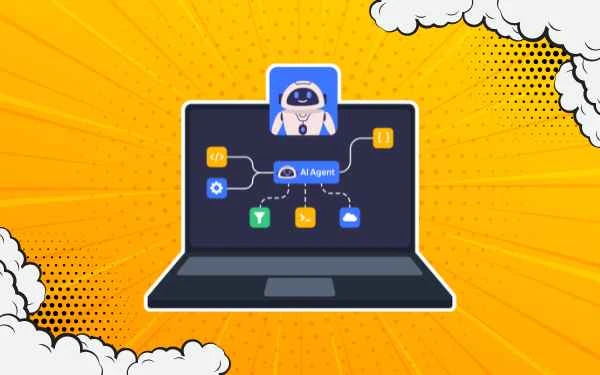








AI-powered penetration testing is moving beyond scanning public-facing systems into the authenticated parts of web applications where authorization flaws and privilege boundaries can be harder to test. Sprocket Security has launched Link, an AI penetration-testing agent designed to assess authenticated web applications and APIs, extending the company’s existing AI testing capabilities beyond external attack surfaces.
A valid login is supposed to determine what a user can—and cannot—access. In complex enterprise applications, proving that those boundaries actually work can require testers to navigate multiple roles, permissions and application workflows.
That is the security problem Sprocket Security is targeting with Link, its second context-aware AI agent for automated penetration testing.
Link is designed to test authenticated web applications and APIs using credentials supplied by customers. Sprocket says the agent can operate with multiple credentialed roles simultaneously, allowing it to investigate whether one role can access data or functionality intended for another.
The distinction is important because conventional vulnerability scanning and external penetration testing do not necessarily reveal authorization failures hidden behind a legitimate login.
An application may be secure from an unauthenticated perspective while still containing an insecure direct object reference, privilege-escalation path or broken access-control flaw. Finding those vulnerabilities requires understanding how the application behaves when different users interact with the same resources.
Link is intended to automate that reasoning.
According to Sprocket, the agent maintains context across credentialed roles and tests whether access boundaries can actually be crossed. The company positions this as a move from identifying suspicious behavior toward demonstrating an exploitable path.
That is increasingly relevant as organizations expand their use of APIs and cloud-based applications. Enterprise applications now frequently expose business logic through APIs, while identity and authorization systems determine access across increasingly complicated user hierarchies.
The result is a larger testing problem for security teams.
A human penetration tester can manually create multiple sessions, switch between accounts and test access controls. But doing that comprehensively across a large application can consume significant time, particularly when applications change frequently through continuous development and deployment.
AI agents could potentially make that process more continuous.
Sprocket’s strategy is to combine autonomous testing with human oversight rather than position AI as a complete replacement for security professionals. Link is available to Sprocket customers that have web application testing in scope and provide credentials for the roles they want evaluated.
That supervised model is significant. Security teams generally need evidence that a vulnerability is reproducible before developers can prioritize remediation. An AI system that produces a long list of hypothetical issues may create more work rather than reduce it.
The company’s emphasis on “proven” vulnerabilities reflects this challenge.
Link follows Apex, Sprocket’s first context-aware AI testing agent, which was designed to examine unauthenticated external attack surfaces. Together, the two agents represent a broader approach to agentic penetration testing: using AI systems to reason through applications rather than relying solely on predefined signatures or automated vulnerability checks.
The market is becoming increasingly crowded.
Traditional application-security platforms from companies such as Microsoft, Palo Alto Networks, CrowdStrike, Rapid7 and Tenable combine vulnerability management, application security, attack-surface monitoring and security testing. Specialist penetration-testing platforms are also incorporating automation and AI to increase testing frequency.
Sprocket’s differentiation is its focus on continuous penetration testing and context-aware agents.
That positioning reflects a larger change in cybersecurity. Conventional penetration tests often happen periodically, while modern cloud applications can change every day. A vulnerability-free assessment from six months ago says little about an application that has undergone hundreds of code, infrastructure or configuration changes since then.
Continuous testing attempts to narrow that gap.
Authenticated testing makes the proposition more complicated because access credentials are sensitive security assets. Enterprises considering an AI agent that logs into applications need strong controls around credential storage, authorization, audit logging, data handling and isolation. The AI must also operate within an agreed testing scope to avoid disrupting production systems or accessing data outside the engagement.
Those governance questions may become just as important as the underlying AI capability.
The technology also highlights the distinction between AI-assisted cybersecurity and genuinely agentic security systems. A generative AI model can explain a vulnerability report or produce a test script. An autonomous penetration-testing agent needs to plan actions, maintain application context, select subsequent tests based on previous observations and determine whether a suspected weakness can actually be demonstrated.
That is a substantially harder engineering problem.
For security leaders, the appeal is potentially significant: authenticated application testing that can run more frequently without requiring a human tester to manually repeat every workflow. For penetration-testing teams, meanwhile, the technology could shift human effort toward complex investigations and remediation guidance rather than repetitive exploration.
Whether that promise translates into lower risk will depend on accuracy.
Sprocket’s Link is now available to customers with web application testing in scope. The company says organizations can provide credentials for the roles they want tested and use the agent alongside Apex for broader application coverage.
The launch suggests that the next phase of AI cybersecurity may not be about replacing security teams with autonomous systems. It may be about giving security professionals agents capable of performing the tedious, context-heavy exploration that is difficult to repeat at enterprise scale.
Market Landscape
The application-security market is moving toward continuous assessment as organizations adopt cloud-native applications, APIs and rapid software delivery.
OWASP continues to identify broken access control as one of the most significant categories of web application risk, underscoring why authenticated testing remains important even when an application’s external attack surface appears well protected.
At the same time, AI is being integrated into security operations, vulnerability management and offensive security. Gartner has predicted that organizations will increasingly use AI agents to automate cybersecurity tasks, although human governance remains essential for high-impact decisions.
The competitive field includes established security vendors such as Microsoft, Palo Alto Networks, CrowdStrike, Rapid7 and Tenable, alongside specialized offensive-security platforms.
For enterprise security teams, the evaluation criteria for AI penetration testing should extend beyond whether an agent can discover vulnerabilities. Important questions include whether findings are reproducible, how credentials are protected, whether production environments can be safely tested, how evidence is generated and how humans can supervise autonomous activity.
Top Insights
- Sprocket Security’s Link uses AI to test authenticated web applications and APIs, targeting authorization weaknesses that external vulnerability scans cannot see.
- The agent can work across multiple credentialed roles, helping security teams investigate privilege escalation and cross-user data-access vulnerabilities.
- Link expands Sprocket’s agentic testing strategy beyond Apex, which focuses on unauthenticated external attack surfaces.
- Continuous AI penetration testing could help security teams keep pace with rapidly changing cloud applications, APIs and software-development environments.
- Enterprise adoption will depend on reproducible findings, credential security, testing controls and effective human oversight rather than autonomous execution alone.
Power Tomorrow’s Intelligence — Build It with TechEdgeAI