







OutSystems has made its Agent Experience generally available, allowing enterprise developers to use AI coding agents including Claude Code, Cursor, Codex and Kiro within the OutSystems platform. Announced at OutSystems World Tour Las Vegas, the capability is designed to let AI agents work against system architecture rather than isolated code, while preserving governance, security, testing and lifecycle controls. The company is targeting organizations that want faster AI-assisted development without creating fragmented codebases or weakening enterprise oversight.
AI coding agents are rapidly changing software development, but enterprises face a difficult trade-off: allowing developers to use increasingly capable agents while preventing generated code from creating architectural inconsistencies, security gaps and long-term technical debt.
OutSystems is attempting to address that problem by opening its enterprise development platform to external AI coding agents.
The company has announced the general availability of OutSystems Agent Experience, which supports coding agents including Claude Code, Cursor, Codex and Kiro. Rather than requiring developers to abandon their preferred AI tools, the platform is designed to provide a controlled architectural layer around them.
The distinction is important for large organizations.
AI coding agents can generate software rapidly, but independently generated code can struggle to understand an application’s broader architecture, dependencies and business logic. OutSystems says Agent Experience allows those agents to work at the level of system design while the platform handles deterministic code generation and enterprise controls.
Moving AI coding beyond individual files
Traditional AI coding assistants generally operate close to the developer, generating or modifying code based on the immediate context supplied through a prompt or development environment.
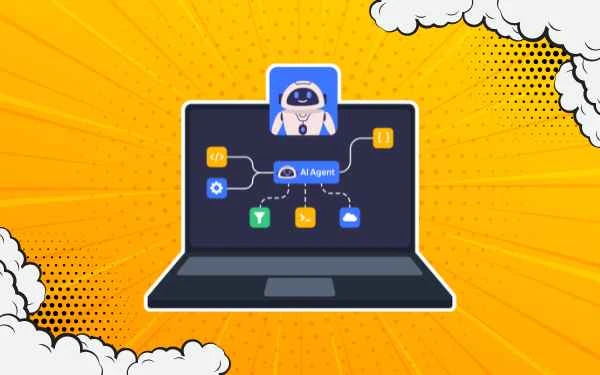
Agent Experience takes a different approach by connecting external agents to the broader system architecture.
OutSystems says its platform automatically enforces system dependencies, data relationships and existing business logic. The objective is to reduce fragmented AI-generated code and preserve reuse as applications evolve.
That approach effectively treats the AI coding agent as an interface for development while keeping architectural coherence within the underlying platform.
For enterprises, that could become increasingly important as multiple developers use different AI tools across the same application estate.
Instead of forcing an organization to standardize on one model or coding agent, OutSystems is positioning its platform as a model-independent control layer.
Governance becomes part of the development environment
Security and governance are central to the product’s pitch.
Agent Experience includes automated testing and governance guardrails intended to maintain software quality, reliability, scalability and performance. OutSystems also supports deployment across public cloud, private cloud, on-premises and hybrid environments.
That deployment flexibility is particularly relevant to regulated organizations that cannot move every workload to a public cloud.
The approach also reflects a broader change in enterprise AI architecture. Organizations increasingly want developers to use generative AI, but technology leaders still need mechanisms for controlling access, testing software, managing releases and maintaining auditability.
Putting those capabilities around the AI coding workflow can potentially reduce the gap between experimentation and production deployment.
AI-generated code still needs engineering controls
The need for such controls is underscored by developer research cited by OutSystems.
New Relic’s 2026 State of AI Coding research found that 74% of AI-generated code requires significant post-generation rework or is never deployed to production, according to the company.
The statistic highlights one of the central challenges of AI-assisted development: generating code is becoming easier, but producing reliable production software remains an engineering problem.
OutSystems argues that its deterministic generation model can address part of that bottleneck by allowing external AI agents to influence architecture while the platform generates the resulting application code within established constraints.
That does not eliminate the need for developers. Instead, it changes where they spend their effort—from repeatedly correcting fragmented generated code toward designing, validating and governing systems.
Early deployments show shorter development cycles
OutSystems says several early customers are already using Agent Experience in regulated or complex environments.
YESCO, an international sign manufacturer, is using Claude Code with the platform and reports reducing software release cycles to two weeks while maintaining its governance requirements. The company says it has used the technology for applications including instant customer pricing and AI-powered design workflows.
Law firm Lowenstein Sandler is using Claude Code and OutSystems’ Enterprise Context Graph to build agentic legal applications. According to OutSystems, its team developed a production-ready Litigation Matter Tracker in less than three hours and reduced application finishing work from approximately one hour to five to 10 minutes.
Danish retailer Normal is using external coding agents alongside the Enterprise Context Graph and OutSystems’ architectural guardrails. The company reports reducing development time from approximately six weeks to two weeks for an application built by a single developer.
These are vendor-reported customer results, but they illustrate the broader proposition: AI coding agents can provide development velocity while a platform supplies the architecture and controls required for production.
Regulated industries become a major test case
OutSystems is extending the same model into industry-specific agentic applications.
The company plans to launch Agentic First Notice of Loss for insurance in November. Insurers can already access an Insurance Agent Kit through OutSystems Forge containing prebuilt claims agents.
OutSystems has also introduced Agentic Loan Applications for banking.
Both use cases demonstrate why governed agentic development could matter beyond general-purpose software. Financial services and insurance organizations need to manage security, compliance, data access and auditability while still modernizing workflows.
The ability to customize industry components using different coding agents could give organizations more flexibility without requiring every developer to work within the same AI tool.
The emerging AI development control plane
OutSystems is entering a competitive market that includes Microsoft GitHub Copilot, Amazon’s coding tools, Google’s developer AI products, Anthropic’s Claude Code and a growing ecosystem of agentic development platforms.
The strategic question is shifting from whether AI can write code to how enterprises can safely integrate multiple AI coding agents into production software development.
OutSystems’ answer is to keep the agents open while making system architecture, governance and lifecycle management platform-level functions.
That model could appeal particularly to organizations that want AI development speed without accepting a fragmented application estate.
As coding agents become more capable, the winning enterprise development platforms may not be those that generate the most code. They may be those that provide the strongest architectural and operational controls around the code AI generates.
Market Landscape
AI-assisted software development is moving from autocomplete and code generation toward autonomous and semi-autonomous AI coding agents capable of planning, modifying and testing applications.
The market includes Microsoft GitHub Copilot, Google developer AI, Amazon’s coding tools, Anthropic’s Claude Code and specialist platforms such as OutSystems. The competitive battleground is increasingly shifting toward agent orchestration, enterprise context, security, governance and production lifecycle management.
OutSystems’ Agent Experience differentiates itself by remaining open to multiple coding agents while keeping architectural coherence and deployment controls within its platform. This model is particularly relevant to regulated enterprises that need to balance AI development velocity with compliance and operational sovereignty.
Top Insights
- OutSystems Agent Experience is now generally available, allowing enterprises to use Claude Code, Cursor, Codex, Kiro and other AI coding agents.
- The platform works at the system-design level, maintaining dependencies, data relationships and business logic instead of treating AI-generated code as isolated fragments.
- Governance is built into the development workflow, including security, automated testing, lifecycle management and deployment controls.
- Early customers report significant development-time reductions, including YESCO’s two-week release cycles and Normal’s two-week application development timeline.
- OutSystems is expanding agentic applications into regulated sectors, with new insurance and banking components designed for customization through external coding agents.
Power Tomorrow’s Intelligence — Build It with TechEdgeAI