








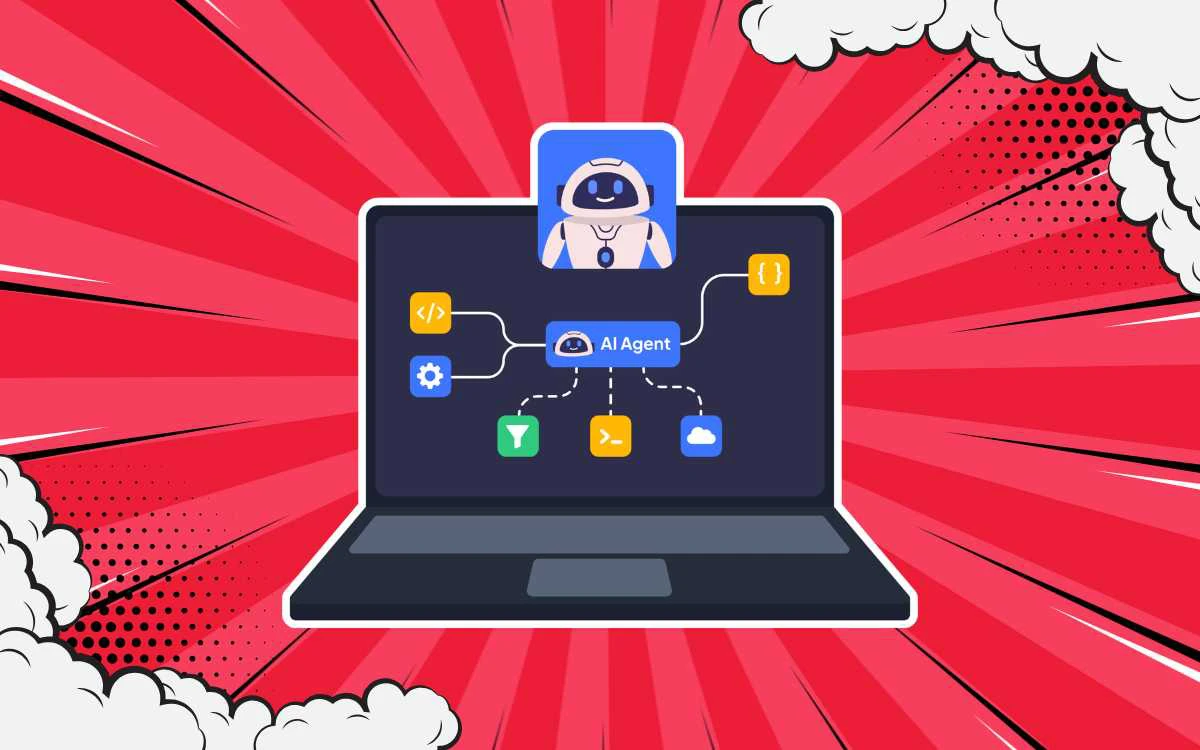
Enterprise insurance software provider Guidewire (NYSE: GWRE) has introduced the Agentic Framework as part of its new Qusar release, enabling insurers to build, deploy, and manage AI agents directly on the Guidewire Cloud Platform. The launch expands Guidewire’s enterprise AI strategy by embedding insurance-aware autonomous agents into core policy, claims, billing, underwriting, and development workflows, helping carriers automate complex processes while maintaining governance, security, and regulatory compliance.
As enterprises increasingly shift from generative AI assistants to autonomous AI systems, the insurance industry is emerging as one of the next major sectors adopting AI agents for mission-critical operations. Guidewire’s latest Qusar release reflects this transition, introducing an Agentic Framework that allows insurers to deploy domain-specific AI agents across core insurance processes rather than relying on standalone AI tools.
The announcement positions Guidewire among a growing group of enterprise software vendors embedding agentic AI into operational platforms. While technology companies including Microsoft, Google, Salesforce, and Amazon Web Services (AWS) are investing heavily in enterprise AI agents, Guidewire is differentiating its approach through insurance-specific workflows, data models, and regulatory requirements.
Moving Beyond AI Assistants
Unlike conventional AI copilots that primarily generate content or answer questions, the Agentic Framework enables AI systems to execute multi-step insurance workflows by securely interacting with policy administration, claims, and billing systems hosted on the Guidewire Cloud Platform.
According to the company, insurers can select different AI models depending on the business task while maintaining secure access to operational data and workflow controls. This enables AI agents to automate processes that previously required multiple manual steps, reducing decision times from days to minutes.
The framework is designed to support the full insurance lifecycle, from underwriting and policy servicing to claims management and customer engagement.
Industry analysts increasingly view this type of embedded AI as a more practical enterprise deployment model than isolated AI experimentation.
“Insurers are increasingly recognizing that AI value comes from deep integration with core business processes, not from isolated experimentation,” said Karlyn Carnahan, Executive Partner at Celent, noting that Guidewire’s framework allows AI deployment within existing operational systems while preserving governance and compliance.
Insurance-Specific AI Agents
Alongside the framework, Guidewire introduced several AI agents built for specific insurance functions.
Among them is Claim Summarization for ProNavigator, which automatically generates concise claim summaries, reducing the time adjusters spend reviewing extensive claim notes and allowing greater focus on complex claim resolution.
Another capability, Policy Change for ProNavigator, acts as an embedded assistant supporting underwriters and customer service representatives by accelerating policy modifications and improving quote-to-bind efficiency.
The company also unveiled an Agentic First Notice of Loss (FNOL) solution that uses conversational AI voice interfaces to guide policyholders through the claims reporting process while automatically capturing structured claim information.
Together, these capabilities illustrate a broader evolution of enterprise AI from document generation toward workflow execution and decision support.
AI for Insurance Development Teams
Guidewire is also extending AI capabilities to software engineering and insurance product development.
The Qusar release introduces Developer Assistants that understand Guidewire’s application architecture, including the Gosu programming language, integrations, the Jutro digital platform, and serverless application functions. Rather than serving as general-purpose coding assistants, these tools leverage platform-specific knowledge to accelerate software development within the Guidewire ecosystem.
Additional AI-powered assistants target data and product teams. The Data Curation Assistant converts natural language requests into SQL queries for Data Studio, while the Product Design Assistant automates portions of insurance product configuration using Guidewire’s Advanced Product Designer (APD).
Guidewire says its Developer Assistants can enable teams to deliver solutions more than 40% faster than generic coding assistants by combining generative AI with deep platform context.
Enterprise AI Strategy
The announcement reflects a growing enterprise technology trend: domain-specific AI agents that operate inside existing business applications rather than functioning as standalone chatbots.
Major enterprise software providers are increasingly embedding AI directly into operational workflows. Salesforce has expanded its Agentforce platform for autonomous customer engagement, Microsoft continues enhancing Copilot capabilities across business applications, and Google Cloud is investing in enterprise AI agents through its Gemini ecosystem.
Guidewire’s strategy applies the same architectural principles to insurance, where regulatory oversight, data privacy, and operational accuracy are essential.
By embedding AI into policy administration and claims systems rather than external interfaces, insurers can automate routine processes while maintaining auditability and governance over business decisions.
Market Outlook
Demand for AI in insurance continues to accelerate as carriers seek to improve underwriting accuracy, claims efficiency, fraud detection, and customer service.
According to McKinsey & Company, generative AI has the potential to create significant productivity improvements across insurance operations, particularly in claims processing, underwriting, and customer interactions. Meanwhile, Gartner expects AI agents and autonomous business systems to become an increasingly important component of enterprise software over the coming years as organizations move beyond experimental AI deployments.
Guidewire’s latest release reflects this broader shift from AI-assisted productivity toward autonomous business operations.
For insurers already running core operations on the Guidewire Cloud Platform, the Agentic Framework provides a foundation for deploying insurance-aware AI agents without replacing existing systems. As competition intensifies across digital insurance, embedded AI capable of executing business processes—not simply generating recommendations—may become a key differentiator for carriers seeking greater operational speed, efficiency, and decision quality.
Market Landscape
The insurance technology sector is rapidly adopting agentic AI, combining generative AI, workflow automation, and industry-specific knowledge to improve operational efficiency. While enterprise vendors such as Microsoft, Google, Salesforce, and Amazon Web Services are expanding AI agent platforms, Guidewire is focusing on insurance-native AI integrated with policy, claims, and billing systems. This reflects a broader market shift toward domain-specific autonomous AI capable of executing regulated business processes securely and at scale.
Top Insights
- Guidewire has launched the Agentic Framework, enabling insurers to deploy AI agents that automate policy, claims, billing, and underwriting workflows directly within Guidewire Cloud Platform.
- The framework provides secure access to insurance data and business processes, allowing AI agents to execute multi-step operational tasks while supporting governance and compliance.
- New insurance-specific AI capabilities include claim summarization, policy change assistance, conversational First Notice of Loss (FNOL), and AI-powered software development tools.
- Guidewire’s strategy aligns with the broader enterprise AI movement toward domain-specific autonomous agents that integrate deeply with existing enterprise applications.
- Growing adoption of AI in insurance reflects increasing demand for faster claims processing, improved underwriting decisions, and operational efficiency across the insurance lifecycle.
Power Tomorrow’s Intelligence — Build It with TechEdgeAI