







As hyperscale AI infrastructure expands worldwide, automation is becoming a critical component of modern data center operations. Emerson has introduced the DeltaV™ Automation Platform for Data Centers, a unified automation solution designed to help operators manage increasingly complex AI facilities by integrating thermal, mechanical, and electrical infrastructure into a single control architecture. The launch reflects growing industry demand for scalable automation platforms capable of accelerating deployment while improving operational resilience.
The rapid adoption of generative AI is reshaping data center design, forcing operators to build larger, denser, and more energy-intensive facilities under increasingly compressed construction timelines. Against this backdrop, industrial automation company Emerson (NYSE: EMR) has launched the DeltaV Automation Platform for Data Centers, positioning its industrial control technology as an integrated automation layer for next-generation AI infrastructure.
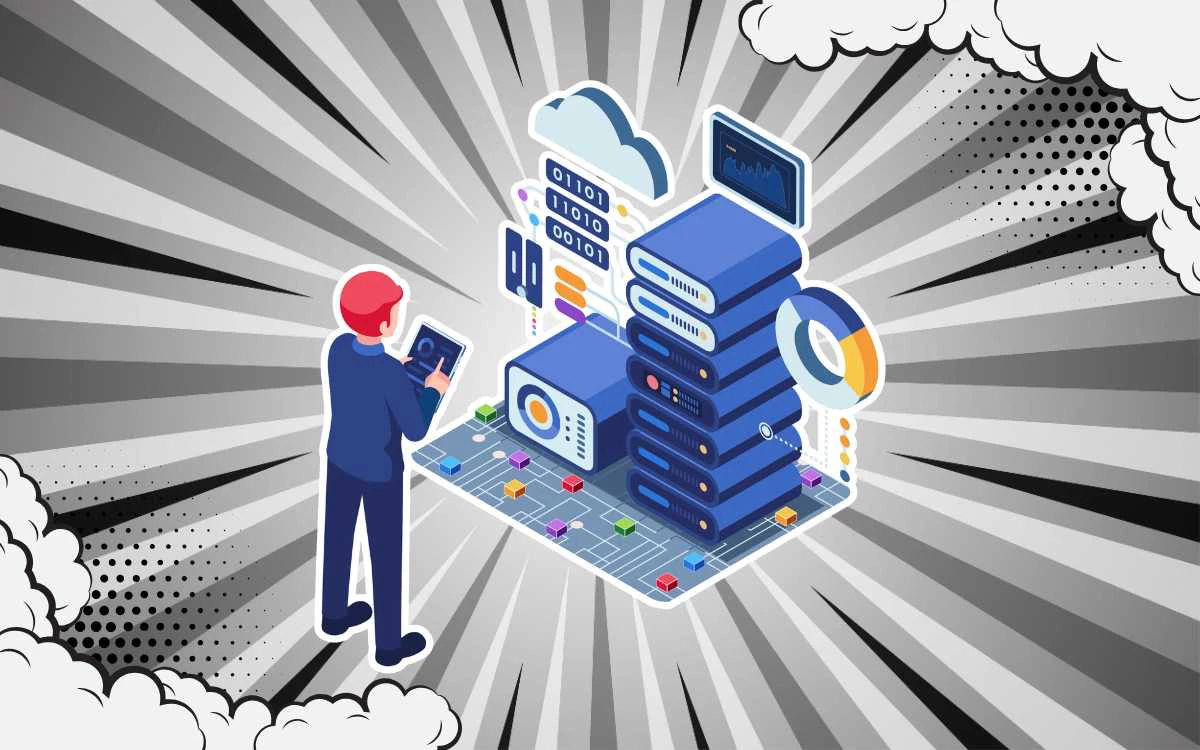
Unlike traditional data center environments that often rely on multiple independent monitoring systems, the DeltaV platform combines thermal management, mechanical equipment, and electrical infrastructure within a unified automation framework. Emerson says this approach is intended to reduce engineering complexity while improving visibility across mission-critical systems throughout the facility lifecycle.
The announcement underscores an emerging trend in enterprise AI infrastructure: as GPU clusters become larger and power densities increase, data center automation is evolving beyond facility management into a strategic operational platform.
Addressing AI Infrastructure Complexity
Modern AI workloads powered by accelerated computing platforms from companies such as NVIDIA, AMD, and Intel are significantly increasing demand for electricity, cooling capacity, and infrastructure orchestration. Large-scale AI training clusters require highly coordinated management of cooling systems, electrical distribution, backup power, and environmental controls to maintain performance and uptime.
Emerson’s DeltaV Automation Platform aims to simplify these operational challenges by replacing fragmented point solutions with a centralized automation architecture. Instead of separately coordinating subsystems during deployment and operation, organizations can manage them through a unified control environment designed to improve commissioning, monitoring, and long-term maintenance.
According to Emerson, the platform provides real-time monitoring and control across facility systems, enabling operators to dynamically adjust cooling performance and respond to fluctuating thermal loads generated by AI compute infrastructure.
Automation Moves Beyond Industrial Facilities
DeltaV has historically been deployed in industrial sectors including energy, chemicals, life sciences, and manufacturing. Its expansion into AI data centers reflects broader convergence between industrial automation and digital infrastructure management.
The platform combines Emerson’s DeltaV Distributed Control System (DCS) with DeltaV programmable logic controllers (PLCs) to create an integrated control environment capable of managing complex operational processes across large facilities.
A notable aspect of the launch is the incorporation of context-aware AI capabilities within engineering workflows and operational control. Emerson says these AI-enabled features can accelerate engineering configuration, support advanced process control, and allow integration with AI optimization models that continuously improve facility performance.
The company also highlights long-term ambitions toward increasingly autonomous operations, where AI-assisted automation could optimize energy consumption, cooling efficiency, predictive maintenance, and operational reliability with minimal manual intervention.
Responding to Industry Growth
Demand for AI-ready infrastructure continues to accelerate globally. According to IDC, worldwide spending on AI infrastructure is expected to grow at a double-digit annual rate as enterprises and cloud providers expand AI computing capacity. At the same time, McKinsey & Company estimates that AI adoption will require substantial investment in digital infrastructure, particularly high-performance computing facilities capable of supporting generative AI workloads.
These investments are driving new priorities for data center operators, including faster project delivery, improved operational resilience, and standardized automation architectures that can scale across multiple campuses.
Emerson argues that standardized automation frameworks can reduce engineering effort while shortening commissioning timelines—a critical consideration as hyperscale providers race to deploy new AI capacity.
Supporting Gigawatt-Scale Data Centers
One of the platform’s primary objectives is supporting the construction and operation of gigawatt-scale AI campuses.
Rather than focusing solely on equipment-level monitoring, the DeltaV Automation Platform is designed to provide facility-wide operational visibility. Emerson says this enables engineering teams to identify abnormal conditions earlier, coordinate responses across interconnected systems, and maintain continuous operations around the clock.
The platform also emphasizes repeatable engineering designs that can be replicated across multiple facilities, allowing operators to standardize deployment while simplifying expansion into new geographic regions.
As AI infrastructure continues to scale, this type of lifecycle approach may become increasingly important. Many cloud providers and colocation operators are moving toward standardized data center designs that can be replicated rapidly to meet growing demand.
Enterprise Implications
For enterprise organizations investing in AI infrastructure, unified automation platforms could reduce operational complexity while improving reliability across increasingly sophisticated facilities.
Competition within AI infrastructure is also intensifying. Technology companies including Microsoft, Google, Amazon Web Services (AWS), and Oracle continue expanding global AI cloud capacity, while infrastructure vendors are investing heavily in automation, power management, and intelligent facility operations.
Although Emerson’s DeltaV platform targets automation rather than AI compute itself, the launch highlights how operational technologies are becoming foundational components of the broader AI ecosystem. As enterprises prioritize speed-to-deployment and long-term operational efficiency, integrated automation platforms are likely to play a larger role in supporting the next generation of AI data centers.
Market Landscape
The AI infrastructure market is evolving beyond servers and GPUs toward integrated operational platforms that manage power, cooling, automation, and facility intelligence. While companies such as NVIDIA dominate AI computing hardware and Microsoft, Google, and Amazon Web Services expand hyperscale cloud infrastructure, industrial automation vendors like Emerson are addressing the operational layer that enables AI facilities to run reliably. Unified automation is emerging as a strategic requirement as operators scale toward multi-gigawatt AI campuses.
Top Insights
- Emerson has introduced the DeltaV Automation Platform for Data Centers to unify thermal, mechanical, and electrical systems within a single automation architecture for AI-scale facilities.
- The platform integrates DeltaV DCS and PLC technologies with AI-assisted engineering capabilities to simplify commissioning, optimize operations, and improve lifecycle management.
- Growing AI workloads are increasing demand for intelligent automation that supports high-density computing, predictive maintenance, and real-time infrastructure optimization.
- Standardized automation architectures may help hyperscale operators reduce engineering complexity while accelerating deployment of next-generation AI data centers.
- The launch reflects a broader shift toward autonomous infrastructure management as AI facilities become larger, more energy-intensive, and operationally complex.
Power Tomorrow’s Intelligence — Build It with TechEdgeAI