







Home energy systems are becoming increasingly difficult to manage as solar panels, batteries, EVs, heat pumps, dynamic electricity tariffs and household appliances operate as one interconnected system. At IFA 2026, Zendure is introducing Agentic HEMS, an AI-driven home energy management architecture designed to move beyond fixed schedules by forecasting conditions, deciding how energy should be allocated and automatically executing those decisions.
The smart home has spent years learning how to turn lights on, adjust thermostats and schedule appliances. Energy management is becoming a much harder problem.
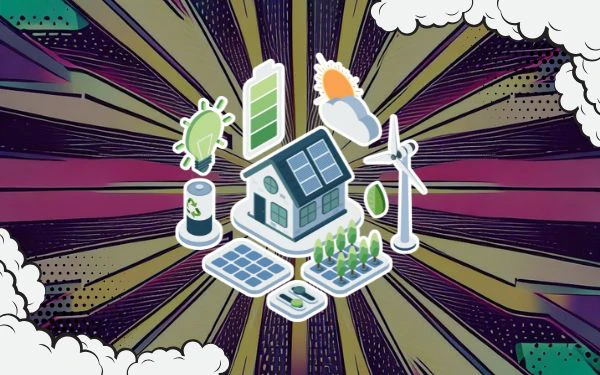
A modern household can simultaneously generate electricity from rooftop solar, store it in batteries, charge an electric vehicle, operate a heat pump and respond to electricity prices that change throughout the day. Each decision can affect several others.
Charging an EV when electricity is cheap may be financially attractive, for example, but drawing too much power from a home battery could reduce its useful life. Sending excess solar energy into storage might preserve grid independence, but using it immediately could be more efficient depending on weather, tariffs and household demand.
Zendure wants artificial intelligence to make those decisions dynamically.
Ahead of IFA 2026 in Berlin, the energy technology company has unveiled Agentic HEMS, a system-level approach to home energy management that combines forecasting, AI agents and an open software platform. Rather than treating AI as a feature that optimizes one appliance or one charging schedule, Zendure is positioning the system as an autonomous energy-management layer for the entire home.
IFA 2026 runs from September 4 to 8 at Messe Berlin, with Zendure listed at Hall 2.2, Stand H2.2-124 and the Mobility Track at MT-113.
From Smart Scheduling to Autonomous Decisions
Traditional home energy management systems are largely rule-based or schedule-driven.
A homeowner might tell a battery to charge during inexpensive hours, direct solar energy toward a specific appliance or charge an EV overnight. AI can make those schedules more adaptive, but the underlying model is still often reactive: determine the best action for a particular moment based on available information.
Zendure’s Agentic HEMS takes a different approach.
The company describes a three-layer architecture consisting of ZenPulse, ZENKI AI Agents and Zen+OS.
ZenPulse is a proprietary large time-series model designed to forecast variables including photovoltaic generation, electricity prices, household loads and weather conditions.
Those forecasts feed into ZENKI AI Agents, which are intended to make decisions across multiple competing objectives: energy savings, household comfort, battery longevity and safety.
Zen+OS then acts as the platform layer connecting those decisions across the home.
The important shift is that the system is designed to reason across time rather than simply respond to the current state of a device.
If tomorrow’s solar generation is expected to be high and electricity prices are forecast to fall overnight, the optimal battery strategy may look very different from what would make sense based solely on today’s battery level.
That is where forecasting becomes more important than conventional automation.
Why Energy Is a Natural Use Case for AI Agents
Energy management is emerging as an interesting application for agentic AI because it involves continuous decisions under changing conditions.
The system has to observe multiple inputs, predict what is likely to happen, choose between competing objectives and execute actions across connected devices.
That is broadly the same pattern behind agentic AI in enterprise software, although the consequences are different. An enterprise agent might coordinate a workflow across applications; an energy agent has to operate within physical constraints involving electricity, batteries, appliances and household comfort.
That also makes reliability particularly important.
An energy-management agent cannot simply optimize for the lowest electricity bill. It must respect constraints such as battery health, backup requirements, device compatibility and household preferences.
Zendure’s architecture is therefore notable less because it uses AI than because it attempts to combine prediction, decision-making and physical execution within a single home-energy system.
An Open Platform Rather Than a Closed Appliance Network
Another significant part of Zendure’s strategy is interoperability.
The company says Zen+OS uses open APIs and integrates with platforms including MQTT, Home Assistant and Homey. Zendure also claims compatibility with more than 5,000 heat-pump models, major rooftop solar inverters and leading EV chargers.
The company says the platform supports more than 90% of common household loads and connects with more than 870 energy providers across Europe serving more than 150 million users.
Those figures are company claims rather than independently verified market measurements, but the underlying strategy is clear: an AI energy agent is only useful if it can actually control enough of the household’s energy infrastructure.
That makes interoperability a strategic issue.
A proprietary battery ecosystem can optimize the hardware it controls, but a whole-home agent needs access to generation, storage, heating, mobility and consumption. Open integrations can therefore become a competitive advantage — assuming they remain reliable and secure.
Zendure also offers ZenWave, its own dynamic electricity tariff, allowing the platform to incorporate electricity purchasing into its optimization strategy.
From Energy Management to an AI Control Plane
The broader trend extends beyond Zendure.
Companies including Tesla, Schneider Electric, Enphase Energy, EcoFlow and SolarEdge are developing increasingly integrated approaches to home solar, storage, EV charging and energy management. Smart-home platforms from Google, Amazon and Samsung are also moving toward greater automation across connected household devices.
The emerging competitive question is whether home energy management remains primarily a hardware-driven category or evolves into an AI software and orchestration market.
Zendure’s Agentic HEMS points toward the latter.
Its proposed architecture treats batteries, solar systems, EV chargers and heat pumps less as isolated products and more as resources that an intelligent software layer can coordinate.
That could eventually allow households to specify outcomes rather than individual commands.
Instead of telling the system when to charge a battery, a user might specify priorities such as minimizing electricity costs, maintaining a certain backup reserve or maximizing the use of renewable energy. The agent would then determine the appropriate actions as conditions change.
That is a meaningful change in the user interface for energy.
Hardware Still Matters
Zendure is using IFA to demonstrate that software strategy alongside its hardware portfolio.
The SolarFlow Mix series is positioned as a modular whole-home plug-in storage system. PowerHub serves as the central gateway connecting SolarFlow systems with rooftop solar, EV chargers and heat pumps, while the SolarFlow 2400 series targets balcony and retrofit storage applications.
The company is also connecting home-generated energy to transportation through its RangeFlow cargo bike and EVFlow AC Series smart wallbox.
The larger demonstration is intended to show a complete energy loop: generate electricity, store it, distribute it across household loads and use it for mobility.
IFA itself is increasingly positioning AI, connected living and sustainable mobility as major technology themes. The 2026 event features more than 1,900 brands and runs September 4–8 in Berlin.
The Challenge Is Trust
Agentic energy management could make sophisticated optimization invisible to homeowners, but autonomy introduces a different requirement: trust.
A system making decisions about electricity, batteries and heating needs to be predictable enough that users understand its priorities and can override it when necessary.
Cybersecurity and privacy are also important because the system can potentially infer household routines from energy consumption.
For Zendure, the long-term opportunity is therefore bigger than automated charging schedules. It is an attempt to make the home energy system behave more like an autonomous computing platform — continuously forecasting conditions, balancing competing objectives and taking action without requiring users to micromanage every device.
If that model works, the smart home may eventually stop asking homeowners what they want each device to do.
It could instead ask what they want their energy system to achieve.
Market Landscape
The home energy management system (HEMS) market is moving from basic monitoring and device scheduling toward coordinated control of solar generation, batteries, EVs, heating and household loads.
The next stage is increasingly software-defined. AI can forecast renewable generation and electricity prices, while agentic systems can potentially translate those predictions into autonomous decisions.
Zendure is competing against broader energy and smart-home ecosystems from companies such as Tesla, Schneider Electric, Enphase, EcoFlow, SolarEdge, Google, Amazon and Samsung.
The key differentiators are likely to be forecasting accuracy, device interoperability, energy-market integration, safety, cybersecurity and the ability to optimize multiple objectives simultaneously.
The category also faces regulatory and infrastructure differences across countries, meaning a global HEMS platform must account for local tariffs, grid rules, device standards and energy markets.
Top Insights
- Zendure’s Agentic HEMS combines forecasting, AI decision-making and device orchestration to automate whole-home energy management.
- ZenPulse forecasts solar generation, electricity prices, household loads and weather, giving AI agents a forward-looking energy model.
- ZENKI AI Agents are designed to balance savings, comfort, battery longevity and safety rather than optimize a single device.
- Zen+OS emphasizes interoperability, connecting energy hardware and third-party smart-home platforms through an open ecosystem.
- The broader opportunity is turning home energy from a collection of connected devices into an autonomous, software-defined system.
Power Tomorrow’s Intelligence — Build It with TechEdgeAI