








1. You’ve worked with organizations across different industries. Are you seeing common obstacles to AI adoption regardless of sector, or do the biggest challenges vary from industry to industry?
I do see some common obstacles across industries. The biggest one is that companies often start with the technology rather than the problem they’re trying to solve. There’s a lot of pressure to say, “We need an AI strategy.” But the more useful question is, “What are we trying to improve, and can AI actually help us do that?” If you can’t answer that clearly, it’s easy to end up with an interesting demo that never makes it into the business.
The second is trust. Even when the technology works, people need to understand the output and how they’re supposed to use it. For example, healthcare and financial services may need different privacy, regulatory, and review safeguards, even when they’re trying to solve a similar business problem. But the underlying challenge is similar. People are much more likely to use AI when it helps them do their jobs and gives them information they couldn’t realistically pull together themselves.
2.As AI agents become more capable, how do you see enterprise software evolving? Will businesses increasingly rely on autonomous systems, or will humans remain firmly in the loop for critical decisions?
I think enterprise software is moving from helping people execute workflows to helping them make decisions. Agents will do more of the work: gathering information, analyzing options, preparing recommendations, and handling routine transactions. Some of that will happen autonomously within defined boundaries. But I don’t think the future is simply “humans out, agents in.”
Take a multimillion-dollar strategic supplier agreement. The procurement team should conduct that negotiation and make the final call. Those decisions involve judgment, relationships, trade-offs, and accountability. The team needs to be able to stand behind what it agrees to.
That’s where Negotiation Intelligence comes in. It helps the team understand the agreement, assess its leverage, and prepare a position. When the supplier comes back with a counteroffer, the team can use an updated Negotiation Playbook to work through what to pursue next.
For lower-risk, repeatable decisions, autonomy makes sense. That boundary will keep moving as the technology improves. But in a strategic negotiation, the buyer needs to remain responsible for the decision.
3.You’ve argued that enterprise tech modernization is as much a data and operational alignment challenge as a technology challenge. What does that alignment actually look like in practice, and where do companies most often get it wrong?
To me, alignment means being clear about what you’re trying to improve, who’s making the decision, and what information they need. Then you look at how that fits into the way the business actually works.
That sounds straightforward, but the information is usually spread across contracts, ERP systems, spreadsheets, and emails. Different teams may also have different definitions of the same thing. Buying a new platform doesn’t automatically resolve that.
In procurement, for example, finance and sourcing need to agree on the baseline. What counts as an identified opportunity? When can you say the savings have actually been realized? Who’s responsible for acting on the recommendation?
That’s where companies often get it wrong. They focus on whether the technology can produce an answer before agreeing on how anyone will use it.
4.Infinity Loop helps organizations bridge the gap between emerging AI capabilities and real-world business outcomes. What’s the biggest misconception executives have about what it takes to turn AI into measurable business value?
The biggest misconception is that deploying AI is the same as creating value. It isn’t. You can spend a lot of time discussing which model to use or which platform to buy without answering the basic question: what’s going to improve in the business?
The other misconception is that adding AI to a process will automatically change the economics. Sometimes the bigger opportunity is in the decision being made within that process.
Take procurement. Automating a contract approval might save time. But are the terms competitive? Does the buyer understand their leverage? Do they know what to ask for?
Negotiation Intelligence helps answer those questions and turns the analysis into a Negotiation Playbook with specific requests and evidence behind them. That can reveal opportunities worth much more than the time saved on approvals.
So I’d shift the question from “Where can we use AI?” to “Where are we leaving money, time, or strategic advantage on the table?”
5.If a CEO told you they had twelve months to demonstrate meaningful returns from their AI investments, where would you advise them to focus first – and where would you caution them against overspending?
I’d start with a few decisions where you can already measure the economics. I wouldn’t try to put AI everywhere. I’d look for decisions that are either valuable enough or happen often enough that better intelligence could change the outcome.
Procurement is a good example. A relatively small improvement across a large contract portfolio can translate into millions of dollars. The same thinking applies to pricing, sales, supply chain, and finance.
Where I’d be careful is spending heavily on broad AI infrastructure or launching dozens of pilots before you know where the value is. There’s pressure to buy platforms, build teams, and try every new model because nobody wants to fall behind.
I’d rather pick three or four use cases and give each one a clear financial target. Agree on the starting point, put someone in charge of acting on the output, and work with finance on how you’ll measure the result. In procurement, identifying an opportunity is one step. Negotiating better terms and realizing the savings are separate steps.
Once you know what’s actually changing in the business, you can make a much better decision about where to invest next.
Author Bio
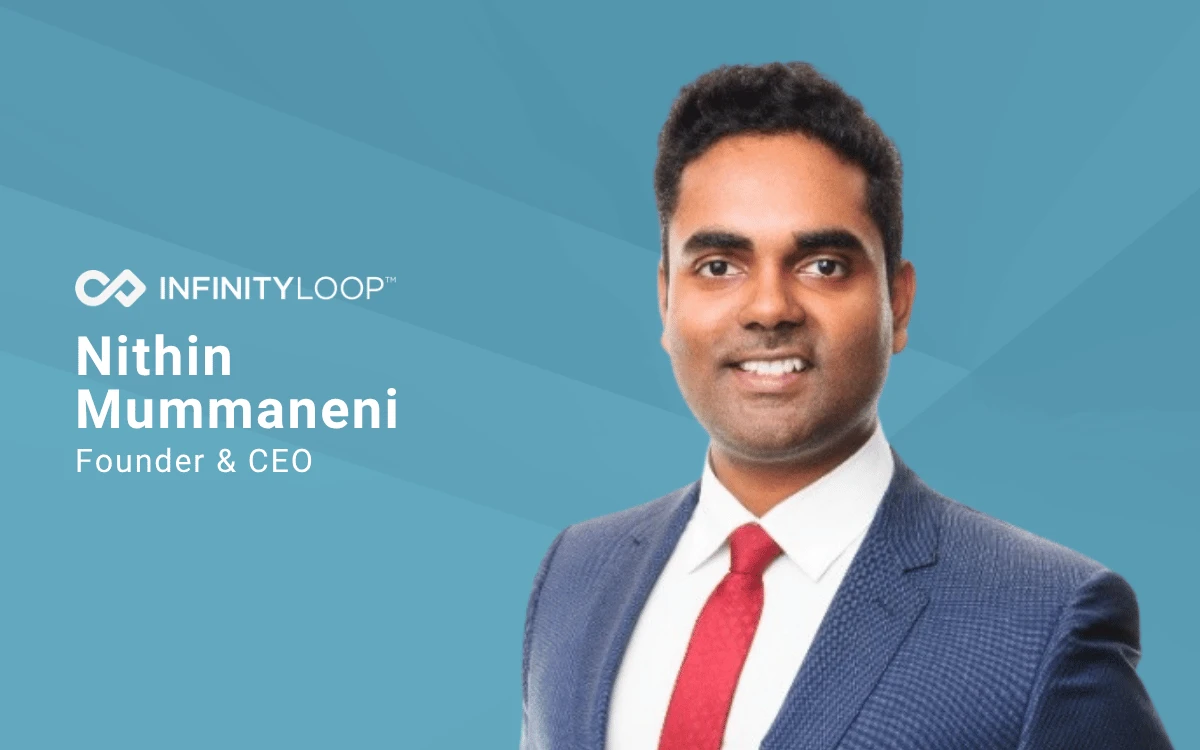
Nithin Mummaneni – Founder & CEO, Infinity Loop
Nithin is the Founder & CEO of Infinity Loop, an AI-powered negotiation intelligence platform that helps companies eliminate overspending by uncovering hidden savings in vendor contracts and delivering data-driven negotiation strategies that unlock their full value. He brings deep experience in procurement, automation, and operational transformation, having led intelligent automation and large-scale vendor negotiations at Compass (NYSE: COMP) and served as a management consultant driving efficiency and cost optimization across airports, manufacturing, logistics, defense, and private equity–backed enterprises.
About Infinity Loop
Infinity Loop is revolutionizing enterprise contract management by combining AI-native intelligence with strategic negotiation expertise. Founded by experts in procurement, technology, and strategy, Infinity Loop eliminates vendor overspending by automating contract analysis, optimizing deal terms, and delivering AI-native due diligence that uncovers hidden savings. The platform serves as an always-on contract command center, delivering real savings, not just insights.