








TrueFoundry has received Frost & Sullivan’s 2026 Global Enterprise AI Control Plane Transformational Innovation Leadership Recognition, highlighting the company’s approach to managing enterprise AI models, agents and tools through a centralized operational layer for governance, security, observability and cost control.
As enterprises move from isolated generative AI experiments toward fleets of AI agents and production applications, a different infrastructure problem is emerging: how to control everything running underneath the models.
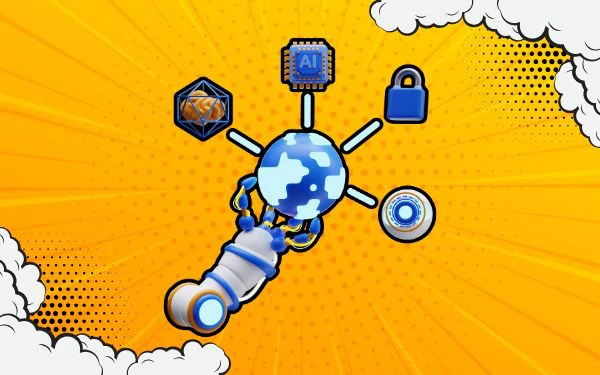
TrueFoundry is targeting that layer with its Enterprise AI Control Plane, an architecture designed to bring AI governance, security, observability, optimization and agent lifecycle management into a centralized platform.
The approach has now received recognition from Frost & Sullivan, which named TrueFoundry the recipient of its 2026 Global Enterprise AI Control Plane Transformational Innovation Leadership Recognition.
Frost & Sullivan evaluates companies across Transformational Innovation and Customer Impact. According to the research and consulting firm, TrueFoundry stood out for addressing fragmentation across enterprise AI environments and translating the concept of a unified control plane into an enterprise-oriented platform.
The timing reflects a broader change in enterprise AI architecture.
Organizations initially approached generative AI by selecting models and connecting them to applications. As deployments become more complex, enterprises increasingly need to manage multiple models, AI agents, tools, data sources and deployment environments simultaneously.
That creates a control problem.
A company might use models from OpenAI, Anthropic, Google or other providers, run some workloads in a public cloud and others on-premises, and deploy agents that interact with internal applications. Without a common management layer, monitoring permissions, controlling costs, enforcing security policies and maintaining compliance can become increasingly difficult.
TrueFoundry’s platform is designed to serve as that management layer.
Its AI Gateway incorporates an LLM Gateway, Model Context Protocol (MCP) Gateway, Agent Gateway, Agent Registry and Skills Registry. The architecture is intended to provide centralized control over models, agents and tools while maintaining the flexibility to operate across different infrastructure environments.
The platform is built on Kubernetes and supports multi-cloud, hybrid, on-premises and air-gapped deployments, according to TrueFoundry. That infrastructure flexibility is particularly relevant to regulated industries and organizations with data-sovereignty or network-isolation requirements.
The emergence of MCP also adds another dimension to the control-plane challenge. As AI agents gain standardized mechanisms for connecting to external tools and data, organizations need mechanisms to understand which agents can access which resources and what actions those agents are permitted to perform.
That makes identity, authorization and observability increasingly important components of agentic AI infrastructure.
TrueFoundry also offers TrueForge, an open-source and vendor-neutral agent harness that allows organizations to bring their own models and tools while building agents on their own infrastructure. The approach is intended to reduce dependence on a single AI model or application ecosystem.
The distinction is significant because enterprise AI stacks are becoming increasingly heterogeneous. A single organization may use several foundation models depending on cost, latency, capabilities, data requirements or regulatory considerations. The control layer therefore needs to operate independently of any single model provider.
The competitive environment is expanding accordingly. Cloud providers including Microsoft, Google and Amazon offer enterprise AI platforms with built-in governance and security capabilities, while companies such as Datadog, Palo Alto Networks, ServiceNow and specialist AI infrastructure vendors are addressing adjacent portions of the AI operations stack.
The emerging AI control-plane category sits between these layers. Its goal is not necessarily to provide the underlying model, but to manage how models, agents and tools are deployed and consumed across an organization.
Cost management is another major factor.
AI inference can create unpredictable consumption patterns as organizations scale agentic workflows. Unlike conventional software applications, agents may generate repeated model calls, retrieve information, invoke tools and initiate multi-step tasks. Enterprises therefore need visibility into token usage, model selection and workload economics.
TrueFoundry says its production deployments have delivered 30% average cost optimization, alongside 60% faster AI deployments and three-times faster time to value. The company also says its platform operates at more than 1 trillion tokens per day.
Those figures are company-reported and should be evaluated in the context of individual deployments, but they illustrate the operational metrics vendors are increasingly using to differentiate AI infrastructure.
Frost & Sullivan’s recognition also points to another important factor: customer adoption. TrueFoundry says it has deployments across telecommunications, healthcare, banking, semiconductors and other industries, including organizations such as Automation Anywhere, NetApp and Cox Communications.
The company uses structured proof-of-value engagements, onboarding programs, engineering collaboration and training to help customers move from AI experimentation into production, according to the announcement.
That transition may become one of the most important battlegrounds in enterprise AI. Generative AI experimentation is relatively easy to initiate, but production deployment introduces requirements around security, reliability, cost management, governance and auditability.
AI agents raise the stakes further because they can act on behalf of users rather than simply generate responses.
This means the enterprise AI stack increasingly needs an infrastructure layer capable of answering fundamental questions: Which model or agent is being used? What data can it access? Which tools can it invoke? How much does it cost? What happened during the interaction? And can the organization demonstrate that the system operated within its policies?
TrueFoundry’s control-plane strategy is designed around those questions.
The recognition from Frost & Sullivan does not by itself establish TrueFoundry as the market leader across all enterprise AI infrastructure. However, it underscores the growing importance of the AI control plane as enterprises move toward multi-model and agent-based architectures.
The competitive advantage may ultimately come not from having the most powerful model, but from providing the infrastructure that lets organizations safely operate many models and agents at scale.
Market Landscape
Enterprise AI infrastructure is shifting from model-centric deployments toward multi-model, agentic and governed AI environments. This is creating demand for centralized layers that can manage models, agents, tools, identity, security, observability and AI spending.
Cloud providers such as Microsoft, Google and Amazon are integrating governance and AI operations into their platforms. Meanwhile, independent vendors are competing around interoperability and cross-environment control.
The emerging control-plane category is particularly relevant for organizations running hybrid or multi-cloud infrastructure. Kubernetes-native architectures can provide a common operational foundation across public cloud, private infrastructure and specialized environments.
As agentic AI expands, control planes may become a critical part of enterprise AI infrastructure because agents can initiate actions, access tools and consume models dynamically.
Top Insights
- Frost & Sullivan recognized TrueFoundry for its approach to enterprise AI governance, security, observability, optimization and agent lifecycle management.
- TrueFoundry’s AI Gateway combines LLM, MCP and Agent Gateway capabilities with registries for agents and reusable skills.
- Kubernetes enables the platform to operate across multi-cloud, hybrid, on-premises and air-gapped enterprise environments.
- TrueFoundry reports 30% average cost optimization, 60% faster AI deployments and three-times faster time to value in production environments.
- The emerging AI control plane addresses a growing need to govern increasingly complex collections of models, agents and enterprise tools.
Power Tomorrow’s Intelligence — Build It with TechEdgeAI