







Saudi Arabian retailer Alsaif Gallery is deploying a self-developed enterprise AI agent platform on Tencent Cloud as businesses across the Kingdom move from AI experimentation toward production deployments. The collaboration combines local cloud infrastructure, AI services and data-localization capabilities to support the retailer’s operations and omnichannel customer experience.
For retailers operating across physical stores, e-commerce and increasingly complex supply chains, the challenge with enterprise AI is no longer simply proving that a model can answer questions. The harder task is embedding AI into everyday operations without creating new latency, compliance or infrastructure problems.
That is the problem Alsaif Gallery is attempting to solve through a new collaboration with Tencent Cloud, the cloud computing arm of Tencent.
The Saudi Arabian home-appliance and furniture retailer has deployed a self-developed enterprise AI agent platform using Tencent Cloud’s local cloud infrastructure in Saudi Arabia. The companies say the system is intended to improve operational efficiency, support decision-making and create more personalized customer experiences across Alsaif Gallery’s omnichannel business.
The deployment provides another example of a broader shift in enterprise AI: companies increasingly want to build specialized agents around their own business data rather than rely exclusively on general-purpose AI assistants.
For Alsaif Gallery, the cloud infrastructure underneath those applications is just as important as the AI itself.
Why local cloud infrastructure matters
Saudi Arabia has become a major market for cloud computing and artificial intelligence as the Kingdom pursues its broader digital-transformation agenda under Vision 2030.
That growth creates a specific requirement for international cloud providers: enterprise customers need access to AI infrastructure while meeting local regulatory and data-handling requirements.
Tencent Cloud says its Saudi Arabian infrastructure provides Alsaif Gallery with local hosting, reduced latency and support for data-localization requirements.
For a retailer, latency may affect everything from employee-facing applications to customer interactions. Keeping workloads closer to users can also simplify the architecture for applications that need to process information in real time.
Data residency is another consideration.
Enterprise AI systems may interact with customer, employee, transaction and operational information. The ability to keep relevant workloads within a local jurisdiction can therefore become a procurement requirement, particularly for organizations operating under evolving privacy and cybersecurity rules.
Tencent Cloud is using that combination of infrastructure and AI services as part of its pitch to Saudi enterprises.
From cloud deployment to AI agents
The more significant development is what Alsaif Gallery is building on top of the infrastructure.
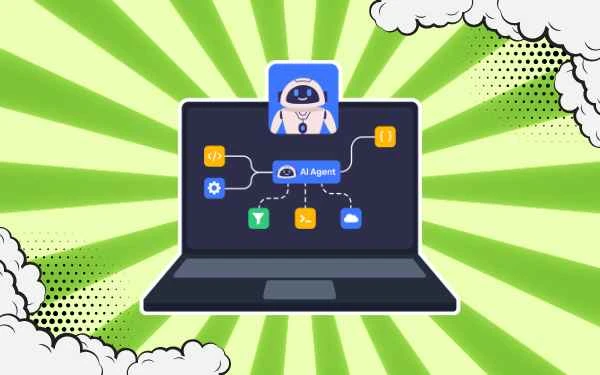
The retailer has developed its own AI agent platform rather than simply deploying a conventional chatbot.
Agentic AI is increasingly being positioned as the next stage of enterprise AI. Traditional generative AI applications primarily respond to prompts. Agents can potentially retrieve information from multiple systems, reason across a workflow and perform actions within defined permissions.
In retail, those capabilities can apply across a wide range of processes.
An AI agent could help employees interpret operational information, support internal decision-making or assist customer-facing systems. It could potentially connect information from inventory, sales, customer-service and other business systems to produce a more complete view of a particular situation.
Alsaif Gallery has not disclosed detailed performance metrics or specific workflows handled by its platform, so the commercial impact of the deployment remains difficult to quantify.
That is an important distinction as enterprise AI moves into production. The number of AI agents deployed is becoming a less useful measure of success than the business outcomes they produce.
Retail is becoming an AI test bed
Retailers are particularly well positioned to experiment with enterprise AI because they generate data across nearly every part of the customer journey.
Product discovery, inventory, merchandising, pricing, customer service and post-purchase support all produce information that can potentially be connected through AI.
Companies such as Amazon, Walmart and Salesforce are investing heavily in AI-powered retail and customer-experience capabilities, while cloud providers including Microsoft Azure, Google Cloud, AWS and Tencent Cloud are competing to supply the infrastructure behind these applications.
The competitive question is shifting from whether retailers should use AI to how deeply AI should be integrated into the operating model.
Alsaif Gallery’s approach puts the retailer’s own AI application at the center, with Tencent Cloud providing the underlying infrastructure and development capabilities.
That model could appeal to enterprises that want greater control over proprietary workflows while avoiding the cost and complexity of building every component of an AI infrastructure stack internally.
Cost and compliance become AI differentiators
The enterprise AI market has often been dominated by discussions around model performance. In production environments, however, other factors can be just as important.
Cost, latency, security, data residency and integration with existing enterprise systems can determine whether an AI deployment is viable.
Tencent Cloud says its offering for Alsaif Gallery includes AI development platforms and APIs alongside computing, storage, networking and database services.
That broader infrastructure approach reflects the economics of enterprise AI.
An AI agent is only as useful as the systems it can securely access. Building those connections requires databases, APIs, identity controls, compute resources and monitoring—not simply access to a large language model.
For Saudi enterprises, local infrastructure could add another layer of differentiation.
Saudi Arabia’s cloud competition intensifies
Tencent Cloud’s relationship with Alsaif Gallery also illustrates the increasingly competitive Saudi cloud market.
Global providers are expanding their presence as demand grows for cloud computing, AI infrastructure and data-intensive applications. Saudi Arabia’s ambition to develop a technology-driven economy makes the Kingdom strategically important for cloud companies looking beyond established markets.
Tencent Cloud says it launched its first cloud region in Saudi Arabia as part of its broader investment in the local digital economy.
For customers, the competition could be beneficial. More regional infrastructure and AI capabilities give enterprises greater choice around cloud architecture, cost and compliance.
But the next phase will be judged on execution.
Alsaif Gallery’s deployment is notable because it moves AI from an abstract transformation initiative into an operating platform connected to a real retail business.
The bigger question is whether enterprise agents can consistently deliver measurable improvements in productivity, decision quality and customer experience.
If they can, Saudi retailers may increasingly treat AI agents as core business infrastructure rather than experimental technology.
Market Landscape
Saudi Arabia is emerging as an important market for enterprise AI, cloud computing and AI infrastructure, driven partly by Vision 2030 and investment in digital services.
The competitive environment includes Tencent Cloud, AWS, Microsoft Azure and Google Cloud, alongside regional infrastructure providers and specialist AI companies.
For enterprise buyers, cloud selection is increasingly influenced by more than compute capacity. Data localization, regulatory compliance, latency, AI model access, cybersecurity, cost and technical support are becoming central procurement criteria.
Retail represents an especially attractive AI market because businesses can connect customer, transaction, inventory and operational data to intelligent applications.
Alsaif Gallery’s deployment also highlights an emerging architecture: enterprises can develop proprietary AI agents while relying on hyperscale cloud providers for the infrastructure, APIs and underlying services needed to operate them.
Top Insights
- Alsaif Gallery deployed a self-developed enterprise AI agent platform on Tencent Cloud, targeting operational efficiency and more personalized omnichannel retail experiences.
- Tencent Cloud’s Saudi infrastructure provides local hosting and lower-latency connectivity while supporting enterprise requirements around data localization and regulatory compliance.
- The deployment reflects a broader shift from experimental generative AI toward agentic systems capable of connecting enterprise data with operational workflows.
- Retailers can use AI across customer service, operations, inventory and decision-making, making omnichannel commerce an important proving ground for enterprise AI.
- Saudi Arabia’s growing cloud market is creating competition among global infrastructure providers around AI capabilities, compliance, cost, resilience and local technical support.
Power Tomorrow’s Intelligence — Build It with TechEdgeAI