







Security operations centers are entering an awkward phase of the AI transition: they need more automation, but sending every alert through an expensive AI model can create a new cost and governance problem. Swimlane is addressing that tension with an expanded Swimlane AI SOC that dynamically routes security investigations between deterministic automation, AI-assisted analysis and fully agentic workflows.
The promise of an AI-powered security operations center is straightforward: let software investigate more alerts while human analysts concentrate on the incidents that require judgment.
The economics are less straightforward.
If every alert is sent through a large language model, enterprises can replace an analyst-capacity problem with a model-cost problem. Swimlane’s latest expansion of Swimlane AI SOC takes a different approach, using an intelligent routing layer to determine how much AI an investigation actually needs.
The new capability evaluates incoming security alerts and sends them down one of three paths: deterministic automation, AI-assisted investigation or a fully agentic investigation.
That architecture reflects a broader change in enterprise cybersecurity. AI SOC agents are moving beyond chatbot-style assistance toward systems that can triage alerts, investigate evidence and recommend—or in some cases execute—responses. Gartner’s recent research describes AI SOC agents as technologies intended to augment common security operations tasks while improving detection, prioritization and response.
Swimlane’s argument is that not every security event needs the same level of reasoning.
A known alert with a well-established response can be handled through deterministic automation. An unfamiliar event may require an AI agent to gather context and reach a conclusion. Between those extremes, an AI-assisted workflow can perform much of the investigation while keeping an analyst in control.
For security teams processing large alert volumes, that distinction could become important.
The conventional security orchestration, automation and response (SOAR) model is particularly effective when an organization can describe a process in advance. Playbooks can enrich an alert, query an endpoint, disable an account or create a ticket. But building and maintaining those workflows requires security engineering expertise, and they can struggle when the investigation does not fit a predefined decision tree.
Agentic AI attacks the other side of the problem. An AI agent can reason through unfamiliar situations, but running an expensive model against every event is difficult to justify at enterprise scale.
Swimlane is effectively proposing a hybrid model: automate what is predictable and reserve AI reasoning for what is not.
The company says its AI SOC can also select models and supports bring-your-own-model (BYOM) strategies, giving customers more control over the relationship between model capability, availability and cost.
The distinction is increasingly relevant as security vendors compete to build AI agents into their platforms. Microsoft has expanded Security Copilot with agents capable of tasks including phishing investigation, alert triage and identity-related operations. Google Cloud is also promoting agentic AI for security operations, positioning agents as tools for triage, investigation and response while retaining human control.
Those larger platforms have an obvious advantage: integration across enormous security ecosystems. Microsoft can connect AI agents with Defender, Entra and its broader security stack, while Google can combine SecOps capabilities with threat intelligence and cloud infrastructure.
Swimlane’s differentiation is workflow flexibility and the combination of automation and agentic investigation inside its Turbine platform.
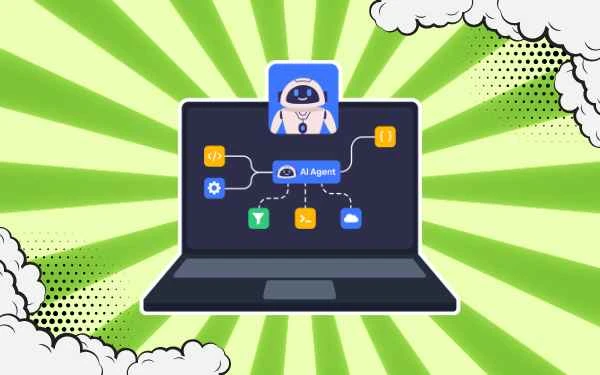
One of the more interesting features is fully agentic investigation. Swimlane says an organization can trigger an investigation through a webhook or API without creating a traditional playbook. Its Investigation & Response Agent can then perform the investigation autonomously.
That is a significant conceptual change from conventional SOAR. Instead of asking an engineer to translate every investigation into explicit workflow logic, the agent can handle cases where the procedure is not fully known in advance.
The platform is also designed to learn from those investigations. When an unknown alert becomes sufficiently understood, teams can codify the resulting knowledge into repeatable automation. In theory, that creates a progression from expensive, reasoning-intensive investigations toward faster deterministic workflows.
Swimlane cites one healthcare customer as an example. The company says the customer was investigating approximately 180 threats per day and achieved 90% cost savings by reserving agentic AI for the most complex 10% of its threat workload. That is a vendor-reported result rather than an independently verified benchmark, but it illustrates the economic model Swimlane is pursuing.
The company is extending the same philosophy beyond investigation.
The latest Turbine release adds an Intelligent Visualization Agent that can generate reports and visualizations from natural-language instructions, a Data Ingestion Agent for connecting new data sources, and an enhanced Playbook Generator Agent that asks clarifying questions while building or modifying workflows.
Hero AI also gains model selection for AWS Bedrock models, allowing customers to match individual agent workloads with different model characteristics.
For enterprise security leaders, those controls may matter as much as the underlying AI capabilities. Google Cloud and the Cloud Security Alliance found that more than 90% of security teams are testing or planning to use AI for areas including threat detection, red teaming and access control. The same research found that organizations with formal AI governance were twice as likely to adopt agentic AI, underscoring the connection between automation and governance.
That is where the AI SOC market is likely to become more complicated.
The goal is no longer simply to find the vendor with the most capable model. Security teams need to determine where autonomous reasoning is appropriate, where deterministic controls are safer, how agents access sensitive systems, and when humans must remain in the loop.
Gartner has also cautioned that AI-driven SOC automation introduces risks including overdependence, skills erosion and budget misalignment. Its research emphasizes process visibility and carefully prioritized automation rather than treating AI as a universal replacement for existing workflows.
Swimlane’s intelligent routing is therefore more than a cost-control feature. It represents a possible operating model for the agentic SOC: AI becomes one component in an investigation pipeline rather than the default mechanism for every event.
The company says the new AI SOC and Turbine capabilities are generally available in its current release, although Hero AI must be enabled for the visualization and model-selection features.
The larger test will come in production. If routing can reliably distinguish routine alerts from investigations that genuinely benefit from reasoning, security teams could gain both scale and cost control. If it cannot, enterprises may find themselves adding another layer of complexity to already fragmented security operations.
The agentic SOC is arriving, but the emerging lesson may be that the smartest security platform is not necessarily the one that uses the most AI. It may be the one that knows when not to use it.
Market Landscape
The AI SOC market is developing around three competing approaches.
Traditional SOAR platforms emphasize deterministic automation. They offer predictable execution and strong governance but often require teams to build and maintain detailed playbooks.
AI-first SOC platforms put LLMs and agents at the center of investigation. They can handle unfamiliar alerts with less predefined logic, but enterprises must manage model costs, accuracy, data access and autonomous-action risk.
Hybrid platforms such as Swimlane’s approach attempt to combine the two. Known problems are automated through established workflows, while AI reasoning is reserved for cases that require contextual analysis.
The competitive field includes Microsoft Security Copilot, Google SecOps, Palo Alto Networks, CrowdStrike, Splunk, SentinelOne and other security platforms developing AI-assisted detection and response capabilities. Microsoft’s Security Copilot ecosystem, for example, already includes agents for incident triage, investigation and threat hunting.
For buyers, the key question is shifting from “Does this platform have an AI agent?” to “How does the platform decide what the agent is allowed to do?”
That makes model selection, human approval, auditability, API controls, data governance and deterministic fallback paths increasingly important procurement criteria.
Top Insights
- Swimlane AI SOC now routes alerts between automation, AI-assisted analysis and autonomous investigation, aiming to reduce unnecessary model usage while expanding SOC capacity.
- The hybrid approach challenges AI-first SOC platforms by treating deterministic automation and agentic reasoning as complementary rather than competing security architectures.
- Fully agentic investigations can start through APIs or webhooks without traditional playbooks, potentially reducing engineering effort for unfamiliar security incidents.
- Turbine’s new agents extend AI beyond investigations into visualization, data ingestion and playbook creation, broadening automation across security operations workflows.
- Enterprise adoption will depend on governance as much as model performance, with security leaders needing controls over AI access, actions, costs and human oversight.
Power Tomorrow’s Intelligence — Build It with TechEdgeAI