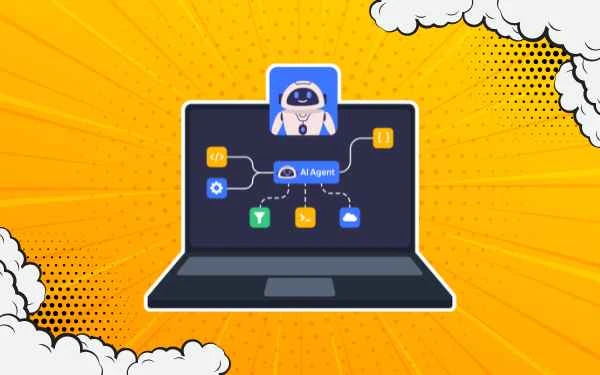








Accounting firms are increasingly experimenting with AI, but the usefulness of those systems depends on how much business context they can access. Qount is addressing that challenge with a new Model Context Protocol (MCP) Connector, allowing accounting firms to connect practice-management data with AI assistants such as ChatGPT, Claude and other MCP-compatible tools.
Qount’s MCP Connector is designed to make information already stored in accounting practice-management systems available to external AI applications. That data can include client activity, workflows, time and billing records, staff performance, documents and communications.
The development reflects a broader shift in enterprise AI from generic question-answering toward systems grounded in company-specific information. A language model can generate an answer, but without access to the underlying business context, it may not have enough information to analyze profitability, capacity, workflow bottlenecks or client behavior.
Through MCP, Qount says accounting firms can provide AI tools with relevant practice data while continuing to use the assistants and workflows they prefer. The approach avoids requiring firms to perform every analysis inside a proprietary AI interface.
For partners and firm leaders, the practical use cases extend beyond traditional reporting. Questions such as which clients may present pricing opportunities, where overdue work is concentrated, how service lines are performing or where operational risks are emerging can require data from multiple areas of the practice.
An AI assistant connected to Qount can bring those data points together and explain the resulting patterns. This changes the workflow from requesting a predefined report to asking a business question and using AI to investigate the information behind it.
Qount also positions MCP as a foundation for recurring analysis. Firms could create regular management briefs, track selected performance measures, review pricing opportunities or generate spreadsheets based on their own operating data. Because the analysis can be built around firm-specific metrics, organizations are not limited to dashboards defined by their software provider.
The MCP Connector is part of Qount’s broader Data Connector strategy. The company says firms can use APIs to connect Qount with other business applications, its Data Lake for large-scale reporting and historical analysis, and MCP for bringing Qount information into AI tools.
That combination points to a larger enterprise AI trend: the value of AI is increasingly tied to the systems it can access and the semantic context surrounding that information. For accounting technology, connecting practice-management data to multiple AI environments could make AI less of a separate application and more of an interface for day-to-day business analysis.
Market Landscape
Enterprise AI is increasingly being connected to operational systems, CRM platforms, finance applications and industry-specific software. Protocols such as MCP are part of this interoperability trend, giving AI applications structured ways to access external context and tools.
For accounting firms, the challenge is particularly data-intensive because business decisions often combine client, labor, billing, collections and workflow information. The emerging technology layer therefore involves not only model capability but also data access, permissions, governance and context.
Top Insights
- Qount’s MCP Connector links accounting practice-management data with external AI assistants, expanding how firms can use operational information in AI workflows.
- MCP can give AI systems access to firm-specific context needed for analyzing clients, profitability, capacity, billing and operational performance.
- The approach shifts accounting analytics from predefined dashboards toward question-driven investigation using data already captured inside practice management.
- Qount combines MCP with APIs and a Data Lake, giving firms different pathways for integrations, historical analysis and AI-driven workflows.
- The announcement highlights a broader enterprise AI trend in which interoperability and data context become critical alongside the underlying language model.
Power Tomorrow’s Intelligence — Build It with TechEdgeAI