


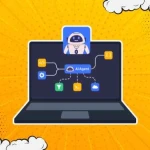







Restaurant operators have access to vast amounts of sales, labor, inventory and food-cost data, but getting useful answers from that information can still require custom reports and manual data preparation. Decision Logic is addressing that gap with Open Semantic Access, a new capability designed to let restaurant companies securely use their operating data with external AI tools such as ChatGPT, Claude and Gemini.
The central idea behind Open Semantic Access is to separate access to restaurant data from the AI interface used to analyze it. Rather than requiring operators to work inside a proprietary chatbot or purchase another business intelligence layer, Decision Logic is making read-only operating data available for use with AI tools customers already have.
A key part of the offering is the semantic context attached to the data. Restaurant metrics can be interpreted differently depending on their definitions and units. Gross versus net sales, for example, can produce very different conclusions if an AI system does not understand the underlying business terminology. Decision Logic says Open Semantic Access provides both the data and the definitions needed to interpret it.
That approach reflects a broader development in enterprise AI: organizations are increasingly looking for ways to connect existing operational systems with general-purpose AI models rather than rebuilding workflows around a single vendor’s AI environment.
For multi-unit restaurant groups, the potential workflow change is significant. A question that falls outside an existing dashboard can currently involve exporting information from multiple locations, cleaning the data and requesting a new report. With semantic access, operators can instead bring a business question directly to an AI tool and work from the underlying operational data.
Possible applications include comparing ideal and actual menu-item performance, examining guest traffic patterns or building margin analyses from restaurant-specific data. The value is less about generating another dashboard than reducing the distance between operational data and business decisions.
Decision Logic estimates that applicable workflows can move from question to answer three to four times faster, although that figure is a company estimate rather than an independently verified benchmark.
The company is also taking a different approach to monetization. Open Semantic Access is included without an additional per-location charge, allowing customers to connect their data to the AI tools and credentials they already use.
That model gives restaurant groups greater flexibility as AI platforms evolve. Instead of committing their data workflows to one embedded assistant, operators can change models or tools while retaining access to the same underlying operational information.
For enterprise AI adoption, the development highlights an increasingly important layer between business systems and AI models: semantic data access. As companies experiment with multiple AI assistants, agents and analytics tools, making operational data understandable, governed and portable may become as important as the model itself.
Market Landscape
Enterprise AI is moving beyond isolated chat interfaces toward connections with operational systems, databases and business applications. This increases the importance of data governance, semantic layers, read-only access, permissions and consistent business definitions.
For restaurant technology providers, the competitive question is also shifting. AI functionality is no longer limited to whether a platform includes its own assistant. Vendors can differentiate through the quality, accessibility and context of the data that external AI systems can use.
Top Insights
- Decision Logic’s Open Semantic Access connects restaurant operating data with external AI tools rather than restricting analysis to a proprietary assistant.
- Semantic context helps AI systems interpret restaurant metrics correctly before generating analysis, reducing ambiguity around definitions, units and business terminology.
- Read-only access is designed to let restaurant organizations retain control over operational data while using multiple AI platforms.
- The capability targets a common reporting bottleneck in large restaurant groups: manually consolidating information before answering questions outside existing dashboards.
- Decision Logic’s no-additional-charge model reflects a broader push toward making enterprise data available to AI without creating another software access layer.
Power Tomorrow’s Intelligence — Build It with TechEdgeAI