







AI systems can generate fluent answers, but grounding those answers in the physical world remains a technical challenge. Mapbox is addressing that gap with a new set of location services for AI applications, autonomous agents and developers, including a new Places API, an upgraded traffic engine and tools that let AI systems interact directly with maps and navigation data.
Mapbox introduced the capabilities at Mapbox BUILD, positioning its platform as a location infrastructure layer for AI systems that need to understand where things are, how places relate to one another and how conditions change in the real world.
At the center is the company’s agentic mapping engine, which continuously processes live inputs and anonymized movement data from more than 45,000 applications. Mapbox says this system helps update roads, traffic conditions and map information in near real time.
The company is also opening a public preview of the Mapbox Places API, providing structured information on more than 250 million points of interest globally. Beyond basic business listings, the API includes geographic context such as building footprints, operating hours, entrances and visitation patterns. That additional context is intended to give AI applications a richer representation of physical places.
For mobility and logistics use cases, Mapbox Traffic 2.0 adds another layer of real-world awareness. The new traffic engine provides ETA information, accounts for congestion around major maneuvers and forecasts traffic up to 2.5 hours ahead. Mapbox says its AI models continuously learn by comparing estimated travel times with actual arrival data.
The company is extending the same approach into AI interfaces. Its enhanced Natural Language Queries Search can interpret conversational requests such as finding nearby businesses with specific characteristics, translating those requests into location results.
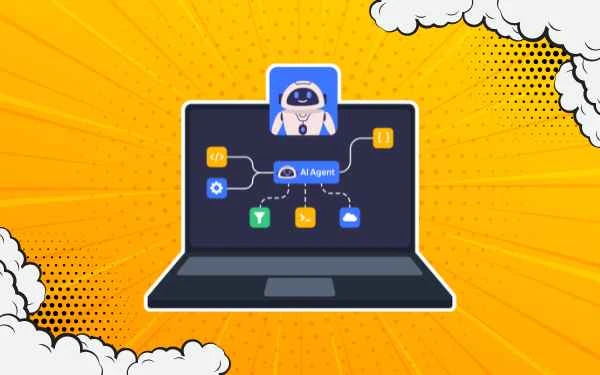
For agents, Mapbox’s Agent Toolkit for Maps and Navigation SDK exposes more than 35 mapping and navigation controls. This allows an agent to perform actions such as adding a stop to a route, retrieving route summaries or changing map context.
Mapbox is also connecting its location capabilities with existing developer and productivity environments. A new Notion integration allows agents to perform spatial workflows such as standardizing addresses and coordinating deliveries, while the Figma MCP connector lets designers generate and modify live map views directly inside Figma.
For developers, Mapbox CLI support and a new Demo Token are designed to make location services easier for both human developers and AI coding agents to access.
The larger shift is toward grounded AI: systems that do more than generate information and can execute actions against continuously changing physical-world data. Mapping, routing and geospatial context become infrastructure for agents operating in mobility, logistics, field services, travel and location-aware applications.
Market Landscape
AI applications are increasingly moving beyond text generation toward multimodal reasoning, tool use and autonomous workflows. That creates demand for external systems that provide reliable real-world context.
Location is particularly important because physical-world actions depend on precise places, routes, proximity and changing conditions. Mapbox’s strategy places geospatial APIs, mapping tools and agent controls closer to the AI application layer, competing with broader mapping and cloud ecosystems while targeting developers building location-aware AI experiences.
Top Insights
- Mapbox is positioning location data as infrastructure for AI agents that need real-world geographic context, routing information and continuously updated physical-world conditions.
- The new Places API extends conventional point-of-interest data with spatial details such as entrances, building footprints and operating information.
- Traffic 2.0 uses an AI learning loop to improve ETA predictions while accounting for congestion and near-term traffic changes.
- Agent Toolkit capabilities allow AI systems to interact with maps and navigation functions rather than simply retrieve static location information.
- MCP integrations with Figma and other tools show how location services are moving directly into AI-assisted development and design workflows.
Power Tomorrow’s Intelligence — Build It with TechEdgeAI