







As generative AI changes how developers create websites and applications, the infrastructure underneath those projects is becoming part of the AI workflow. cPanel, a WebPros company, has announced the general availability of cPanel AI, adding AI-assisted creation, deployment, support and infrastructure management to its hosting control platform.
The launch expands cPanel beyond its traditional role as a hosting administration interface. The company is positioning the platform as a bridge between AI-generated projects and the infrastructure required to run them securely in production.
A central part of the rollout is Meridian, a redesigned user interface that organizes hosting around user goals rather than individual infrastructure tasks. cPanel says onboarding can guide a new account from activation to a live website or application in under 10 minutes.
For creation, Nova provides a conversational interface that helps users build projects through natural-language interaction. The platform also adds AI App Hosting, allowing supported Node.js applications to move into production, including projects developed with external AI coding tools.
That creates an increasingly common enterprise AI workflow: one system can be used to generate or modify an application, while another manages the environment where the software ultimately runs. cPanel is attempting to reduce the gap between those two stages.
AI also becomes part of the post-deployment lifecycle. The platform’s AI Assistant provides contextual guidance, helps users complete routine hosting workflows and assists with diagnosing issues. Instead of treating troubleshooting as a separate support process, cPanel is embedding AI into the operating environment itself.
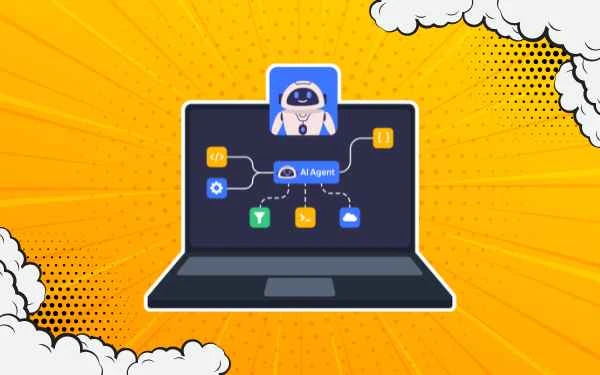
The company’s use of the Model Context Protocol (MCP) extends that strategy further. MCP creates a governed connection between compatible AI systems and hosting infrastructure, allowing AI tools to interact with hosting environments while cPanel retains control over access and agent permissions.
That permission layer could become increasingly important as AI agents move from providing recommendations to taking actions. Hosting environments contain sensitive configuration, applications, databases and customer resources, making the boundary between an AI assistant and infrastructure a significant security consideration.
For hosting providers, cPanel AI also represents a shift in where AI can enter the software lifecycle. Rather than competing directly with AI coding assistants, cPanel is positioning the hosting platform as the controlled destination for applications created through those tools.
The result is a broader vision of AI-native application hosting, where creation, deployment, operations and support increasingly share a connected workflow. As more software is generated with AI, the infrastructure layer will need to become equally accessible to both developers and the agents helping them build.
Market Landscape
AI-assisted software development is expanding beyond code generation into deployment, monitoring, troubleshooting and infrastructure management. That shift is creating demand for platforms that can connect AI tools to production systems without removing human or administrative controls.
Hosting companies are therefore evolving from static management interfaces toward AI-assisted infrastructure platforms. MCP and similar integration approaches could make it easier for AI agents to work with servers, applications and cloud resources while maintaining permission boundaries.
Top Insights
- cPanel AI brings generative AI into website creation, application deployment, hosting support and infrastructure management within a familiar hosting environment.
- Meridian and Nova introduce goal-oriented and conversational workflows designed to reduce friction between account setup and application creation.
- AI App Hosting allows Node.js projects, including applications created with external AI coding tools, to move into production.
- MCP gives compatible AI systems a governed connection to hosting infrastructure while preserving controls around customer access and agent permissions.
- The launch reflects a wider shift toward AI-native infrastructure, where agents participate across software development, deployment and operational workflows.
Power Tomorrow’s Intelligence — Build It with TechEdgeAI