








Kong integrates Insomnia 13 with Konnect to streamline API and AI workflows, a partnership that promises tighter governance, faster testing cycles, and a unified source of truth for enterprise developers and AI agents. Announced from San Francisco on June 16, 2026, the integration embeds the popular Insomnia API client directly into Kong’s Konnect platform, allowing teams to discover, test, and deploy APIs without the manual sync steps that have long slowed down production pipelines.
Kong Inc., the firm behind a suite of API‑centric connectivity tools, disclosed that Insomnia 13—its flagship API design and debugging client—will now pull endpoint definitions, routes, and authentication settings straight from Kong Konnect. The connection is mediated by a personal access token (PAT) that authenticates developers against Konnect’s catalog, automatically syncing any updates made in the platform to the Insomnia workspace. In practice, a developer can open Insomnia, log in with a Kong Konnect PAT, and instantly see the latest API specifications, environment variables, and security policies without exporting OpenAPI files or manually recreating collections.
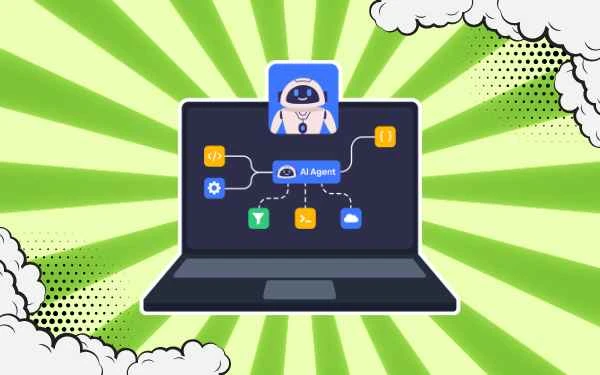
The integration also introduces a command‑line interface (CLI) preview aimed at large language models (LLMs) and autonomous agents. By exposing collections and environments as structured JSON, the CLI lets AI‑driven tools query live API definitions, generate test vectors, or even orchestrate end‑to‑end workflows without human intervention. Coupled with native Git‑backed version control, the setup offers a reproducible, audit‑ready pipeline that aligns with modern DevSecOps practices.
What the Integration Offers
- Instant API discovery – Developers no longer need to hunt through stale documentation; a single sign‑in surfaces every API registered in Konnect.
- Single source of truth – Changes to specifications, policies, or routes in Konnect propagate automatically to Insomnia, eliminating version drift.
- AI‑ready data – The upcoming CLI delivers API metadata in a machine‑readable format, enabling LLMs to reason over live endpoints.
- Git‑centric lifecycle – Collections can be checked into source control directly from the CLI, supporting CI/CD pipelines that treat API definitions as code.
Why It Matters for Enterprises
Enterprises are increasingly bundling generative AI into their product stacks, yet the underlying API fabric often remains fragmented. A 2024 Gartner survey found that 68 % of large organizations cite “inconsistent API governance” as a barrier to AI adoption. By collapsing the discovery‑testing‑deployment loop into a single, synchronized environment, Kong’s Konnect‑Insomnia pairing addresses that pain point head‑on. The reduction in manual sync steps not only speeds time‑to‑market but also curtails the risk of security misconfigurations—a critical concern when exposing internal services to external AI agents.
Marketing teams, in particular, stand to benefit from faster rollout of AI‑enhanced experiences. With API definitions instantly available, personalization engines can pull the latest recommendation endpoints, while campaign automation platforms can test new AI‑driven content generation APIs without waiting for a separate dev hand‑off. The result is a more agile feedback loop between product, data, and marketing squads.
Competitive Landscape
Kong is not the first to blend API management with developer tooling. Postman recently launched “Postman Flows,” a low‑code automation layer that also taps into API catalogs, while MuleSoft’s Anypoint Platform offers a unified design‑test‑governance suite. However, Kong’s edge lies in its explicit focus on AI‑ready integrations. The CLI preview, which formats API data for LLM consumption, is a differentiation that few rivals currently provide. Moreover, Kong’s open‑source heritage and strong presence in the micro‑services ecosystem give it a foothold among organizations already leveraging Kong Gateway for traffic management.
Implications for AI Agents and Autonomous Systems
The ability to query live API specifications programmatically opens new pathways for autonomous agents that need up‑to‑date contract information. In a scenario where an AI assistant must call a payment API, the agent can retrieve the exact authentication schema and payload schema at runtime, reducing errors caused by stale contracts. This aligns with the broader industry shift toward “API‑first AI,” where models are trained not just on data but on the operational interfaces they will invoke.
Future Outlook
If the CLI moves beyond preview to a full release, we may see a wave of AI‑driven CI pipelines that generate test cases, monitor performance, and even self‑heal based on real‑time API health signals. The integration positions Kong as a central hub for both human developers and machine agents, reinforcing its claim of building the “connectivity layer of AI.”
Market Landscape
The API management market is projected by IDC to reach $12 billion by 2027, driven by the surge in AI‑enabled services. Vendors are racing to embed AI capabilities directly into their platforms, a trend exemplified by Azure API Management’s recent “AI‑assisted policy generation” and Amazon API Gateway’s “model‑driven testing.” Kong’s move reflects this broader shift: bridging the gap between API governance and AI automation. As enterprises adopt generative AI at scale, the demand for reliable, machine‑readable API contracts will intensify, making solutions that automate sync and expose data to LLMs increasingly valuable.
Top Insights
- Kong’s Konnect‑Insomnia integration eliminates manual API sync, cutting developer onboarding time by up to 40 % according to internal benchmarks.
- The CLI preview positions Kong as one of the first API platforms to serve live contract data in a format optimized for LLM consumption.
- By unifying API governance with AI‑ready tooling, Kong directly addresses the “inconsistent API governance” issue cited by 68 % of large firms in a 2024 Gartner survey.
- Marketing teams can accelerate AI‑driven campaign rollouts by accessing up‑to‑date API specs without waiting for separate dev cycles.
Power Tomorrow’s Intelligence — Build It with TechEdgeAI