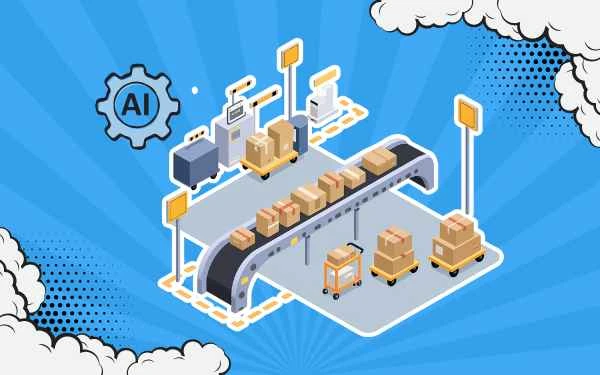









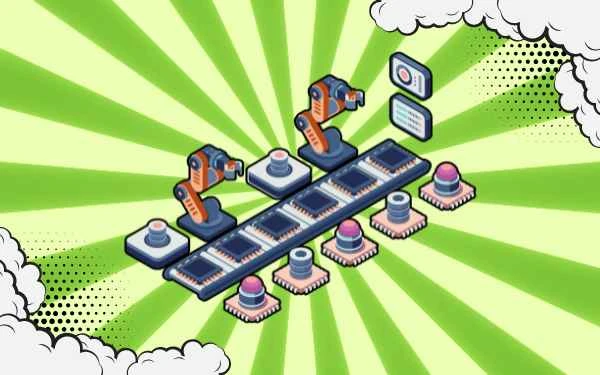
ListEasier Inc. has announced the deployment of physical AI manufacturing robotics designed to automate high-volume e-commerce inventory processing, combining industrial robotics, computer vision, natural language processing and predictive pricing in a single operational pipeline. The system connects robotic hardware with the company’s proprietary AI engine to automate product intake, image capture, condition assessment, catalog creation, pricing and marketplace distribution. The announcement highlights an emerging application of physical AI: extending artificial intelligence beyond digital workflows into warehouse operations, where automated systems can connect physical inventory handling with e-commerce data infrastructure.
ListEasier Deploys Physical AI Robotics for E-Commerce Operations
Artificial intelligence is increasingly moving beyond software applications into physical environments, where robotic systems can interact with objects, capture visual information and execute operational tasks. Warehousing and e-commerce inventory processing are emerging areas for this convergence, particularly as businesses handle large volumes of returned, used and resale products.
ListEasier Inc. has announced the deployment of physical AI manufacturing robotics operations that connect industrial hardware directly with its proprietary AI engine. The system is designed to automate the journey from physical inventory intake to digital product listings, integrating robotic handling, computer vision, product data extraction, predictive pricing and marketplace syndication.
The company says the deployment targets opportunities across warehouse automation, industrial reverse logistics and high-volume e-commerce inventory processing, which it estimates represent a $45 billion total addressable market.
The announcement reflects a broader shift toward AI-powered industrial automation, where physical processing and digital commerce systems are increasingly being integrated into unified workflows.
Connecting Robotics With AI-Powered Product Intelligence
ListEasier’s system combines robotic hardware with computer vision and natural language processing to automate several stages of product intake.
The process begins with automated physical handling. Robotic equipment performs item placement, captures images from multiple angles and measures spatial dimensions. These inputs are then processed by AI models that identify product characteristics, extract attributes, assess visible condition details and generate listing metadata.
This integration is intended to reduce the manual work traditionally required to inspect, photograph, describe and categorize inventory before it can be sold online.
For businesses processing large volumes of secondhand merchandise, returned products or resale inventory, these activities can create significant operational bottlenecks. Manual inspection and catalog creation can slow inventory turnover, particularly when products vary widely in condition, category and physical characteristics.
By combining physical automation with AI-driven catalog generation, ListEasier aims to make inventory processing more continuous and scalable.
The architecture also illustrates an important distinction in physical AI: rather than using robotics exclusively for repetitive material handling, the system connects physical actions with software-based interpretation and commercial decisions.
Predictive Pricing and Marketplace Syndication
The platform extends beyond product recognition into commercial processing.
ListEasier integrates its PriceEasier engine into the workflow to calculate pricing recommendations across global marketplaces. According to the company, the system uses predictive pricing capabilities to identify suitable price points while balancing selling speed and potential margins.
Once product information and pricing are generated, completed catalog profiles can be distributed to connected sales channels and marketplaces.
This creates an integrated pipeline covering several traditionally separate functions:
- Physical product intake and positioning.
- Computer vision-based image capture and product analysis.
- Attribute extraction and listing generation.
- Predictive pricing through PriceEasier.
- Multi-channel product listing and distribution.
For enterprise sellers and reverse logistics operators, connecting these functions could reduce the time between receiving inventory and making products available for sale.
However, the commercial effectiveness of automated pricing will depend on product identification accuracy, condition assessment, marketplace demand, comparable inventory and the quality of available pricing data.
Physical AI Extends Automation Onto the Warehouse Floor
The launch also reflects a broader evolution in physical AI, where machine perception, intelligent software and robotic hardware work together to perform tasks in real-world environments.
Unlike conventional warehouse automation, which often focuses on predefined activities such as transportation, sorting and picking, ListEasier is targeting the connection between physical inventory handling and digital commerce operations.
This is particularly relevant to reverse logistics. Returned, refurbished and secondhand products often require individual inspection, condition assessment, photography, pricing and catalog creation before they can be resold. Automating these steps could help logistics providers and enterprise sellers improve inventory throughput.
The International Federation of Robotics reported that the global operational stock of industrial robots reached approximately five million units in 2025, following 11% growth in annual installations. More than 600,000 new industrial robots were installed worldwide during the year. International Federation of Robotics
That expansion provides context for ListEasier’s strategy, although its specific application combines robotics with AI-based product intelligence and marketplace operations rather than conventional factory automation alone.
The broader competitive environment includes warehouse automation and robotics technologies from companies such as Amazon, Symbotic and GreyOrange. ListEasier’s announced focus is narrower: automating the processing and commercialization of physical inventory.
Scaling E-Commerce Inventory Processing
ListEasier says the deployment builds on two operational milestones: more than $200 million in gross merchandise value (GMV) listed and a sixfold increase in data processing speeds.
These figures provide some indication of the company’s existing listing infrastructure, although GMV listed should not be confused with completed sales or revenue.
The company estimates a $45 billion addressable market across warehouse automation, industrial reverse logistics and high-volume e-commerce inventory processing. This is a company-provided market estimate, and the announcement does not provide a detailed methodology or breakdown of the individual market segments.
The technology’s commercial potential will depend on several factors: robotic handling accuracy, the ability to identify diverse products, condition-assessment reliability, pricing quality and compatibility with marketplace requirements.
There are also practical deployment considerations. Product variability, fragile items, irregular shapes and inconsistent inventory conditions can make automated physical processing more difficult than standardized manufacturing tasks.
ListEasier has not disclosed deployment throughput, operational cost savings, accuracy rates or the number of facilities using the robotics system. Those metrics will be important in evaluating whether the platform can deliver measurable advantages over conventional inventory processing.
Nevertheless, the announcement illustrates a developing enterprise AI opportunity: connecting physical automation with product intelligence, pricing and digital distribution in one operational system.
For e-commerce operators and reverse logistics providers, the longer-term value may lie in reducing the time between receiving an item and making it commercially available across multiple sales channels.
Market Landscape
ListEasier enters the intersection of physical AI, warehouse robotics, reverse logistics and e-commerce automation.
Several industry developments support this opportunity:
- Physical AI: AI systems are increasingly combining machine perception, software intelligence and robotics to automate physical operations.
- Warehouse automation: Businesses are investing in robotics to improve throughput, reduce labor dependency and increase inventory processing efficiency.
- Reverse logistics: Returns, refurbishment and resale operations require faster inspection, categorization and inventory processing.
- Computer vision: AI-powered image recognition and product identification are becoming important for automated catalog creation.
- Intelligent pricing: Predictive analytics can help sellers adjust prices according to product condition, marketplace demand and inventory availability.
The International Federation of Robotics reported approximately five million industrial robots operating globally in 2025, with annual installations increasing 11%. International Federation of Robotics
Grand View Research estimates the global warehouse robotics market reached $7.5 billion in 2025 and could reach $24.2 billion by 2033. Grand View Research
The competitive landscape includes robotics and warehouse automation providers such as Amazon Robotics, Symbotic and GreyOrange. ListEasier’s differentiation is its focus on connecting physical inventory processing directly with AI-generated product catalogs, predictive pricing and marketplace distribution.
Top Insights
- ListEasier combines industrial robotics, computer vision and NLP to automate physical inventory intake and digital product listing.
- The platform connects robotic handling with PriceEasier, enabling predictive pricing and multi-channel marketplace syndication.
- Its physical AI approach targets reverse logistics and resale operations, where manual inspection and catalog creation can delay inventory commercialization.
- ListEasier reports more than $200 million in GMV listed and a sixfold increase in data processing speeds.
- The company’s estimated $45 billion addressable market requires further validation, particularly across its combined warehouse automation and reverse logistics segments.
Power Tomorrow’s Intelligence — Build It with TechEdgeAI