






AI has become increasingly capable at generating documents, presentations, code and analysis, but workplace software remains fragmented around the models. SuperApp, formerly Instabase, is betting that the next step is to bring people, multiple AI models and the resulting work into one collaborative environment. Its new platform combines team communication with models from Anthropic, OpenAI, Google and xAI, allowing conversations to become documents, presentations, spreadsheets and interactive applications.
The workplace AI market has spent the past few years solving an individual problem: give one person access to a powerful model.
The next problem is collaboration.
A typical knowledge-work process now involves several disconnected layers. Employees communicate in Slack or Microsoft Teams, ask questions of ChatGPT or Claude, copy useful material into Google Docs or Microsoft Office, and then send the finished work back to colleagues.
Every transition creates another place where context can disappear.
SuperApp, the new product and corporate identity of the company formerly known as Instabase, is attempting to collapse those steps into a single workspace.
The company describes SuperApp as an AI collaboration super app, available across web, iOS, Android and desktop. Its central idea is straightforward: people and AI models should participate in the same conversation, while the conversation itself becomes the foundation for producing finished work.
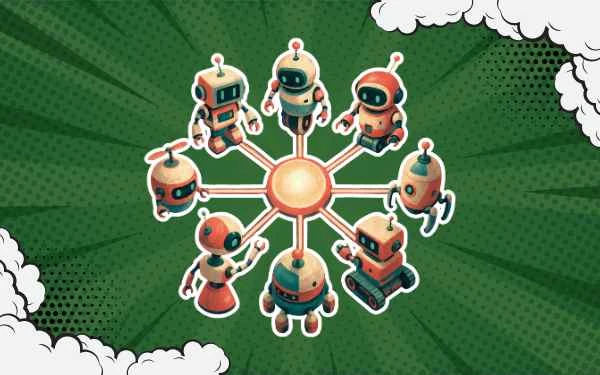
Users can bring models from Anthropic, OpenAI, Google and xAI into a shared thread. The resulting interaction can then be transformed into a document, presentation, spreadsheet or interactive application.
That makes the product less like another chatbot and more like an AI-native collaboration layer.
The distinction is increasingly important as enterprises move from experimenting with generative AI to incorporating it into everyday workflows.
A chatbot is generally optimized around a question-and-answer interaction. Collaborative work is messier. It involves multiple people, revisions, source material, decisions and feedback.
A marketing team, for example, might start a campaign discussion with several colleagues and AI models in the same thread. The team could ask one model to analyze research, another to generate creative concepts and another to critique the resulting strategy. Instead of exporting those outputs into separate applications, the conversation can become the underlying workspace for the final deliverable.
SuperApp’s proposition is that this retained context is itself valuable.
“The conversation becomes the workspace,” is the company’s central product thesis.
That puts SuperApp into an increasingly crowded market.
Microsoft is embedding Copilot throughout Microsoft 365, while Google is integrating Gemini into Workspace. Slack has expanded its own AI capabilities, and enterprise collaboration platforms are increasingly adding agents, search and content-generation features.
Meanwhile, AI-native productivity companies are attempting to rebuild the traditional office suite around agents rather than documents and spreadsheets.
SuperApp’s differentiation is its multi-model approach.
Instead of making one model the center of the product, the platform presents multiple leading models as participants in a shared environment. That could appeal to organizations that do not want their workflows tied to a single AI provider.
It also reflects the reality of enterprise AI adoption.
Different models can perform differently depending on the task. A company may prefer one system for coding, another for reasoning, another for writing and another for multimodal analysis. The challenge is managing that diversity without forcing employees to become experts in a growing collection of AI interfaces.
SuperApp is effectively proposing that the workspace become the abstraction layer.
The strategy has parallels with how cloud software changed enterprise computing. Employees no longer need to understand every infrastructure component behind an application. Similarly, an AI collaboration platform could potentially hide some of the complexity of model selection while preserving access to different systems.
But the harder challenge is collaboration governance.
When multiple AI models participate in a workstream, enterprises need to understand which model generated which output, what sources were used, how sensitive information is handled and who ultimately approved the result.
Context persistence can be an advantage, but it can also increase the amount of information flowing through an AI workspace.
That makes security, permissions, data residency and model governance important considerations for enterprise buyers.
The rebrand from Instabase also signals a significant strategic shift.
Instabase built its reputation around enterprise AI and intelligent document processing. The move to SuperApp suggests the company sees a broader opportunity in the way people interact with AI rather than limiting itself to a particular enterprise automation category.
The timing is notable.
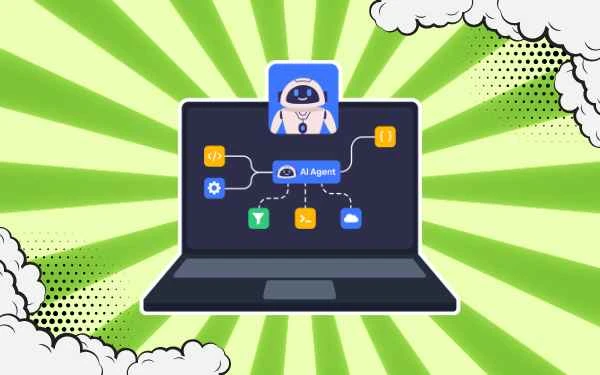
AI agents are increasingly being positioned as digital coworkers capable of executing multi-step tasks. But agents still need a place where humans can review their work, provide instructions, collaborate and make decisions.
A collaborative AI workspace could become that control surface.
The strongest version of SuperApp’s vision is therefore not simply “Slack plus ChatGPT.” It is an attempt to make the boundary between communication, reasoning and production disappear.
That could change how teams organize knowledge work.
Instead of a meeting producing notes, notes becoming a document, a document becoming a presentation and a presentation being reviewed in another application, the entire chain could theoretically remain connected.
For enterprises, the appeal is less about reducing the number of applications for its own sake and more about reducing context switching.
The question is whether workers will trust a single environment enough to make it the center of their workflows.
SuperApp will face formidable competition from platforms with enormous installed bases, including Microsoft, Google and Salesforce, as well as specialist AI productivity products.
Its multi-model architecture is a potential differentiator, but interoperability alone is unlikely to be enough. The product will ultimately have to demonstrate that shared AI conversations produce better outcomes than the increasingly capable AI features already embedded in existing productivity suites.
Still, the launch points to an important evolution in enterprise AI.
The first generation of workplace AI largely gave individuals smarter tools.
The next generation may give teams a shared intelligence layer.
If SuperApp’s approach gains traction, the unit of AI-assisted work may no longer be the prompt or even the application. It could be the collaborative thread from which the final work emerges.
Market Landscape
The enterprise AI collaboration market is converging around several categories:
- AI productivity suites: Microsoft Copilot, Google Gemini and other AI features embedded in established workplace software.
- AI collaboration platforms: Products designed around shared conversations between people and AI.
- Multi-model AI platforms: Systems allowing users to access multiple foundation models through one interface.
- AI agents: Systems capable of executing multi-step tasks rather than simply generating responses.
- AI-native document creation: Tools that turn conversations and instructions into presentations, documents, spreadsheets and applications.
- Enterprise AI orchestration: Infrastructure for model selection, governance, permissions and workflow management.
SuperApp’s core bet is that the collaborative workspace becomes the orchestration layer connecting these categories.
For enterprise technology teams, the comparison with Microsoft and Google will be especially important. Those vendors already control the productivity environments where employees work. SuperApp therefore needs to prove that model neutrality and conversation-centric workflows deliver enough value to justify adding another platform.
Top Insights
- SuperApp combines team communication with Anthropic, OpenAI, Google and xAI models, creating a shared workspace where conversations can become finished business deliverables.
- The former Instabase is shifting toward collaborative AI, addressing fragmented workflows where employees communicate, prompt models and produce work across separate applications.
- Its multi-model strategy could appeal to enterprises seeking flexibility rather than dependence on a single AI provider or foundation model.
- The platform competes indirectly with Microsoft Copilot, Google Gemini and Slack by attempting to make AI collaboration itself the primary workplace environment.
- Enterprise adoption will depend on governance, security, model transparency and whether persistent shared context delivers measurable productivity gains.
Power Tomorrow’s Intelligence — Build It with TechEdgeAI