

AI coding tools are moving beyond autocomplete and one-off code generation. Huawei Cloud is now pushing further into agentic software engineering with the commercial launch of CodeArts Agent across Asia Pacific, positioning the platform as an AI development environment capable of coordinating multiple agents across requirements, coding, testing and code review.
Huawei Cloud Brings CodeArts Agent to Commercial AI Development in Asia Pacific
Huawei Cloud has moved its CodeArts Agent AI coding platform from public beta to general availability for international customers in Asia Pacific, marking a broader push to bring agentic AI into enterprise software development.
The commercial release includes the Basic and Professional editions of CodeArts Agent. The platform combines large code models, integrated development environment (IDE) capabilities and autonomous development workflows to handle tasks ranging from code generation and software engineering questions to automated unit-test creation.
The move comes as the AI coding market shifts from tools that primarily assist individual developers toward systems that can reason over projects, execute longer-running tasks and coordinate multiple AI agents.
That distinction is becoming increasingly important. Gartner predicts that 90% of enterprise software engineers will use AI code assistants by 2028, compared with less than 14% in early 2024. The analyst firm also expects developer roles to increasingly shift from implementation toward orchestration, problem-solving and system design.
Huawei Cloud is targeting that next stage with CodeArts Agent.
From coding assistant to AI engineering team
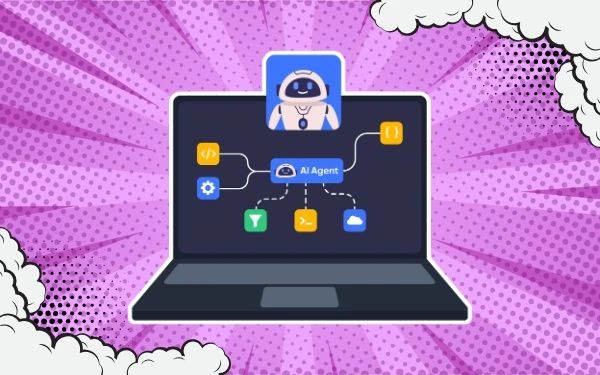
One of the platform’s more notable features is Agent Team, which Huawei says includes 16 specialized AI agents covering different stages of the software development lifecycle.
The agents are designed to divide responsibilities across requirements analysis, architecture, coding, testing, issue resolution and code review. Rather than simply suggesting the next line of code, the system can plan and execute more complex, long-running development tasks.
This places CodeArts Agent in the increasingly crowded category of agentic coding platforms, alongside products and ecosystems from companies such as GitHub, Microsoft, Google Cloud, Amazon and specialized AI coding vendors including Cursor, Windsurf and Qodo.
The competitive difference is therefore less about whether a platform can generate code. Most modern AI coding products can do that. The more important questions are how well an agent understands an existing codebase, how reliably it executes multi-step workflows, what engineering controls surround it, and how easily enterprises can integrate it into established development environments.
Gartner’s 2025 research on AI code assistants reflects this broadening market, evaluating capabilities such as code understanding, testing and debugging, application delivery, context enrichment, code review, modernization and requirements management.
Context is becoming a key battleground
For enterprise developers, generating a new function is usually the easy part. The harder problem is modifying a large, interconnected software system without breaking existing functionality.
Huawei says CodeArts Agent can retrieve and understand code across tens of millions of lines, giving its agents broader project context when working on incremental development.
That capability could matter for enterprises maintaining large legacy applications, internal platforms and complex software estates. An AI system that only sees the immediate file or prompt can produce technically valid code that nevertheless conflicts with architecture, dependencies or organizational conventions.
CodeArts Agent is also built around what Huawei describes as specification-driven development and more than 30 reusable engineering skills derived from the company’s software development practices. The objective is to encode engineering rules and workflows into reusable AI-agent capabilities rather than relying entirely on developers to provide context through prompts.
That approach mirrors a wider industry shift toward context-aware and enterprise-customized AI development tools.
Multiple interfaces target enterprise workflows
Huawei is also attempting to avoid tying CodeArts Agent to a single development environment. The platform can be accessed through AI-native IDEs, plugins and command-line or text-based interfaces.
For enterprise engineering teams, that flexibility can be as important as model performance. Development organizations often operate across multiple languages, IDEs, repositories and deployment environments, making wholesale changes to developer tooling difficult.
The company also highlights enterprise management and security capabilities designed to support organizational deployment.
Those controls will become increasingly important as AI agents gain permission to read repositories, modify code, run tests and potentially interact with production-adjacent systems. Gartner has warned that AI agents can introduce security and vulnerability risks alongside their productivity benefits, making governance and human oversight critical to enterprise adoption.
The commercial opportunity extends beyond code generation
The broader market trend suggests that Huawei’s launch is part of a larger transition in software engineering.
McKinsey has described a progression from AI assistance at the individual-task level toward systems that automate entire workflow stages and, eventually, coordinate AI agents capable of delivering applications end to end. Its research into nearly 300 public companies found that leading organizations were seeing 16% to 30% improvements in productivity, time to market and customer experience, alongside 31% to 45% gains in software quality, when AI was deeply embedded across the development lifecycle.
The implication for enterprise technology leaders is that buying an AI coding assistant is only the beginning. The larger opportunity lies in redesigning development processes around AI while retaining human review for architecture, security, quality and business-critical decisions.
Huawei Cloud’s commercial availability in Asia Pacific therefore represents more than another AI coding launch. It gives enterprises another option as the market moves toward AI-native software engineering, where developers increasingly supervise networks of specialized agents rather than using AI simply as a faster autocomplete engine.
For Huawei Cloud, the next test will be whether CodeArts Agent can translate its multi-agent architecture and engineering-specific capabilities into measurable improvements for production software teams—and compete effectively in a market increasingly dominated by AI platforms from Microsoft, Google, Amazon and specialized coding-tool providers.
Market Landscape
The AI coding market is entering a more competitive phase as vendors expand from code completion into agentic software engineering. Gartner’s 2026 research says the enterprise AI coding-agent market is undergoing competitive realignment, driven by frontier model providers moving up the software stack and AI agents expanding across the software development lifecycle. Gartner predicts that by 2027, more than 65% of engineering teams using agentic coding will treat the IDE as optional as automated platforms take on more control, governance and validation.
Huawei Cloud therefore enters a market that includes Microsoft GitHub Copilot, Amazon’s developer AI ecosystem, Google Cloud’s AI development tooling and specialist platforms such as Cursor, Windsurf and Qodo. The differentiation increasingly rests on codebase context, agent orchestration, enterprise governance, model choice, security and integration, rather than basic code generation.
IDC has also identified multi-agent orchestration as one of the major shifts reshaping developer and DevOps practices, indicating that organizations are moving from simply consuming AI agents toward managing and governing them across enterprise environments.
For CIOs and engineering leaders, the practical question is shifting from whether to use AI coding tools to where autonomous development should be permitted, how it should be governed, and which parts of the SDLC can safely be automated.
Top Insights
- Huawei Cloud CodeArts Agent is now commercially available in Asia Pacific, giving enterprise developers access to AI agents spanning requirements, coding, testing and review workflows.
- Agent Team coordinates 16 specialized agents across the SDLC, moving CodeArts Agent beyond conventional code completion toward longer-running autonomous software engineering tasks.
- Large-scale code understanding is central to the platform, allowing agents to work with existing software systems and potentially improving incremental development across complex enterprise codebases.
- Enterprise governance becomes more important as AI gains autonomy, requiring engineering teams to balance automation with security, validation, architecture controls and human oversight.
- The launch reflects a broader shift toward agentic development, as Microsoft, Google, Amazon and specialist AI coding vendors compete to automate larger portions of software engineering.
Power Tomorrow’s Intelligence — Build It with TechEdgeAI