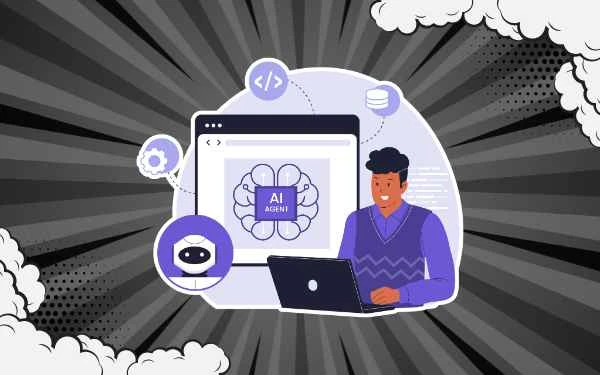






AI coding agents are changing the bottleneck in software development. As autonomous systems generate code at volumes human teams cannot easily review, Harness is expanding its autonomous software delivery platform with an agent-ready code repository and AI Code Review designed to manage, assess and govern machine-generated changes.
The software development bottleneck is shifting.
For years, engineering teams focused on helping developers write code faster. Generative AI has largely changed that equation. Coding agents can now generate, modify and test software at a pace that can overwhelm the systems and human processes responsible for reviewing and shipping those changes.
That creates a new problem: what happens when the amount of code being produced grows faster than teams can safely review it?
Harness, which develops an autonomous software delivery platform, is betting that source-code management and code review need to be redesigned around AI agents rather than simply augmented with AI features.
The company has launched Agent-Ready Harness Code Repository and AI Code Review, positioning the two capabilities as connected layers in its broader autonomous software development lifecycle (SDLC).
The premise is straightforward. If AI agents become active participants in software engineering, they need controlled access to repositories, clear permissions, scalable source management and automated mechanisms for determining which changes are safe to merge.
Source control was designed around humans
Traditional source-code management has largely been built around a human-centric workflow.
A developer writes code, creates a branch, submits a pull request, and waits for colleagues to review the changes. The process works reasonably well when developers produce a manageable number of pull requests.
AI coding agents alter the economics.
A single developer can now supervise multiple automated coding tasks, potentially generating many more commits and pull requests. The challenge becomes less about producing code and more about filtering, validating and governing the resulting changes.
Harness says its new repository has been tested to handle thousands of simultaneous pull requests and commits, including repositories with tens of thousands of branches.
The company is also introducing agent-specific access controls. Agents inherit permissions from the humans who initiate them, while organizations can further restrict what an agent can modify, merge or deploy.
Those controls are implemented through role-based access control (RBAC) and Open Policy Agent (OPA) policies.
That distinction is increasingly important as AI agents move from generating suggestions to taking actions.
An agent that can autonomously open a pull request presents limited risk. An agent authorized to merge code or trigger a production deployment presents a very different governance challenge.
AI Code Review shifts attention toward risk
Repository scale is only half of the problem.
If agents dramatically increase pull-request volume, asking engineers to manually inspect every change simply recreates the bottleneck AI was supposed to remove.
Harness’s AI Code Review is designed to automate some of that first-pass analysis.
Instead of treating every changed file equally, the system groups changes by perceived risk. The objective is to make potentially consequential modifications easier for reviewers to identify amid routine changes such as file renames, dependency updates and formatting modifications.
Teams can also establish mandatory AI checks. Required checks can block a merge if a change fails a defined condition.
That creates an important distinction between AI-assisted review and AI-enforced governance.
A chatbot that comments on a pull request can help a developer identify potential problems. A review system connected to merge policies can become part of the control mechanism determining whether software is actually allowed to ship.
Harness is positioning its system toward the latter.
Agents need machine-readable development workflows
Another notable element is how Harness is exposing its repository and review capabilities to both people and AI systems.
The company’s MCP and CLI interfaces allow developers and agents to perform operations without relying exclusively on the browser interface.
That includes locating pull requests, reviewing open changes, creating and responding to comment threads, and managing other parts of the pull-request lifecycle.
This is significant because AI agents need deterministic interfaces if they are going to participate reliably in software delivery.
The broader industry is moving in the same direction. GitHub Copilot, GitLab, Amazon Web Services, Microsoft Azure and Google Cloud are all expanding AI-assisted development capabilities, while agent frameworks increasingly allow models to interact directly with development tools.
The resulting software stack is becoming less like an IDE with an AI assistant and more like an automated system capable of moving from an issue to code, testing and deployment.
Harness wants the repository to become part of the autonomous SDLC
Harness’s strategy goes beyond source control.
The company already provides capabilities covering continuous integration, deployment, security, testing and software delivery. The new repository and review layers therefore sit inside a broader pipeline.
Harness says its Software Delivery Agent can operate across that workflow, while the company’s SDLC Knowledge Graph provides contextual information about an organization’s software, policies and historical production failures.
That context could become increasingly important for AI code review.
A model evaluating a code change in isolation has limited knowledge of the application. A system that understands how the organization deploys software, what policies it enforces and which types of failures have previously occurred has a much richer basis for evaluating risk.
This is one of the emerging differentiators in enterprise AI development tools: context.
The competitive landscape is getting crowded
Harness is entering a market where established developer platforms already have enormous installed bases.
GitHub, owned by Microsoft, remains one of the dominant platforms for source control and collaborative development, while GitLab and Atlassian’s Bitbucket serve large enterprise engineering organizations.
The challenge for Harness is therefore not simply to offer another repository.
Its argument is that an agent-heavy development environment requires a different architecture—one designed around high-volume machine-generated changes, automated governance and an end-to-end delivery pipeline.
That positioning could appeal particularly to enterprises already using Harness for CI/CD, security and deployment.
Migration remains another hurdle. Engineering organizations are reluctant to move repositories because source control sits at the center of development workflows. Harness says its migration tooling can transfer repositories from platforms including GitHub, GitLab, Bitbucket and Azure DevOps, along with pull requests, labels, webhooks and branch rules.
The availability of a free starting tier with 50 GB of storage is also intended to lower the barrier to experimentation.
Enterprise adoption will depend on governance
The larger question is whether enterprises are ready to let AI agents participate in software delivery without turning automation into a new source of operational risk.
The answer will likely depend on governance.
AI-generated code can accelerate development, but organizations still need confidence that automated changes comply with security requirements, coding standards and deployment policies.
Harness’s approach attempts to make those controls part of the same workflow rather than adding governance after the fact.
The company says its own engineering teams have used the technology to save more than 10,000 hours of manual review time each month. That figure is a Harness-reported result and should not be interpreted as an independently verified benchmark.
The underlying trend, however, is broader than one vendor.
As coding agents become more capable, the industry is moving toward a software development model in which humans increasingly define goals and constraints while AI systems execute portions of the work.
That makes the repository, code review and deployment pipeline more important—not less.
Harness’s latest products reflect that transition. The company is effectively arguing that autonomous coding requires autonomous quality controls, with source management, review, security and deployment operating as one system.
If that model takes hold, the next generation of developer platforms may compete less on who can generate the most code and more on who can help enterprises safely decide which machine-generated code should actually reach production.
Market Landscape
The rise of AI coding agents is forcing a rethink of the traditional software development toolchain.
Platforms such as GitHub, GitLab, Bitbucket and Harness increasingly compete across source control, CI/CD, security, testing and AI-assisted development. At the same time, model providers including OpenAI, Anthropic, Google and Microsoft are turning coding models into increasingly autonomous engineering agents.
This creates a new market requirement: agent governance.
Enterprises need to know what an AI agent can access, which changes it can make, who authorized those actions and what checks must pass before code reaches production.
The repository itself is therefore becoming part of the AI control plane.
Harness’s strategy is differentiated by combining source management and AI review with an existing software delivery platform. Whether that integrated approach can overcome the network effects and developer familiarity of GitHub and other established platforms will be one of the key competitive questions.
Top Insights
- Harness launched an agent-ready code repository and AI Code Review, targeting enterprises where AI coding agents are rapidly increasing software development volume.
- The repository introduces agent-specific governance, using RBAC and OPA policies to restrict what autonomous systems can modify, merge or deploy.
- AI Code Review prioritizes changes by risk, helping engineers focus attention on consequential modifications instead of manually examining every machine-generated change.
- MCP and CLI access enables agent-driven workflows, allowing AI systems to interact with repositories and pull requests without relying entirely on graphical interfaces.
- Harness is integrating source control into its autonomous SDLC, connecting coding, review, testing, security and deployment through a common policy and knowledge layer.
Power Tomorrow’s Intelligence — Build It with TechEdgeAI