







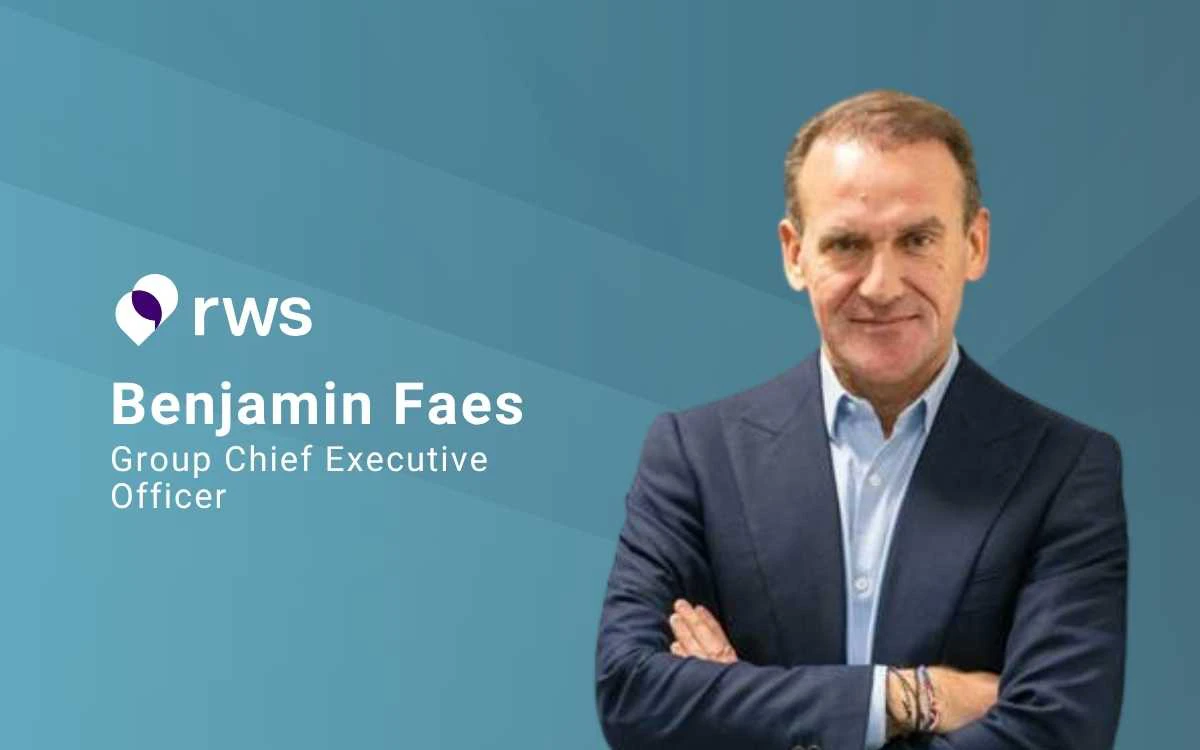
There’s a clear shift from general-purpose AI to more specialized enterprise models. What’s driving this transition, particularly in the context of language and translation?
We’re seeing a natural maturity curve in AI. General-purpose models have proven what’s possible, but they weren’t designed for high-stakes enterprise use.
In language and translation, the gap becomes obvious very quickly. Enterprises aren’t looking for something that works most of the time – they need consistency, control and accountability across thousands of documents, markets and use cases. A small inconsistency in tone, terminology or meaning can create real risk, whether that’s regulatory exposure or brand damage.
That’s what’s driving the shift. Specialized models are built with those realities in mind. They’re designed to handle domain-specific language, maintain consistency across content at scale and operate within the governance frameworks enterprises require.
It’s less about raw model capability, and more about making AI secure, accurate and scalable for enterprise use.
With the announcement of your latest AI translation solution, what differentiates it from existing models in terms of accuracy, scalability, and trust?
The biggest difference is intent. Language Weaver Pro wasn’t built as a general model and then adapted for enterprise – it was designed for enterprise from the start.
That shows up in a few key areas. First, accuracy isn’t just about sentence-level fluency. We’ve designed the system to work at paragraph and document level, where meaning, tone and consistency actually live. That required architectural decisions like a larger context window, combined with a Mixture of Experts approach to maintain performance at scale.
Second, scalability comes from efficiency without compromise. Enterprises need to process large volumes of content quickly, but without sacrificing quality. The system is built to do both.
And third, trust is built into the platform. That includes terminology control, deployment flexibility – whether on-prem, private cloud or hybrid – and governance features like auditability and human-in-the-loop workflows.
In high-stakes global deployments, trust is critical. What does it take to build translation models that enterprises can truly rely on?
Trust comes from control, transparency and predictability.
At a foundational level, it starts with the data. If your model is trained on noisy, unverified sources, you’ll get outputs that are fluent but unreliable. We’ve built our models on decades of curated, domain-specific linguistic data, so they learn what “right” looks like in real business contexts.
From there, it’s about giving enterprises control over outcomes. That includes terminology management, so approved language is used consistently, and deployment options that keep sensitive data within secure environments.
And finally, it’s about closing the loop. Human expertise remains essential. By integrating expert linguists into the process, you create continuous feedback and validation – which is critical for catching nuance and ensuring quality over time.
Trust isn’t a feature. It’s something you design for across the entire system.
How do domain-specific datasets and linguistic expertise influence the performance of AI translation systems compared to generic large language models?
They make a fundamental difference.
Generic models are trained to be broadly useful, which means they’re often optimized for fluency rather than precision. That works for low-stakes content, but it breaks down in specialized domains.
When you train on domain-specific datasets – legal, medical, technical – the model learns the correct terminology, structures and conventions of that field. It understands not just what words mean, but how they should be used in context.
Linguistic expertise adds another layer. Language isn’t just technical it’s cultural and
contextual. Human experts ensure that tone, intent and nuance are preserved, especially across markets.
The result is a system that’s not just fluent, but accurate, consistent and fit for purpose.
What are the biggest risks enterprises face when relying on general-purpose AI for multilingual communication?
General-purpose models can produce output that looks correct but contains subtle errors – the kind that are easy to miss but costly in practice. In regulated industries, that can mean compliance issues. In customer-facing content, it can damage trust or misrepresent a brand.
There’s also a lack of control. Without terminology enforcement or governance, you can’t guarantee consistency across content. And without secure deployment options, you risk exposing sensitive data.
Ultimately, “good enough” becomes a liability. For enterprise use cases, accuracy, consistency and security aren’t optional – they’re essential.
How is AI reshaping the way global organizations approach localization, compliance, and customer experience across markets?
AI is moving localization from a reactive process to a strategic capability.
Traditionally, translation has been treated as a downstream task – something you do after content is created. AI is changing that by enabling organizations to think about multilingual content from the start.
With more context-aware and fluent systems, combined with human expertise, teams can focus less on basic translation and more on relevance, impact and customer experience.
At the same time, governance becomes more important. As content scales, so does risk. AI allows organizations to embed compliance, terminology and quality controls directly into their workflows, rather than relying on manual checks.
The result is faster, more consistent and more culturally relevant communication across markets.
From your perspective, where do current AI translation solutions fall short, and how is RWS addressing these gaps?
Most solutions still struggle with three things: context, consistency and control.
They’re often optimized for sentence-level translation, which means they lose meaning across longer content. They lack robust terminology management, so consistency breaks down. And they don’t provide the governance or deployment flexibility enterprises need.
At RWS, we’ve addressed these gaps directly.
We’ve designed for document-level understanding, built in terminology and workflow controls, and ensured the platform can operate within enterprise security environments. Just as importantly, we combine AI with human expertise, so quality doesn’t rely on the model alone.
It’s about moving from isolated outputs to a complete, reliable system.
Looking ahead, how do you see enterprise AI evolving in the next few years, particularly in terms of specialized models versus general AI systems?
We’ll continue to see general models improve, but the real value will come from specialization.
The next phase of AI isn’t just about bigger models – it’s about applying them in context. That means combining core AI capabilities with domain expertise, proprietary data and human oversight.
In enterprise environments, that combination is what drives performance. It’s what allows AI to move from experimentation to production.
So the future isn’t general versus specialized. It’s ecosystems where specialized solutions, powered by strong AI foundations, deliver outcomes that enterprises can trust.
And that’s where we see the most meaningful progress happening.