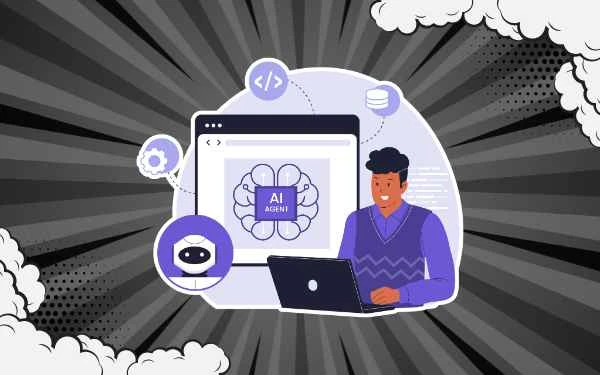






Audi is expanding its use of artificial intelligence in enterprise software engineering through a new collaboration with Comsysto Reply, introducing an AI-powered multi-agent development system for its Used Car Platform. The initiative embeds specialized AI agents into the software development lifecycle, helping engineering teams automate repetitive tasks while maintaining human oversight over code quality, governance, and feature delivery.
Artificial intelligence is increasingly reshaping enterprise software development, with organizations moving beyond standalone coding assistants toward AI agent-based development environments capable of orchestrating multiple stages of the software lifecycle. Reflecting this shift, Comsysto Reply, a Reply Group company specializing in agile software development and cloud-native technologies, has partnered with Audi to deploy a tailored multi-agent AI system supporting the ongoing evolution of the automaker’s Used Car Platform.
The platform has become one of Audi’s most important digital assets, serving as the company’s primary B2B marketplace for used vehicle trading. According to Audi, the platform has supported nearly all of its B2B used car transactions since 2025, making continuous software innovation essential for maintaining operational performance and dealer services.
Rather than replacing developers, the new AI implementation is designed to streamline software engineering workflows by automating repetitive activities across the Software Development Lifecycle (SDLC). The system enables development teams to accelerate feature delivery while preserving governance and code quality through a structured human review process.
At the center of the deployment is a multi-agent architecture built on GitHub Copilot, Microsoft’s AI-powered developer platform. Instead of relying on a single AI assistant, the solution assigns specialized responsibilities to three independent AI agents covering requirements analysis, code generation, and quality assurance, including automated documentation creation.
The approach reflects a broader evolution in enterprise AI, where organizations are increasingly deploying AI agents rather than general-purpose chatbots. AI agents are designed to execute specific business tasks autonomously, collaborate with other agents, and interact with enterprise systems while operating within defined governance frameworks.
For Audi’s engineering teams, the multi-agent system transforms software requirements into structured development artifacts that developers can validate, refine, and integrate into production environments more efficiently.
A distinguishing feature of the implementation is its enterprise knowledge base. Instead of generating code from generalized programming patterns, the AI agents reference the platform’s existing architecture, API specifications, engineering standards, and security policies. This contextual awareness enables recommendations that align with Audi’s technical environment while supporting consistency across development teams.
This capability addresses one of the major challenges enterprises face when adopting generative AI for software engineering. Generic AI coding assistants often lack awareness of proprietary architectures, compliance requirements, and internal engineering standards. By grounding AI outputs in organization-specific knowledge, enterprises can improve both development accuracy and governance.
The project also embraces a human-in-the-loop development model, an approach that is becoming increasingly common across enterprise AI deployments. While AI agents automate documentation, code suggestions, and routine engineering tasks, developers retain responsibility for reviewing outputs, validating quality, and approving production releases.
This balance between automation and human oversight helps organizations improve productivity without relinquishing accountability for software quality or security. It also enables engineering teams to dedicate more time to higher-value initiatives, including new product capabilities and business innovation.
According to Audi, the efficiency gains created by the multi-agent system allow developers to focus more heavily on strategic platform enhancements such as AI-powered pricing capabilities that can respond dynamically to changing conditions in the used vehicle market.
“The introduction of AI agents has fundamentally changed both the speed and the way our team works,” said Stefan Winkler, Development Lead at Audi. “Our developers can now focus on the tasks that create the greatest value: developing new features that deliver real benefits for our dealers.”
The deployment reflects a wider transformation occurring across enterprise software engineering. Technology providers including Microsoft, GitHub, Google, Amazon Web Services (AWS), and OpenAI are investing heavily in AI-powered developer tools, autonomous coding agents, and software engineering assistants capable of supporting increasingly complex development workflows.
Rather than viewing AI as a replacement for developers, many enterprises are adopting agent-based architectures that augment engineering teams by reducing repetitive work while improving development consistency, documentation quality, and delivery speed.
Cloud-native architecture also remains central to Audi’s modernization strategy. Since replacing its legacy platform with an AWS-based cloud infrastructure in collaboration with Comsysto Reply, the company has continued evolving the marketplace into a scalable enterprise platform capable of supporting critical commercial operations across its dealer network.
The latest AI deployment extends that modernization effort by embedding intelligence directly into development operations rather than limiting AI to customer-facing applications.
Industry analysts continue to highlight software engineering as one of generative AI’s most promising enterprise use cases. McKinsey & Company estimates that software engineering could capture significant productivity gains from generative AI through faster coding, documentation, testing, and maintenance. Meanwhile, Gartner predicts that AI-assisted software development will become a mainstream capability across enterprise engineering organizations as organizations seek faster application delivery and improved developer productivity.
For enterprise technology leaders, Audi’s implementation illustrates how AI agents are evolving from experimental productivity tools into governed execution layers embedded within software engineering processes. As organizations continue modernizing business-critical platforms, multi-agent systems are likely to play an increasingly important role in accelerating innovation while maintaining enterprise-grade governance, quality, and security.
Market Landscape
Enterprise software development is rapidly shifting toward AI-assisted engineering, with organizations integrating coding assistants, autonomous AI agents, cloud-native development platforms, and DevOps automation into software delivery pipelines. Companies including Microsoft, GitHub, Google, AWS, and OpenAI are expanding enterprise AI capabilities, while industries such as automotive, finance, healthcare, and manufacturing increasingly deploy AI agents to accelerate software delivery without compromising governance or code quality.
Top Insights
- Audi and Comsysto Reply have deployed a multi-agent AI system that automates requirements analysis, code generation, testing, and documentation across the software development lifecycle.
- The AI agents leverage an enterprise knowledge base containing platform architecture, API specifications, and security policies to generate context-aware outputs aligned with Audi’s engineering standards.
- A human-in-the-loop development model enables AI to handle repetitive engineering tasks while developers retain responsibility for validation, governance, and production approvals.
- The initiative supports faster delivery of new capabilities for Audi’s business-critical Used Car Platform, including intelligent pricing features for the B2B automotive marketplace.
- The project highlights the growing role of AI agents as enterprise software engineering accelerators rather than replacements for human developers.
Power Tomorrow’s Intelligence — Build It with TechEdgeAI.