







Here’s a scenario: A company’s security team receives an alert that there’s suspicious activity going on across their network. They determine whether it is a real threat, know how far it has spread, and respond before the situation impacts business operations.
The traditional security approach is no longer to keep pace with sophisticated cyberattacks. Attackers rely on automated tools and AI for finding and exploiting vulnerabilities, whereas the organizations are experiencing an increasing number of security alerts that make it harder for them to differentiate between threats and regular operations.
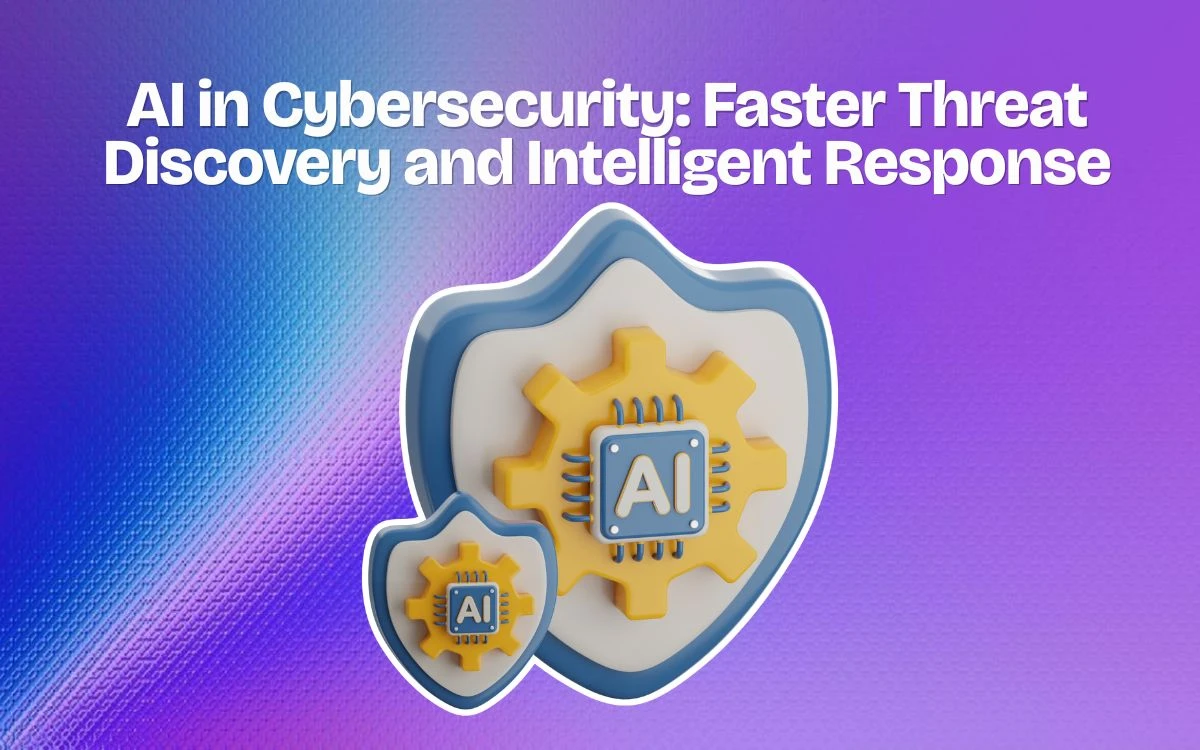
This article discusses the role of AI in cybersecurity.
ML for Anomaly Detection: Hunting the Signature-less Threat
ML models learn what activity across an organization’s networks and applications looks like, rather than just looking for known threats.
1. Establishing a Baseline for Regular Operations
Machine learning algorithms review past data to find out any patterns in the operations of users, data transactions on the network, and applications.
After establishing those regularities, the algorithms recognize any activity that goes beyond the normal range.
An employee uses the company’s applications during office hours, from an office network. If the same account suddenly tries to access a sensitive database at 2 AM, the system can flag the activity for investigation.
2. Detection of Abnormal Network Traffic
Cyberattacks don’t start with signs of intrusion. Attackers can ‘tiptoe’ through a network, talk to external servers or move small amounts of sensitive data to avoid detection.
If traffic moves significantly outside of established patterns, the system can flag it as a potential anomaly.
An application server that usually transmits small quantities of data to internal systems starts transmitting huge amounts of data to an IP address outside the organization. ML understands the anomaly and alerts the security team regarding data leakage.
3. Decreasing Alert Fatigue with Prioritization
Security personnel face thousands of alerts coming from various monitoring solutions. Treating all the alerts equally in terms of urgency leads to slower responses to threats.
AI helps security experts to pay more attention to incidents which demand immediate analysis.
A company faces several alerts related to failed log-in attempts from various employee accounts. Nevertheless, an AML model detects that those alerts have originated from the same locations and targeted privileged user accounts.
LLMs in SOC: Alert Summaries, Incident Explanations, and Speeding up Triage
1. Summary for Security Alert
Analysis of each of the alerts is time-consuming, especially when there are multiple alerts for the same event.
LLMs generate summaries focusing on the alert, systems involved, suspicious activity, and the threat itself.
The SOC team receives several alerts regarding failed logins, activities within accounts, and access to sensitive files. The LLM does not analyze all the alerts individually; instead, it provides a summary of all of them.
2. Translation of Technical Occurrences to Analytical Language
LLMs translate technical logs, security warnings, and system messages into descriptions understandable by analysts.
They explain the alert generated, why it looks like a threat, and what kind of additional details are needed to further analyze the situation.
This approach is helpful for junior analysts who have little experience in dealing with cybersecurity incidents.
The security application running on an employee’s computer generates a security alert because of suspicious activity. The LLM provides an explanation that suspicious activity includes executing script commands for downloading files or accessing resources. It also identifies the process involved and suggests which logs an analyst should review next.
3. Rapid Triage of Incidents
Triage of incidents is concerned with identifying which incident is critical and which is not.
LLMs categorize the incident based on its severity and impact on the affected assets and security.
The SOC gets information about a failure to update, log in failure, and server access. The LLM provides the context of each alert along with the reason that makes this action important and requires faster investigation.
Defense against Phishing, Fraud, and Deepfake using AI
1. Detecting Financial Fraud
The AI recognizes any anomalies like too many transactions or new recipients and any change in behavior of the account holder.
It helps to identify possible cases by flagging suspicious transactions before their approval.
The company usually transfers payments to the vendor monthly. Then suddenly they ask for a big amount from an unknown account. The AI system detects this anomaly.
2. Identification of Identity Theft and Impersonation
Attacker uses the identity data or the false identity to get access to the business account of the organization
The AI verifies the identity through document verification, biometric data, behavioral login patterns, and more.
The financial service firm accepts an application through the submission of identity documents which seem to be legitimate. However, there are inconsistencies and the biometric verification detects some abnormalities in the process. AI flags the application for manual review before the account is approved.
3. Analysis of Communication Patterns for Identifying Impersonators
Business email compromise (BEC) involves impersonating as senior management or vendor or partner.
AI analyzes the communication pattern between sender and receiver, time of messages, requests for money, and the change in communication pattern.
The procurement manager receives an email from a supplier requesting an urgent change in their bank accounts. AI email security software detects change in communication pattern.
The Shifting Responsibilities of the Security Analyst and Looking Ahead
AI is impacting how businesses manage their cybersecurity needs, and with that, the job of the security analyst is changing as well. In terms of strategy, it is crucial to prepare one’s staff to work in conjunction with AI and not as a replacement for humans.