







AI has already turned into a standard for doing business. The technologies which gave firms a competitive edge at first are now available to any firm in any industry. They are easy to obtain and implement.
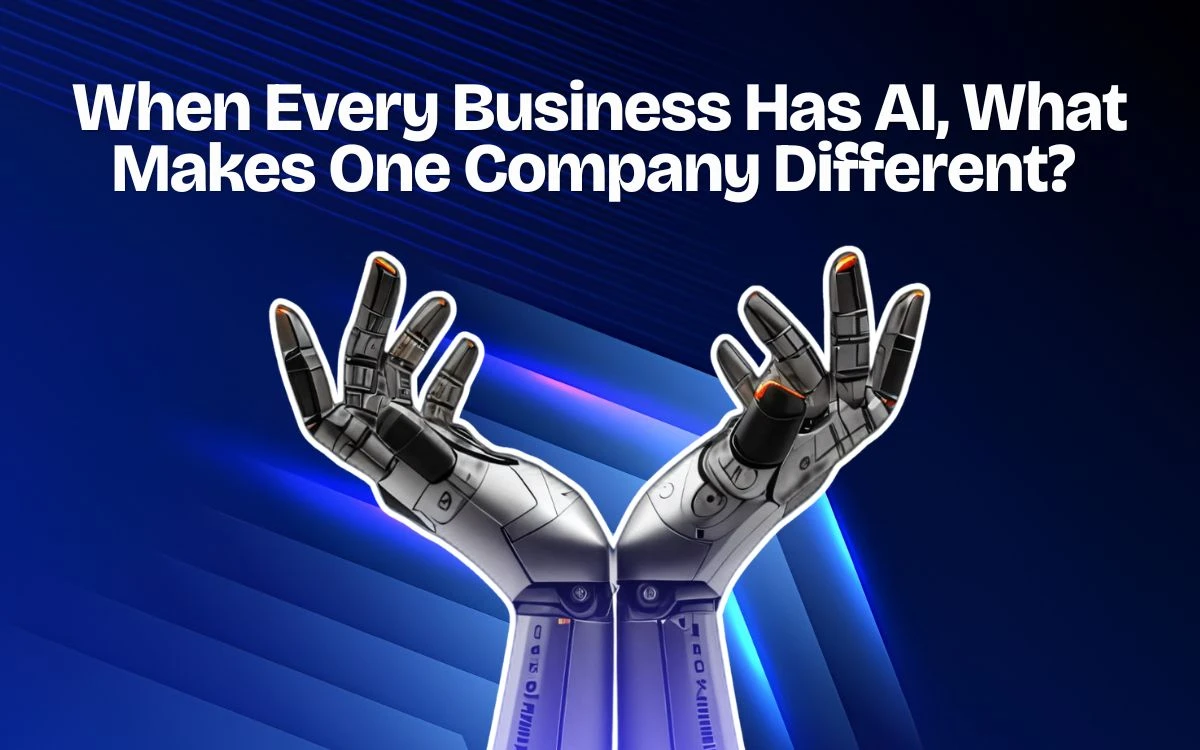
On the other hand, as the adoption increases, another problem arises. If all firms have access to AI models, tools for automation and data analysis, how can they differ from each other?
Access to AI is Not a Competitive Advantage Anymore
Based on the Deloitte’s Asia Pacific’s CEO AI Leadership Report, ‘Artificial Intelligence. Original Advantage.’ report, it states that AI adoption is no longer a differentiator on its own. The technology may improve performance, but it does not create a reason for customers to choose one brand over another.
How ever, the real question is how the technology supports a company’s strengths and helps it do something competitors cannot replicate.
The Risk of Making Every Business Look the Same
Consider B2B marketing. Several companies use generative AI to develop campaign messages, create website content, and identify potential customers. Although this decreases the time spent, the result lacks industry knowledge and perspective.
The same problem is experienced in product development and customer service. AI recognizes client problems and suggests possible ways of solving them. However, it cannot decide which problems are important for the clients.
Companies must ask themselves whether they are harnessing AI for better innovation or merely generating more of the same.
The Value of Human Expertise in Distinction
While an AI tool can determine that the customer is becoming less engaged, determining what action to take will require more than crunching the numbers. Understanding the market, competition, and factors that influence behavior change is key.
This does not imply that companies should restrain from the use of AI or that they have to resort to manual decision making alone. Rather, they should develop a partnership between human expertise and AI.
Employees must have the capability to utilize AI to examine possibilities, test assumptions, and eliminate repetitive process. Equally, employees should also be able to challenge the recommendations, discover gaps, and make decisions based on factors beyond the technology.
Business Transformation Needs More than Just Implementation
The challenge is the approach that is adopted by organizations for implementing AI. Firms integrate AI in their current process without evaluating the relevance of the process.
This needs cooperation from all the departments of the business. The AI projects need to be aligned with business priorities.
Leadership plays an equally crucial role. It is vital to understand areas where AI could add value, the decisions which needs human expertise, and how performance would be measured.
The Era of Originality Shall Drive the Upcoming AI War
It is essential for organizations to develop their own intelligence, gain deeper insights about their customers, and instill a questioning mentality among their employees. All these factors along with AI help to create a competitive advantage.
With each business having equal opportunities to leverage AI in their favor, creativity, decision-making skills, and implementation becomes difficult to ignore. Those organizations that will distinguish themselves are the ones who know what sets them apart and how to leverage AI accordingly.