For businesses that still rely heavily on phone calls, missed calls can quickly become missed customers. CCS (Custom Computer Specialists) is entering the AI voice-assistant market with Connected AI Receptionist, a voice-enabled virtual receptionist designed to answer incoming calls, understand caller intent, provide information, route conversations and schedule appointments without requiring an employee to pick up every call.
The business phone call has survived the shift to chat, email and social messaging. For many organizations, it remains one of the most important ways customers ask questions, schedule appointments and seek support.
It is also one of the easiest channels to overwhelm.
A busy employee may be serving a customer when another call comes in. A small business may not have anyone available after hours. A growing organization can face call volumes that exceed what its front-office staff can reasonably handle.
CCS, also known as Custom Computer Specialists, is targeting that gap with a new offering called Connected AI Receptionist, part of the company’s Connected Voice portfolio.
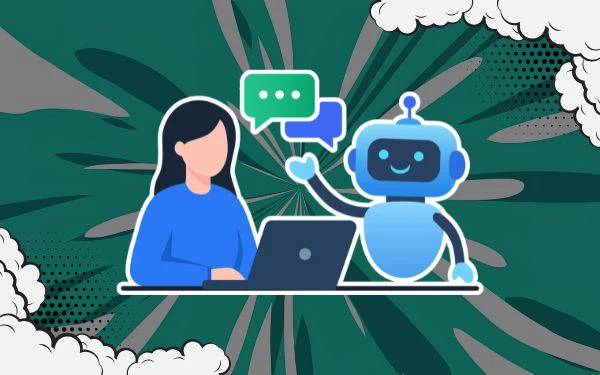
The voice-enabled system is designed to answer business calls using conversational language rather than traditional keypad-based phone trees. It can identify why someone is calling, answer common questions, route the caller to an appropriate person or department and assist with appointment scheduling.
The proposition reflects a broader shift in enterprise AI: moving conversational AI from websites and chat windows into the telephone systems that businesses already use.
AI moves onto the business phone line
The basic technology is not entirely new. AI-powered voice agents are becoming increasingly common as improvements in speech recognition, natural-language processing and generative AI make automated conversations more natural.
What is changing is the scope of those systems.
Older interactive voice response systems typically asked callers to “press one” or “press two” before moving through predefined menus. Modern voice agents can interpret conversational requests and determine what action should follow.
CCS’s Connected AI Receptionist is positioned around that model.
A caller can use the business’s existing phone number. The AI receptionist answers, determines the caller’s intent and then performs an appropriate action—whether that means responding to a routine question, transferring the call or helping arrange an appointment.
For businesses, that can turn the telephone from a simple communication channel into another automated customer-service workflow.
Adam Lapitino, divisional president at CCS, said the objective is to help companies remain responsive without forcing employees to interrupt higher-value work every time the phone rings.
That is a practical use case for AI. Rather than asking employees to learn another productivity application, the technology operates inside a communication channel customers already understand.
Where an AI receptionist can make a difference
The strongest business case may come from routine calls.
Questions about operating hours, services, availability or appointments often require little specialized judgment. Automating those interactions could allow employees to concentrate on customers and tasks that actually require human involvement.
After-hours calls represent another opportunity.
A company that closes at 5 p.m. may still receive inquiries in the evening or over the weekend. An AI receptionist can remain available outside normal staffing hours, potentially capturing inquiries that otherwise would reach voicemail.
That does not necessarily mean every call should be automated.
Complex complaints, sensitive customer interactions and situations requiring judgment may still be better handled by employees. The value of a voice agent therefore depends partly on how accurately it can distinguish routine requests from conversations that need escalation.
CCS’s approach is built around that routing function.
Instead of replacing the company’s existing phone operation, Connected AI Receptionist is designed to sit at the front of it, handling straightforward interactions while directing other calls to the appropriate human.
The emerging competition in AI voice agents
CCS enters a rapidly developing market.
Companies including Amazon Web Services, Microsoft, Google and Salesforce are investing in conversational AI, contact-center technology and AI agents capable of interacting with customers. Specialist voice-AI companies are also developing systems that can answer calls, qualify leads, book appointments and conduct customer-service workflows.
The competitive question is therefore not simply whether an AI can speak naturally.
Businesses will increasingly evaluate voice agents on accuracy, integration, latency, escalation capabilities, reliability and their ability to work with existing CRM, scheduling and telephony systems.
Privacy and security will also matter. Voice interactions can contain customer information, payment details and other sensitive data. Enterprise buyers will need to understand where conversation data is processed, how long it is retained and what controls govern access.
For CCS, being part of a broader IT-services portfolio could provide an advantage if the company can integrate the receptionist with customers’ existing infrastructure.
AI receptionists could become an entry point to agentic customer service
There is also a bigger implication.
A system that can answer a question is useful. A system that can understand intent and take an action is closer to an AI agent.
Appointment scheduling is a simple example. Instead of merely telling a caller that appointments are available, an agent can potentially participate in the workflow required to arrange one.
That pattern could eventually extend to lead qualification, service requests, customer updates and other business processes.
The telephone may therefore become another interface through which AI agents interact with customers and enterprise systems.
The technology’s success will ultimately depend on whether those interactions feel useful rather than frustrating. A conversational voice agent that misunderstands callers or makes it difficult to reach a human can create more customer friction, not less.
That makes the quality of escalation just as important as automation.
Enterprise adoption will come down to workflow fit
For businesses considering AI receptionists, the most important question may not be how sophisticated the underlying AI model is.
It is whether the system can handle the organization’s actual call patterns.
Companies should examine the percentage of calls that are repetitive, the questions customers commonly ask, how appointments are managed, when call volumes peak and which conversations require human judgment.
They should also establish clear escalation rules and measure outcomes such as missed calls, appointment conversions, response times, employee interruptions and customer satisfaction.
That approach places AI voice technology in a more realistic category: not a replacement for the front office, but an additional operational layer.
CCS is betting that businesses want that layer.
Connected AI Receptionist aims to make the first point of contact more consistently available while allowing employees to focus on interactions where human attention remains valuable.
As conversational AI becomes more capable, the business phone could become one of its most practical enterprise interfaces.
Market Landscape
The AI voice-agent market is evolving from traditional interactive voice response (IVR) systems toward conversational platforms that can understand natural language and execute business actions.
Large cloud and enterprise software providers such as Microsoft, Google, Amazon Web Services and Salesforce are building AI capabilities into contact-center, CRM and workflow ecosystems. Specialist vendors are competing on voice quality, agent autonomy, integrations and vertical-specific functionality.
For enterprise buyers, the important distinction is moving from voice automation to voice-based workflow execution.
Answering frequently asked questions is relatively straightforward. Connecting an AI receptionist to calendars, CRM systems, customer records and escalation processes creates significantly more value—but also introduces greater security, governance and reliability requirements.
CCS’s Connected AI Receptionist is entering this market with a straightforward business proposition: automate routine inbound calls while preserving the company’s existing telephone channel and human escalation path.
Top Insights
- CCS has launched Connected AI Receptionist, a conversational voice system designed to answer calls, understand intent, route customers and schedule appointments for businesses.
- The platform targets routine telephone interactions, potentially reducing employee interruptions while helping organizations respond to customers during busy periods and outside normal hours.
- AI voice technology is moving beyond traditional IVR, using natural-language conversations to determine what callers need instead of relying primarily on fixed keypad menus.
- Enterprise adoption will depend on integration and escalation, with businesses needing reliable connections to calendars, CRM systems, telephony infrastructure and human support teams.
- Voice agents could become an important AI interface, connecting customer conversations directly to business workflows rather than limiting AI to answering questions.
Power Tomorrow’s Intelligence — Build It with TechEdgeAI