






Yokogawa Engineering Asia has joined the Sustainable Tropical Data Centre Testbed Phase 2.0 (STDCT 2.0) Consortium at the National University of Singapore, bringing industrial automation, measurement and autonomous operations expertise to efforts focused on more efficient AI data centers. The collaboration comes as rising AI workloads increase pressure on power, cooling, reliability and operational resources, particularly in tropical environments.
The rapid expansion of AI computing is turning data center efficiency into an engineering problem that extends well beyond servers and accelerators. Higher rack densities are increasing demands on power infrastructure and cooling systems, while operators are also facing pressure to maintain reliability with limited technical resources.
Yokogawa Engineering Asia, a subsidiary of Yokogawa Electric, is joining the Sustainable Tropical Data Centre Testbed Phase 2.0 (STDCT 2.0) Consortium to work on that challenge in Singapore.
Led by the College of Design and Engineering at the National University of Singapore (NUS), STDCT 2.0 brings together industry, academia and government participants to develop and evaluate technologies for energy management, cooling and sustainable operation of data centers in tropical climates. NUS has described the initiative as part of a broader push toward energy- and water-efficient, low-carbon data center infrastructure.
For Yokogawa, the project extends capabilities traditionally associated with industrial automation into digital infrastructure.
AI is changing the data center operating model
The need for new approaches is being driven partly by the physical demands of AI workloads.
Gartner forecasts that worldwide AI spending will reach approximately $2.7 trillion in 2026, representing a 49.5% increase from 2025. The research firm says AI infrastructure—including AI-optimized servers, networking, processing semiconductors and related infrastructure—will remain the largest area of AI spending.
More compute also means more power.
Gartner projects global data center electricity consumption will reach 565 terawatt-hours in 2026, up 26% year over year. AI-optimized servers are expected to account for 31% of data center power consumption this year, with their power consumption projected to exceed that of conventional servers in 2027.
Those trends make cooling, power management and operational automation increasingly important components of AI infrastructure.
The challenge is particularly pronounced in tropical regions. Singapore’s high temperatures and humidity increase cooling requirements, meaning that improvements in cooling efficiency can have a direct effect on both energy consumption and data center operating economics.
Treating the data center as an integrated system
STDCT 2.0 is designed around the idea that individual improvements to servers, cooling equipment or power systems are not enough by themselves.
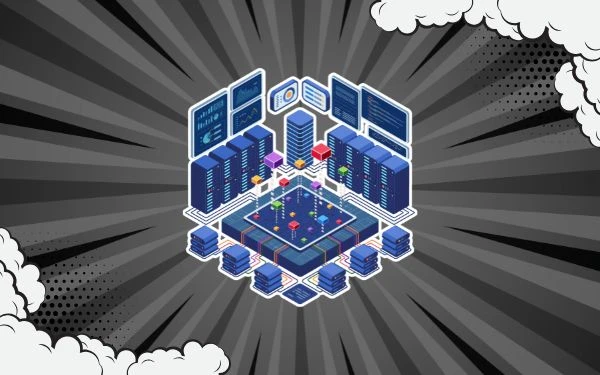
The testbed brings together computing, power, cooling, controls and operational technologies so they can be evaluated as a connected system. That approach is increasingly relevant for AI data centers because changes in compute density can affect thermal loads, power distribution and cooling requirements simultaneously.
Yokogawa’s contribution centers on measurement, industrial automation and autonomous operations.
The company says it will work with consortium members to improve operational efficiency, asset reliability and energy optimization. It will also explore a joint research agenda for challenges where existing commercial technologies may not adequately address data center operators’ requirements.
That research component is important because AI data centers are evolving faster than many conventional facility-management approaches.
A cooling system optimized for relatively stable workloads, for example, may need to respond differently when AI clusters generate rapidly changing thermal loads. Monitoring and control systems therefore need to operate with greater awareness of computing activity and infrastructure conditions.
Autonomous operations move beyond industrial facilities
Yokogawa has built much of its technology portfolio around industrial measurement and automation, including systems designed to monitor complex physical processes and control equipment.
Applying those capabilities to data centers creates a bridge between industrial automation and AI infrastructure.
Instead of treating the data center as a static facility, autonomous operations can potentially coordinate equipment based on real-time measurements and changing operating conditions. Sensors can provide information about temperature, energy consumption, equipment health and environmental conditions, while automation systems can adjust operating parameters within defined limits.
For data center operators, the objective is not simply automation for its own sake. It is to maintain service availability while reducing unnecessary energy and resource consumption.
That becomes more significant as data center infrastructure grows more complex. Gartner expects AI-optimized infrastructure spending to continue rising rapidly, with AI-optimized infrastructure-as-a-service spending projected to reach about $42 billion in 2026, up 96.4% year over year. Gartner also forecasts inference spending of $23.3 billion, exceeding projected AI training spending of $19 billion.
The growing importance of inference means AI infrastructure is increasingly operating continuously in production rather than being used primarily for periodic model development.
Singapore as a data center test environment
Singapore provides a particularly relevant environment for the project.
The city-state has positioned data centers as an important part of its digital economy while simultaneously facing constraints around land, energy and environmental sustainability. Tropical conditions add another layer to the challenge because cooling systems must operate in a hot and humid climate.
The STDCT 2.0 approach therefore has potential relevance beyond Singapore. Technologies and operating models validated under demanding tropical conditions could be applicable to other markets across Southeast Asia and other warm climates.
NUS’s broader STDCT work already emphasizes integrated approaches to energy, water, cooling, controls and digital intelligence as AI increases rack densities.
That systems-level approach is becoming more important as operators seek to balance AI capacity expansion with environmental and infrastructure constraints.
From facility automation to AI infrastructure intelligence
Yokogawa’s participation also illustrates how the definition of AI infrastructure is expanding.
The AI data center is not only a collection of GPUs, servers and networking equipment. Its performance depends on the power systems supplying those components, the cooling infrastructure removing heat, the controls coordinating equipment and the software used to monitor the entire environment.
That creates opportunities for companies with expertise in industrial automation, digital twins, asset monitoring and autonomous operations to participate in the AI infrastructure market.
The broader spending trajectory reinforces the opportunity. Gartner’s latest forecast puts worldwide data center systems spending at approximately $822 billion in 2026, up 62.5% from 2025, as hyperscalers and enterprises expand capacity for AI workloads.
The challenge now is ensuring that capacity can be operated efficiently.
For Yokogawa, STDCT 2.0 provides a real-world environment to test that proposition. Rather than focusing solely on individual cooling or energy technologies, the consortium is examining how the physical infrastructure, computing workloads and control systems can work together.
If those approaches can be validated in Singapore’s demanding climate, they could provide a blueprint for more efficient and resilient AI data centers in other tropical markets.
Market Landscape
AI infrastructure is increasingly constrained by power and cooling rather than compute capacity alone. Gartner forecasts global data center electricity consumption at 565 TWh in 2026, with AI-optimized servers accounting for 31% of consumption.
At the same time, worldwide AI spending is forecast at $2.7 trillion in 2026, while data center systems spending is projected to reach $822 billion.
This is expanding the AI infrastructure market beyond processors and cloud platforms into cooling, power management, facility automation, monitoring, digital twins and autonomous operations. In tropical regions, where cooling requirements are particularly demanding, integrated energy and thermal management can become a critical part of sustainable AI infrastructure.
Top Insights
- Yokogawa Engineering Asia has joined NUS’s STDCT 2.0 Consortium to advance sustainable AI data center operations in tropical environments.
- The initiative combines power, cooling, computing, controls and operations rather than optimizing individual infrastructure components independently.
- Gartner forecasts global data center electricity consumption will reach 565 TWh in 2026, up 26% year over year.
- Yokogawa will contribute industrial automation, measurement and autonomous operations expertise to the research program.
- Technologies validated in Singapore could inform AI data center designs and operating models across other tropical markets.
Power Tomorrow’s Intelligence — Build It with TechEdgeAI