





As enterprises move from experimenting with AI agents to deploying them across operational workflows, the technology stack is becoming more complicated. XMPro, an agentic operations platform for asset-intensive and mission-critical industries, says it has been named across nine Gartner research reports published between July 24 and August 7, 2026, spanning agent orchestration, agentic AI, multiagent generative systems and AI agent management platforms.
The significance of XMPro’s latest industry recognition is less about the number nine than about where those nine placements sit.
The company has been identified as a Sample Vendor or Example Vendor across four emerging areas of enterprise AI: Agent Orchestration, Agentic AI, Multiagent Generative Systems (MAGS), and AI Agent Management Platforms. The spread reflects a broader change in how enterprises are approaching autonomous software: building an agent is increasingly only the first step.
Gartner’s research describes AI agent management platforms as centralized systems for managing agents across deployment environments, including capabilities for governance, security, cost and return-on-investment oversight.
For enterprise technology teams, that distinction matters. An AI agent that can independently perceive information, make decisions and execute tasks creates a fundamentally different management problem from a conventional software assistant.
XMPro focuses on that problem in industrial environments, where agents may interact with operational data, business applications and physical-world processes.
The company says its nine Gartner placements were published across research covering supply chain, local government, AI and cloud, AI governance, multienterprise solutions, AI services, public safety and law enforcement, generative AI, and AI agent management platforms.
Agent orchestration becomes an enterprise infrastructure problem
Four of the placements concern agent orchestration.
XMPro was named as a Sample Vendor in Gartner’s 2026 Hype Cycle reports for AI in Supply Chain, Local Government, AI and Cloud, and AI Governance Technologies. According to Gartner’s description, agent orchestration involves coordinating networks of specialized agents so they can work together on complex problems and adapt to changing conditions.
That is an important evolution from the first generation of enterprise generative AI.
Early deployments largely centered on individual copilots: a model answers a question, summarizes information or generates content. Agentic systems introduce a different operating model in which software can determine what actions are required and potentially invoke other systems or agents to complete them.
The architecture starts to resemble an operating layer for AI rather than a single application.
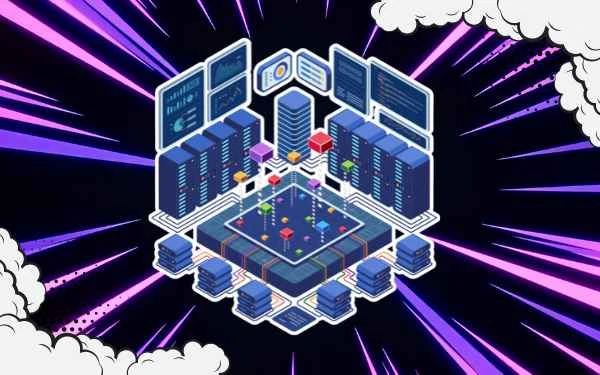
XMPro’s APEX platform is positioned as the orchestration and control layer, while its Multi-Agent Generative Systems (MAGS) framework is designed to coordinate specialized agents. StreamDesigner provides enterprise integration, with composite AI reasoning operating on the company’s Operational Context Engine.
For industrial organizations, the appeal is clear: production environments typically cannot be treated as isolated AI sandboxes. Agents need access to operational systems, real-time information and established business processes.
Multiagent AI creates a new governance challenge
XMPro’s inclusion in Gartner’s Emerging Tech Impact Radar: Generative AI for Multiagent Generative Systems is particularly relevant to this shift.
MAGS approaches complex workflows by distributing work among specialized agents rather than relying on one monolithic AI system.
That model can potentially improve specialization and resilience, but it also increases the number of components an enterprise must monitor.
An organization deploying one AI agent has one set of permissions, behavior and performance metrics to understand. A multiagent architecture may involve multiple agents with different responsibilities, tools and access levels, along with the orchestration layer connecting them.
This is where agent management becomes increasingly important.
Gartner has warned that enterprises face significant governance challenges as autonomous agents proliferate. The research firm predicts that 40% of enterprises will demote or decommission autonomous AI agents by 2027 because of governance gaps identified only after production incidents.
The implication for CIOs and AI leaders is straightforward: agent deployment cannot be separated from governance, observability and lifecycle management.
AI agent management emerges as its own software category
XMPro was also named an Example Vendor in Gartner’s Market Overview: AI Agent Management Platforms, published July 30.
Gartner describes these platforms as centralized systems that manage AI agents regardless of where they are deployed, including custom-built and marketplace-sourced agents. The category includes capabilities for managing costs and ROI while providing centralized governance and security controls.
XMPro’s placement puts it in a market that includes much larger enterprise technology providers. Gartner’s market overview identifies vendors including AWS, Google, IBM, Microsoft, Salesforce, ServiceNow, SAP and UiPath, illustrating how quickly agent management is becoming an enterprise software battleground.
The competitive distinction for XMPro is its focus on asset-intensive and mission-critical operations rather than general-purpose enterprise productivity.
That specialization could matter as companies move AI agents closer to physical infrastructure. Manufacturing plants, utilities, energy facilities, transportation networks and other industrial environments impose stricter requirements around reliability, latency, integration and human oversight.
The enterprise agent market is moving beyond copilots
The broader market trajectory suggests that this fragmentation is likely to continue.
Gartner predicts that 33% of enterprise software applications will include agentic AI capabilities by 2028, compared with less than 1% in 2024. It also expects agentic AI to make at least 15% of day-to-day work decisions autonomously by that point.
Another Gartner forecast says 40% of enterprise applications will incorporate task-specific AI agents by the end of 2026, up from less than 5% in 2025.
Those numbers help explain why the market is separating into orchestration, agent management, governance and multiagent infrastructure.
For enterprise buyers, the question is no longer simply which large language model to use. It is increasingly which agents should act, what they can access, how their actions are coordinated, how their performance is measured and what happens when they fail.
That puts agent infrastructure alongside models as a core enterprise AI consideration.
XMPro’s nine Gartner placements should therefore be viewed as a marker of that architectural shift rather than simply a vendor recognition story. The company is positioning its platform around the control plane between AI agents and industrial operations.
Whether that approach wins against broader platforms from Microsoft, Google, AWS, Salesforce and other enterprise software providers will depend on implementation depth, integration, governance and measurable operational outcomes.
But one trend is becoming increasingly clear: as AI agents move into production, managing the agents may become almost as important as building them.
Market Landscape
The enterprise agentic AI market is moving through a transition from single-agent copilots to coordinated, governed agent ecosystems.
Three layers are becoming particularly important:
- Agent orchestration: Coordinates multiple agents, tools, models and workflows.
- Multiagent systems: Assigns specialized tasks to different agents and combines their outputs.
- Agent management: Provides centralized oversight of deployment, security, governance, cost and performance.
The competitive field includes hyperscalers and enterprise software companies such as AWS, Google, Microsoft, Salesforce, IBM, SAP, ServiceNow and UiPath, alongside specialized vendors such as XMPro.
For industrial enterprises, another consideration is the connection between digital AI systems and physical operations. An agent recommending an action inside an office workflow presents a different risk profile from an agent influencing maintenance, production, supply-chain or safety processes.
That is creating demand for more granular controls around permissions, auditability, human intervention and operational context.
Gartner’s forecast of $234 billion in enterprise application spending exposed to agentic arbitrage through 2030 further illustrates how deeply agentic AI could alter the enterprise software market.
The emerging market therefore extends beyond LLM providers. It includes the infrastructure required to deploy, coordinate, govern and economically manage autonomous software.
Top Insights
- XMPro appears across nine Gartner reports, spanning orchestration, agentic AI, multiagent systems and management, highlighting the rapid fragmentation of enterprise agent infrastructure.
- Agent orchestration is becoming a control-plane requirement, particularly for industrial companies deploying specialized AI agents across complex operational and physical environments.
- Multiagent architectures create new governance demands, requiring enterprises to monitor agent permissions, behavior, costs, security and interactions rather than individual models alone.
- Gartner expects agentic AI to reach 33% of enterprise software applications by 2028, increasing pressure on CIOs to establish scalable management infrastructure.
- XMPro competes in a market increasingly populated by hyperscalers and enterprise platforms, differentiating through its focus on asset-intensive and mission-critical operations.
Power Tomorrow’s Intelligence — Build It with TechEdgeAI