








1. AI systems don’t just rank content; they make recommendations and attribute credibility. From what you’ve seen, what signals is AI using to decide which executives and brands it surfaces and which ones it ignores?
This is a fantastic question, because the first thing to understand is that there is no single “AI algorithm.” We consistently see that ChatGPT, Gemini, Google AI Overviews, AI Mode, Perplexity and Claude do not retrieve or cite information in exactly the same way. The platforms also do not publish a universal list of recommendation signals. What we can see, however, are a few patterns that consistently matter.
First is entity clarity and consistency. If your name, title and company affiliation show up differently across LinkedIn, your company site, speaking bios and press coverage, you create ambiguity. The model may merge two people, use an outdated title or decide it does not have enough confidence to include you. A clear executive page, updated LinkedIn profile, and a consistent bio makes the brand and professional easier to disambiguate.
Second is retrievability. Can the system actually access and parse the material? Important content needs to be public, crawlable and available in text. That is why transcripts matter for podcasts and video, and why a beautifully designed page with very little readable copy often underperforms.
Third is corroboration. AI systems are more comfortable making a recommendation when the same person or brand is credibly associated with a topic across multiple independent sources. A claim on your own site is a claim. The same claim supported by reporting, a conference bio, a podcast, an industry paper and informed discussion begins to look like consensus.
Then there is where you publish. LinkedIn has become especially important for professional queries. In a Profound analysis of 1.4 million citations across six AI platforms, LinkedIn ranked first for professional queries and in our own Lilypath research, we consistently see LinkedIn as the dominant source for professional queries. Reddit is interesting. It often comes out as a top source but it has an extremely long lag. Even Ask Me Anythings (AMAs) can take a long time to render in the LLMs. YouTube matters when a demonstration, explanation or transcript is useful, and it can be especially visible in Google’s ecosystem.
It’s important to note no one thing on here is the silver bullet it is consistency built over time across multiple sources that moves the needle.
2. Brand authority used to be built through press coverage, speaking slots and backlinks. What’s the equivalent currency in an AI-driven environment, and how do you earn it?
Press coverage, speaking, podcasts, YouTube, newsletters and links still matter. And getting SEO fundamentals correct is also important. What has changed is how all of those signals compound. The goal is no longer simply to get a page to rank. It is to make your brand or your executive the most supportable answer to a real question.
That requires three layers:
1. A source of truth you control. Your site or LinkedIn Profile should clearly explain who you are, what you do, what you believe and what evidence supports your claims. Include original research, methodology, dates, author bios, customer evidence and direct answers to the questions buyers actually ask, and ensure it’s written in the most digestible way for the AI crawlers or LinkedIn’s 360Brew engine.
2. Independent validation. Earned media, trade publications, analysts, customers, academics and credible practitioners give the system evidence that your claims exist beyond your own marketing.
3. Useful coverage across formats. A strong point of view should exist as a canonical article or report, but it should also travel into interviews, conference discussions, video transcripts and informed social conversation. One excellent idea with multiple credible proofs is more valuable than 50 generic posts.
3. Most B2B marketing teams are still optimizing for search rankings that may matter less every month. What should they actually be optimizing, and how do they even measure it?
I would challenge the premise slightly. Search still matters. What is shrinking is not necessarily search usage; it is the portion of the journey in which a buyer clicks through to ten blue links and evaluates every source personally.
Pew found that users clicked a traditional result on 8% of Google visits when an AI summary appeared, compared with 15% when one did not. They clicked a source inside the AI summary only 1% of the time. So the old equation, ranking equals traffic equals influence, is clearly weakening.
B2B teams should now optimize for four outcomes:
1. Answer share. How often are we included when a buyer asks the questions that define our category?
2. Recommendation share. When the system names vendors, leaders or solutions, how often are we recommended relative to competitors?
3. Citation quality. Which sources are being used to support the answer, and do we appear in the sources that influence it?
4. Narrative accuracy. Is the answer correct? Does it associate us with the attributes we want to own? Does the resulting visit, demo or sales conversation convert?
Measurement needs to begin with a stable set of prompts mapped to the buyer journey—problem discovery, category education, comparison, risk, implementation and purchase. Run those prompts repeatedly across the platforms your buyers use. Do not treat a single answer as a ranking report as AI is non deterministic meaning it customizes the answers to what it knows about you but study the trends over time. Also ensure that you’re continuing the measure the metrics that matter to your business from reputation to revenue as those are the ultimate metrics of success for optimizing successfully for AI.
4. Trust is the variable that AI systems are trying to evaluate before recommending a source. What does a brand need to demonstrate structurally for AI to treat it as a credible reference?
The model is trying to assemble an answer it can support. Structurally, a brand needs to make that support easy to find.
That starts with a clear, crawlable source of truth: accurate organization and executive pages, named authors, a strong, current LinkedIn Profile, visible dates, clear claims, supporting evidence, methodology, contact information and links to original documents. Keep your executive bios, company descriptions and core facts consistent across the web. Use structured data where it accurately describes the visible page, particularly to help disambiguate the organization or person.
Then add independent proof: reputable coverage, customer evidence, expert references, standards, certifications and research where appropriate. The system should not have to take the brand’s word for every important claim.
Formatting owned content in a digestible way can also help. An FAQ format can be useful when it answers real questions aligned to real AI prompts with specific, sourced information. Comparisons also do well when they expose decision criteria honestly. A useful comparison says where each option is strong, where it is weak, who it is for and what evidence supports the conclusion. That makes it easier for both a person and a machine to use.
Finally, reimagine the press room as an evidence room. Keep current releases, coverage, reports, media contacts and senior-leader bios in one maintained place. A press release is a good primary source for what the company announced.
5. A CEO who had strong Google search visibility two years ago may barely exist today. What changed, and why did the old playbook stop working so fast?
This is the piece most people do not talk about enough. People have spent entire careers building stature, which is a very human thing. The old web translated some of that stature into rank: earn authority, win links and appear near the top of the page. The user still had to click, compare and decide.
Now an AI system increasingly performs part of that comparison before the person ever arrives. It breaks a broad question into related searches, retrieves evidence from different source types and synthesizes an answer. Google calls one version of this “query fan-out.” That creates a different visibility test. It is no longer enough to rank for your own name. You need to be credibly associated with the topic, problem and decision the user is asking about.
I do not think the old playbook stopped working. I think it became incomplete. Technical SEO, quality content, links and media authority still help content become retrievable. What stopped working was the assumption that strong Google visibility automatically translates into inclusion in an AI-generated answer.
That is why this feels like a stature reset. A well-known executive with thin, outdated or inconsistent digital evidence can disappear from an answer. A less famous expert with a precise body of work, current third-party validation and content that directly resolves the prompt can leapfrog them. The AI does not care how many rooms you have been important in if none of those rooms left usable evidence behind.
6. AI systems are trained on what already exists. That creates a problem for original thinkers: your best ideas may not yet have the citation trail that makes AI trust them. How do you solve for that?
The premise is directionally right, but it misses an important change many AI answers now use live web retrieval. You do not have to wait for the next model-training cycle. You do have to create a clear, citable record.
Start by publishing the original idea in a place you control. Date it. Name it. Define the claim. Show the method, the evidence, the limits and the practical consequence. If there is original data, publish enough of the methodology that another serious person can evaluate it. If there is no data yet, be explicit that it is a thesis and explain what would prove or disprove it.
Then take the idea into trusted environments where it can be tested. LinkedIn is useful, especially for an executive who already has a relevant following. So are interviews, YouTube, podcasts, conferences and thoughtful industry communities. But the goal is not to copy and paste the same assertion everywhere. The goal is to invite credible people to examine it, challenge it, apply it and cite the original source.
Do not manufacture consensus, spam Reddit or confuse repetition with authority. Trust is built over time, just like in real life. The best-in-class outcome is multiple credible sources pointing back to you as the originator of a useful idea.
7. You run a company and you’re also the face of a point of view in the market. Where does your time go when it comes to building that presence, and what have you had to stop doing to make room for it?
I am a sponge. I absolutely love learning about new things. A meaningful amount of my time goes into watching YouTube videos, listening to the nerdy AI podcasts and following the people who are actually building and testing this technology. I am trying to understand not just what happened this week, but where the patterns might be taking us.
Then I have to turn that input into a point of view. Consuming information is not authority. The work is deciding what I believe, what I disagree with and what I can add that is genuinely useful.
I focus on LinkedIn as my primary channel because what happens on LinkedIn does not necessarily stay on LinkedIn. It reaches the professional audience I care about, and it can also become part of the information layer AI systems retrieve for professional questions. For a time-starved executive, that is a 2-for-1, which I appreciate.
What I had to stop doing was trying to be everywhere. I do not need to chase every platform, react to every headline or turn every thought into “content.” I would rather develop one strong idea, publish it where the right people will engage with it and let the best ideas travel into other formats from there.
I also try to remember that I am writing for people first. If a post is useful to a machine but boring to a human, it is not thought leadership. It is metadata with a headshot.
8. What’s the difference between an executive who is building genuine authority in an AI-first world and one who is just producing content and calling it thought leadership?
I would reframe this question slightly. This is the biggest stature reset we have seen in a generation or two, but the opportunity is not simply that anyone can “win the algorithm.” The opportunity is that expertise now has more ways to become discoverable—if it is real, specific and supported.
Here’s a great example. An executive producing content is filling a feed. An executive building authority is creating ideas that other people can use. Their point of view has evidence behind it. It survives disagreement. Customers repeat it. Peers cite it. Journalists call for clarification. The executive is also willing to update the idea when the facts change.
So yes, this is a great reset—but it is not a free-for-all. Senior leaders need to pay attention to how AI systems represent them, because someone with a clearer and better-supported body of work can leapfrog you without either party realizing it. The risk is not literally that an algorithm “steals” your IP. The risk is that your ideas become flattened, misattributed or associated with someone else because you never established a clear record of origin and authority.
Genuine authority is not winning a prompt once. It is becoming the answer because you have done the work to deserve the attribution.
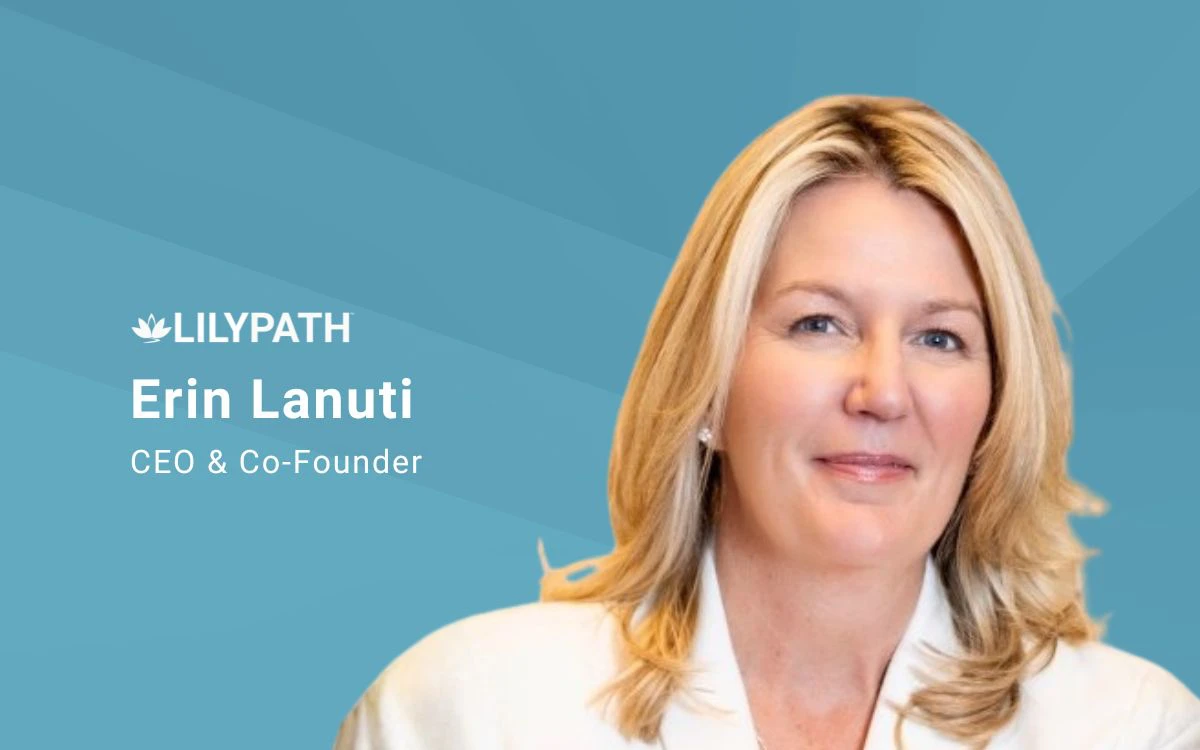
About Erin Lanuti:
Erin sets Lilypath’s strategic direction, owns category creation, and leads go-to-market strategy — defining what Lilypath is, who it serves, and how it wins as AI becomes the primary interpreter of authority, credibility, and opportunity.
She brings deep expertise in building, scaling, and commercializing technology offerings globally. Previously, she served as Chief Innovation Officer at Omnicom Public Relations Group, where she led enterprise AI strategy and innovation across a $3B global portfolio spanning 25+ agencies and 8,000+ professionals. She invented and scaled OmniearnedID™, a patent-pending intelligence platform, and launched AI Optix, Omnicom’s global Generative Engine Optimization offering. She built and led a 100+ person multidisciplinary organization across AI strategy, engineering, data science, analytics, and product.
Erin is a recognized authority on AI, trust, and narrative power — and a frequent keynote speaker at Cannes Lions, the 4A’s, PRWeek, Provoke, and OAAA.
About Lilypath:
Lilypath is the company behind the patent-pending Authority Intelligence™ platform that helps professionals understand, shape, and protect how AI systems interpret their professional authority.