








- How do you see AI’s role in healthcare evolving into a practical tool for real-time clinical decision-making, particularly when integrated into medical devices and imaging technologies?
Over the past few years, the development of AI has progressed from the technical infrastructure layer to the application layer. We’re now seeing it get to a point where it can support decisions that practitioners in all industries are making every day. Healthcare is a particularly meaningful use case because better information can directly affect patient care and there’s hardly a more important field to apply this amazing technology.
In breast cancer surgery, for example, nearly one in four women undergoing a lumpectomy require a repeat surgery, or re-excision, because microscopic disease cannot always be seen during the initial procedure. AI-enabled Optical Coherence Tomography (“OCT”) imaging has the potential to give surgeons better information while the patient is still in the operating room, helping reduce repeat surgeries and address a challenge estimated to cost the U.S. healthcare system roughly $600 million each year.
For AI to be useful in surgery, it needs to provide clinicians with information they can act on during the procedure. Medical devices and imaging are a natural fit because they bring AI closer to the point of care and help turn raw data into something useful. That is what drew me to Perimeter after years of working on AI infrastructure. I wanted to help apply these systems in settings where they can directly influence people’s lives every day in a very meaningful way.
- What separates meaningful clinical AI from tools that are simply adding AI as a feature?
Meaningful clinical AI has to solve a problem that clinicians and patients already experience. A company can say it uses AI, but the technology needs to improve a decision, strengthen a workflow, or provide information the clinician does not otherwise have. And, it has to do so in a way that leverages one of AI’s greatest strengths – continuous batch learning, allowing models to improve and evolve over time.
For example, while our clinical models at Perimeter are securely locked during surgery to ensure patient safety, our platform is built for continuous data acquisition. We capture a constant stream of high-resolution insights to power our next-generation deployments.
A strong demonstration is not enough in healthcare. The technology has to perform in real clinical settings. That requires diverse and representative clinical data, validation across multiple sites and patient populations, and review through the regulatory process. It also requires responsible monitoring after launch through real-world clinical data.
At Perimeter, we established a predetermined change control plan with the FDA that allows our AI to continue iterating within an approved regulatory framework. That level of clinical evidence, validation and oversight is what distinguishes meaningful clinical AI from a feature added primarily for positioning.
- What did your time building AI infrastructure at Groq teach you about what it takes for AI to work in the real world?
At Groq, I worked on the AI infrastructure layer before AI became a regular topic in nearly every industry. That experience gave me some understanding of how AI is built from the silicon to the algorithms to the data. This background is useful as we’re working through improving our AI performance at Perimeter.
Compute, speed, data architecture, technical performance and cost all matter, but they only become valuable when the tradeoffs are evaluated in the appropriate way on problems people need solved. Having learned something about the relationship between those design variables in my previous job, I was excited about entering healthcare because I wanted to take that experience and apply it in a setting where the effect is more direct.
In healthcare, the test is whether the technology can fit into an existing clinical workflow, earn clinician trust, and help them make a better-informed decision.
- What does it take for an AI tool to move from a promising concept into a clinical workflow?
An AI tool has to work within the realities of clinical care. The technology needs to perform consistently, meet regulatory requirements, fit into the way clinicians already operate, and provide information they can trust.
That standard is much higher than building a tool that performs well in a controlled environment. The AI tools that make it into clinical workflows are the ones that address a clear need without creating additional work or disruption for the people using them.
- Why is the operating room such an important frontier for applied AI?
The operating room is where clinicians make time-sensitive decisions that can affect what happens next for the patient. AI has the potential to give surgeons additional information during the procedure rather than after it is complete.
That matters because clinicians in the OR cannot pause for long periods to interpret data, consult a separate system or wait for answers. Applied AI in this setting has to be fast and designed around the surgeon’s workflow.
In breast cancer surgery, nearly one in four lumpectomy patients require a repeat procedure. Giving surgeons better information during the initial operation could help reduce unnecessary re-excisions and the associated costs of additional operating room time, delayed treatment and avoidable complications. It can also support health systems as they work to improve outcomes and use resources more efficiently.
- How can AI support surgeons when decisions need to be made in real time?
AI can help surgeons identify and interpret information that may not be immediately obvious during a procedure. The surgeon remains responsible for the decision, while AI can help direct attention to areas that may deserve a closer look.
That support needs to fit into the procedure without slowing down the surgical team. It should help reduce uncertainty and provide clearer information during the limited window when the surgeon can still act.
AI may also help improve consistency across different care settings. Surgeons who perform fewer breast cancer procedures could gain access to the same type of real-time decision support available at higher-volume centers. In breast cancer surgery, that could mean identifying tissue that may warrant additional evaluation before the operation is complete and potentially reducing the need for a re-excision.
- What does AI need to account for when it is being used in high-stakes moments like cancer surgery?
In cancer surgery, the technology has to be evidence-based and designed around the way clinicians make decisions. Surgeons should have access to better information when it is available, but they also need confidence in how that information was developed and validated.
Claire was trained on a library of more than two million proprietary breast tissue images collected from approximately 4,000 real-world surgeries. That gives us a substantial clinical dataset specific to breast cancer surgery.
The database continues to grow through participation from surgeons, hospitals and patients, allowing us to learn from additional real-world clinical experience. AI can provide meaningful support in surgery, but only when it is connected to strong clinical evidence and a clearly defined patient need.
- Why does data quality matter so much when building AI for clinical environments?
Clinical AI is only as reliable as the information it learns from. In healthcare, an inaccurate result can influence decisions about patient care, so the data has to be well structured, clinically- relevant, and specific to the problem the AI is designed to address.
One of the reasons I joined Perimeter was the strength of its proprietary breast tissue image library and the opportunity to build AI using data developed for this particular clinical use case. Trustworthy clinical AI cannot be built on weak, incomplete, or disconnected datasets.
- How can AI-enabled imaging change what surgeons are able to see and act on while the patient is still in the operating room?
AI-enabled imaging can give surgeons information that is not available through the current standard of care while the patient is still in the operating room. Today, surgeons may have to wait two to seven days for pathology results to confirm whether all of the cancer was removed.
AI-enabled imaging can help evaluate tissue margins during the procedure itself. Claire provides cellular-level visualization that is approximately 10 times sharper than ultrasound and 100 times more detailed than MRI. This gives surgeons additional information at a point when they may still be able to act. What’s critical about the AI assistant is that it helps surgeons by pointing out suspicious areas as they interpret images from a novel imaging modality like OCT, which provides a level of resolution that other modalities can’t achieve. Surgeons are not typically trained in advanced imaging, so if an AI assistant helps them become more proficient in the operating room, with a specialized system, it’s a big benefit to patients, healthcare providers and payers.
When imaging identifies an area that deserves a closer look, the surgeon has the opportunity to evaluate it before the patient leaves the operating room. That could help reduce uncertainty and lower the likelihood of a second surgery.
- What do you think the next generation of healthcare AI companies will need to prove in order to create lasting clinical impact?
Healthcare AI companies will need to show that their technology addresses a real clinical need and performs reliably in actual care settings. Strong technical performance alone is not enough.
At the health system level, the greatest value will come from reducing unnecessary procedures, limiting variation in care, improving operating room efficiency, and avoiding costs that result when clinicians do not have the information they need at the time a decision is made.
Companies will also need clinical evidence, regulatory discipline, and the trust of the people using the technology. The healthcare AI companies that endure will be the ones that can demonstrate measurable value for clinicians, patients, and health systems.
Adrian Bio:
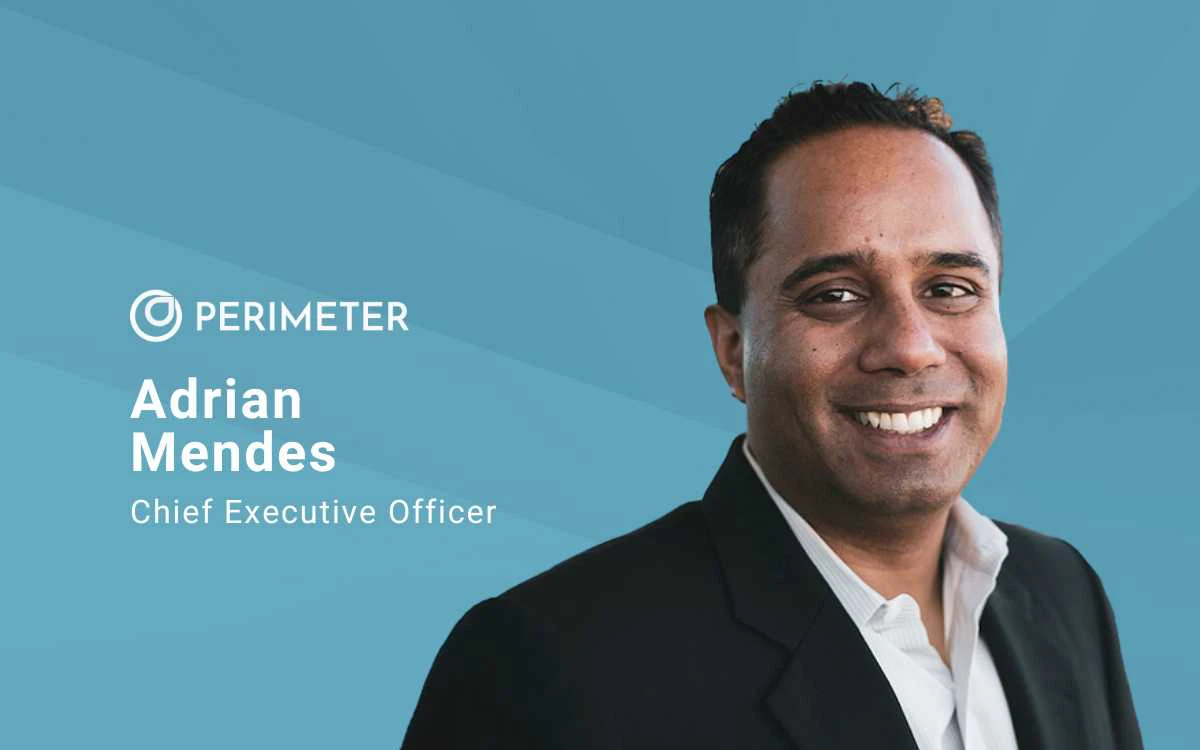
Adrian Mendes is the Chief Executive Officer at Perimeter Medical. Adrian is a seasoned technology executive with 25 years of experience building and scaling innovative companies across multiple industries. With a passion for innovation and a deep belief in the transformative power of AI, he is focused on driving advancements in the medtech industry, and improving patient experiences and healthcare outcomes.
Previously, Adrian was Chief Operating Officer at Groq Inc., an AI hardware company he helped grow from its early days into a multi-billion dollar market leader, which recently entered into a $20 billion talent and IP licensing deal with Nvidia. Prior to that, he spent years investing in and founding technology-driven companies across North America and internationally, focusing on scaling operations and driving strategic growth.
Adrian’s career began at Cypress Semiconductor, where he spent 14 years leading key marketing, finance, and operations functions. Cypress was acquired by Infineon Technologies AG in 2020 for a significant premium at approximately $9 billion.
He holds a Bachelor’s degree in Electrical Engineering from the University of Waterloo and remains committed to developing technology that creates meaningful impact.