







Transit agencies have accumulated software for nearly every part of the operation—fixed-route scheduling, paratransit, fleet management, workforce planning and safety—but those systems often do not share the same operational picture. Transit Technologies is betting that artificial intelligence can make those fragmented systems work more like a single platform with the launch of TransitTechOS, an AI-first operating suite designed to connect transit operations without forcing agencies to replace their existing software.
The announcement reflects a broader shift in enterprise AI: the value of artificial intelligence is increasingly moving away from standalone chatbots and toward systems that can interpret operational data and help employees act on it.
TransitTechOS is designed around that model. Rather than functioning as another scheduling or fleet application, the platform creates a shared data layer across service, fleet, workforce and safety operations. Transit Technologies says it can connect its existing portfolio—including Ecolane, TripShot, TripMaster, Vestige, Passio, ByteCurve, busHive and FASTER—to an AI intelligence layer.
The pitch is straightforward: transit operators should be able to see what is happening across different modes and systems without manually reconciling data from multiple applications.
That problem is particularly relevant in public transportation, where a single organization may operate fixed-route buses, paratransit, microtransit, school transportation and on-demand services. Each can generate its own schedules, vehicle data, driver information, incidents and performance metrics.
TransitTechOS organizes these capabilities into two operating environments. Connected Campus targets universities, corporate and medical campuses and airports, while Connected Agency covers municipal transit, paratransit and ADA services, K-12 transportation, microtransit, rural and regional transit, and other specialized operations.
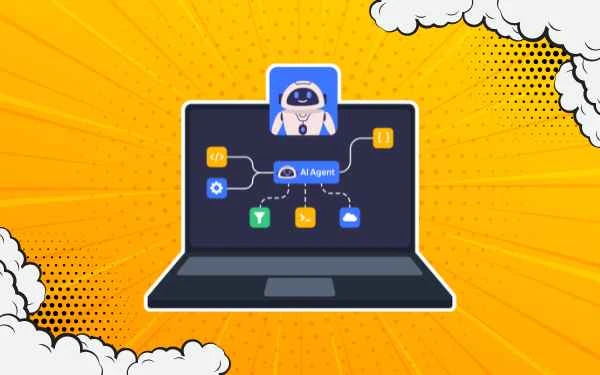
The technology combines conventional operational analytics with newer generative AI and agentic capabilities. Transit Technologies says employees can query operational information using conversational AI, while background agents continuously identify inefficiencies and potential risks.
In practical terms, that could mean an operations manager asking why a route is consistently running late, rather than manually searching through separate scheduling, fleet and workforce systems. The underlying value is not the conversational interface itself; it is whether the platform has enough reliable, connected operational data to produce an answer that can inform a decision.
That distinction matters as enterprises move from AI experimentation toward deployment. McKinsey’s 2025 global AI survey found that 88% of respondents said their organizations were using AI in at least one business function, but only 7% said AI had been scaled across the enterprise. The research points to workflow redesign and organizational integration as important factors in capturing value.
For Transit Technologies, the strategy is therefore less about adding an AI assistant to transit software and more about creating an operating system for transportation data.
The company says early design partners have used the unified view to identify problems sooner, including maintenance issues associated with particular routes. Transit Technologies also claims its existing technology serves more than 4,000 clients worldwide, has supported more than 54 million rides and has produced a 30%–44% increase in rides per hour. Those performance figures are company claims rather than independently verified industry benchmarks.
The competitive question will be whether TransitTechOS can deliver meaningful orchestration across heterogeneous systems while preserving the specialized capabilities agencies already depend on.
The market already includes established transit technology vendors focused on computer-aided dispatch, scheduling, fleet management, passenger information, fare collection and mobility management. Meanwhile, broader enterprise platforms from companies such as Microsoft, Google, Amazon and Salesforce increasingly offer AI agents, data platforms and workflow automation.
Transit Technologies is taking a more vertical approach. Its advantage could be domain-specific operational knowledge and access to transportation workflows that general-purpose enterprise AI platforms do not natively understand. The trade-off is that transit agencies may want evidence that the platform can integrate reliably with a complicated technology estate and operate within public-sector requirements for security, reliability, accessibility and data governance.
The launch also highlights an important distinction between generative AI and operational AI. A large language model can summarize an incident report or answer a question, but an effective transit operating platform needs structured data, real-time telemetry, rules, predictive analytics and workflow controls underneath the language interface.
That is where the company’s “AI-first” positioning will ultimately be tested.
TransitTechOS is currently available to select clients through early-access programs focused on campus and specialized transportation operations. Transit Technologies says broader availability for public transit agencies and non-emergency medical transportation providers is planned for later in 2026.
For enterprise transportation teams, the more significant development may be the architectural direction: instead of asking agencies to abandon existing applications, TransitTechOS attempts to put an intelligence layer across them. If that approach works at scale, it could provide a blueprint for how vertical industries use AI to modernize fragmented operational systems without undertaking a wholesale software replacement.
Market Landscape
AI adoption is accelerating, but enterprises are still struggling to move from individual pilots to operational scale. McKinsey’s 2026 operations research found that almost 90% of organizations surveyed were experimenting with AI, while only 7% reported scaling it across the enterprise. The same research emphasizes real-time data, clear KPIs and operational systems as important components of successful AI deployment.
Transportation is increasingly part of that transition. Gartner identified AI-driven data insights, infrastructure management and operational efficiency among major transportation technology priorities for 2025.
This creates an opening for vertical AI platforms. Companies that understand the underlying workflows can potentially offer more useful automation than horizontal AI tools alone. The challenge is proving that AI recommendations are accurate enough for safety-sensitive, time-critical environments.
TransitTechOS enters that market alongside established transportation software providers and the broader AI infrastructure ecosystem. Its differentiator is not simply conversational AI; it is the attempt to combine a unified operational data model, domain-specific applications, predictive intelligence and autonomous agents in one transit-focused architecture.
For CIOs and operations leaders, the key evaluation criteria will therefore include integration depth, data quality, explainability, cybersecurity, human oversight, interoperability and measurable operational outcomes—not just the sophistication of the AI interface.
Top Insights
- TransitTechOS connects service, fleet, workforce and safety data, giving transit operators a unified operational layer across fragmented transportation software environments.
- Transit Technologies is embedding conversational AI and autonomous agents into transit workflows, targeting faster decisions around scheduling, maintenance, safety and workforce performance.
- The platform supports campus and specialized transportation first, with wider public transit and NEMT availability planned later in 2026.
- Its strategy differs from horizontal AI platforms by combining domain-specific transit software with a shared data model and intelligence layer.
- Enterprise adoption will depend on integration, data governance, reliability and measurable operational improvements rather than AI features alone.
Power Tomorrow’s Intelligence — Build It with TechEdgeAI