









Suriname telecom operator Telesur has gone live with Cerillion 26.1, upgrading its business and operations support systems (BSS/OSS) with faster product configuration, AI agents and expanded TM Forum Open APIs. The deployment illustrates how communications service providers are beginning to embed agentic AI and composable architecture directly into core telecom platforms rather than treating AI as a separate layer.
Telecom operators have spent years modernizing networks while leaving many of the business systems surrounding those networks constrained by legacy software. That is changing as AI moves into billing, customer management, product configuration and operational workflows.
Telesur, Suriname’s leading telecommunications provider, has completed an upgrade to Cerillion 26.1, giving the operator access to new automation, product management and integration capabilities. The deployment includes Cerillion’s Promotions Engine, AI-powered agents, expanded TM Forum Open APIs and an updated CRM Plus environment.
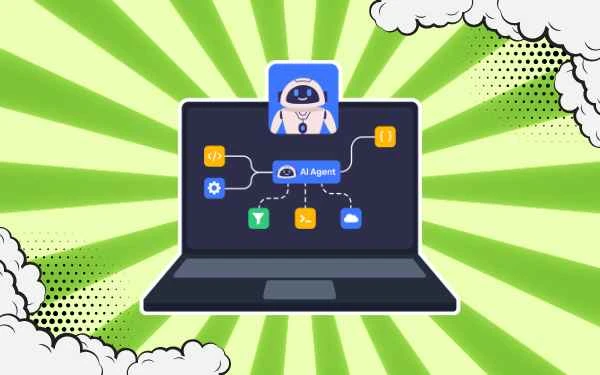
The significance goes beyond a conventional software upgrade. Cerillion 26.1 was released with Agent2Agent (A2A) capabilities, allowing AI agents to communicate and coordinate tasks across systems rather than operating as isolated assistants. Cerillion says the release builds on its earlier AI agents and Model Context Protocol (MCP) capabilities to support multi-step process execution.
For telecom operators, that is potentially important because business processes rarely stay within a single application.
Launching a new mobile offer, for example, can involve product catalogs, pricing, charging, customer eligibility, orders, inventory and customer communications. An AI agent that can only access one system may automate a task, but an agentic BSS/OSS environment can potentially coordinate a sequence of related actions.
Telesur’s immediate benefit is more conventional. The operator can use Cerillion’s Promotions Engine to configure and launch new offers more quickly. That gives product teams greater flexibility to respond to changing customer demand without relying on extensive bespoke development.
The upgrade also provides a more consolidated customer view through CRM Plus. Cerillion says the updated environment brings customer information together from different systems, giving staff more real-time context when interacting with subscribers.
That kind of data consolidation remains important even as AI becomes more sophisticated. Agents are only as useful as the data and permissions available to them. In telecom, fragmented systems and inconsistent information can make autonomous automation particularly difficult.
TM Forum has identified this as a structural challenge for the industry. Its recent research says telecom networks remain highly fragmented and multi-vendor, with siloed data and low tolerance for operational errors making trusted AI deployment particularly difficult.
The standards layer therefore matters almost as much as the AI layer.
Cerillion 26.1 expands the platform’s use of TM Forum Open APIs, while Cerillion has achieved Diamond-level status in the organization’s Open API Conformance program. The company says its certifications include real-world deployments rather than only laboratory validation.
Open APIs can give AI agents standardized ways to discover and invoke business capabilities. Cerillion’s MCP implementation builds on that foundation by providing a mechanism for agents to access context and services through APIs.
That puts Cerillion within a larger industry movement toward AI-orchestrated telecom operations.
TM Forum’s Autonomous Operations Target Operating Model, published in 2026, describes AI agents as a link between business intent and technical execution. The framework brings together agentic AI, MCP, Agent2Agent communication, TM Forum Open APIs and existing telecom systems as components of a potential autonomous-operations architecture.
The market is already moving beyond customer-service chatbots. Telecom operators are exploring AI for network operations, service assurance, customer lifecycle management, product creation and increasingly autonomous workflows. TM Forum reports that 72% of surveyed communications service providers plan to use digital twins to enable autonomous networks and agentic AI, while 13% already do so.
That creates a competitive opening for BSS/OSS vendors. Companies such as Amdocs, Comviva and Netcracker are also pursuing AI-enabled telecom operations, while hyperscalers including Microsoft, Google and Amazon are providing the underlying cloud and AI infrastructure.
The differentiation may increasingly come down to how deeply AI is integrated into the operational platform.
Cerillion’s approach is to put AI agents, APIs and orchestration capabilities inside its existing BSS/OSS suite rather than requiring operators to assemble separate AI systems around it. The company’s April 2026 release positioned A2A capabilities as a step toward coordinated autonomous operations, with agents able to work across internal and external systems.
For Telesur, the next stage will extend that modernization to customer-facing digital journeys. The operator plans to deploy Cerillion’s composable Self Service capability, including support for electronic know-your-customer (eKYC) during customer onboarding.
That could eventually connect the back-office modernization with more automated customer journeys, but the immediate value is simpler: faster product launches, better access to customer information and a more standards-based technology foundation.
The larger lesson is that agentic AI in telecom will depend on the BSS/OSS plumbing underneath it. AI models may provide reasoning and automation, but standardized APIs, reliable customer data, identity controls and well-defined business processes determine what those agents can actually do.
Telesur’s Cerillion upgrade is therefore a useful example of a broader transition. Telecom operators are moving from adding AI tools around legacy systems toward embedding AI capabilities inside the systems that run the business.
Market Landscape
Telecom BSS/OSS is becoming an important battleground for enterprise AI, AI automation and agentic operations. TM Forum’s autonomous-operations framework combines AI agents with Open APIs, MCP and A2A capabilities to provide a standardized path toward more autonomous CSP operations.
The trend extends across customer care, product management, network operations and service assurance. TM Forum says 72% of surveyed CSPs plan to use digital twins for autonomous networks and agentic AI.
The competitive question is increasingly whether telecom platforms can provide the data, APIs, governance and orchestration needed for AI agents to execute safely—not simply whether they offer an AI assistant.
Top Insights
- Telesur’s Cerillion 26.1 upgrade embeds AI agents directly into telecom BSS/OSS workflows rather than treating AI as a standalone application.
- Cerillion’s Promotions Engine gives telecom product teams a faster way to configure and launch new offers.
- TM Forum Open APIs and MCP provide an integration foundation for AI agents operating across telecom applications and systems.
- Agent2Agent capabilities move BSS automation toward coordinated multi-step workflows involving multiple specialized AI agents.
- Telesur’s planned eKYC and self-service rollout could extend the modernization into customer-facing digital journeys.
Power Tomorrow’s Intelligence — Build It with TechEdgeAI