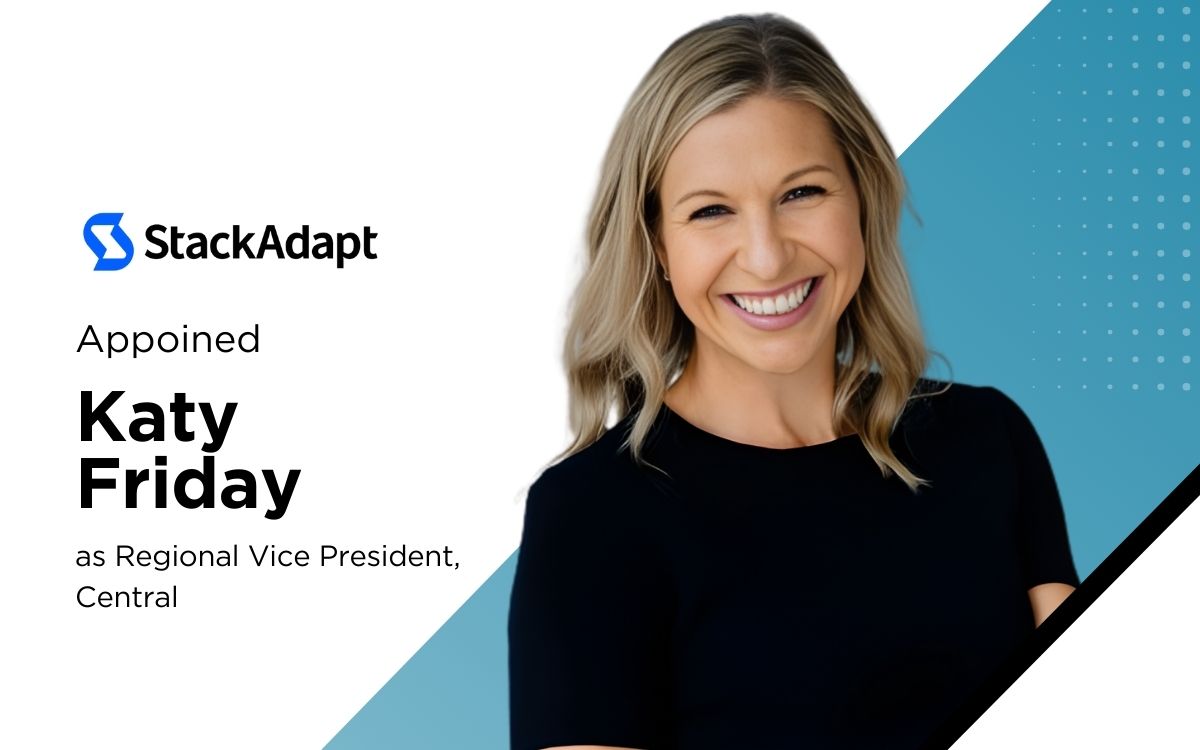


StackAdapt is making a clear statement about where it believes the next phase of growth in AI-powered advertising will come from—and who it wants leading that charge.
The Toronto-based AI advertising and orchestration platform has appointed Katy Friday as Regional Vice President for the Central region, adding a seasoned programmatic heavyweight to its senior revenue leadership team. Friday joins StackAdapt after more than a decade at The Trade Desk, one of the most influential companies in programmatic advertising, where she most recently served as Senior Vice President of Business Development.
The hire underscores StackAdapt’s push to deepen its enterprise footprint in the U.S. heartland while competing more directly with entrenched programmatic leaders—and it reflects a broader industry shift toward AI-led, full-funnel advertising platforms that promise more than just media buying efficiency.
Why This Hire Matters Now
Executive moves don’t always signal strategy shifts—but this one does.
StackAdapt has spent the past few years evolving from a native advertising specialist into a broader AI-powered advertising and orchestration platform, spanning programmatic display, video, CTV, native, digital out-of-home (DOOH), and owned channel activation. As advertisers demand tighter integration between brand, performance, and first-party data strategies, platforms are under pressure to pair sophisticated technology with experienced commercial leadership.
Friday’s background positions her squarely at that intersection.
At The Trade Desk, she oversaw national independent agencies and political advertising across North America, navigating one of the most complex, scrutinized, and fast-moving segments of programmatic media. Her remit involved structuring long-term commercial agreements, scaling agency partnerships, and sustaining revenue growth through periods of rapid market change—including the rise of CTV, identity disruption, and intensifying competition among demand-side platforms (DSPs).
For StackAdapt, which competes in a crowded and consolidating market, that experience is not just additive—it’s strategic.
From The Trade Desk to StackAdapt: A Shift in Platform Philosophy
Friday spent 12 years at The Trade Desk, a company widely regarded as the gold standard for independent DSPs. Her decision to move is notable, particularly as The Trade Desk continues to double down on OpenPath, UID2, and CTV dominance.
StackAdapt, by contrast, has taken a different route.
Rather than positioning itself purely as a DSP, StackAdapt emphasizes “orchestration”—using AI to unify planning, activation, optimization, and measurement across both paid and owned channels. The pitch resonates with mid-market and enterprise brands alike that are struggling with fragmented ad stacks, siloed data, and rising operational complexity.
Friday’s appointment suggests StackAdapt is confident that this differentiated model is ready to scale more aggressively—especially in the Central U.S., a region that includes fast-growing tech hubs, major agency markets, and brand headquarters often overlooked in coastal-centric ad tech strategies.
A Leader Shaped by Agency and Advertiser Realities
Before her tenure on the platform side, Friday worked on the agency side, partnering closely with brands and media teams. That dual perspective—agency and technology vendor—has become increasingly valuable as marketers push for transparency, flexibility, and measurable outcomes.
Over her career, she has worked with:
- Global and regional brands
- Holding company agencies
- High-growth independent agencies
She is known for helping partners scale through periods of disruption, from shifts in buying models to regulatory pressure and changing consumer behavior. Those skills are especially relevant today, as AI reshapes how campaigns are planned, executed, and optimized in near real time.
At StackAdapt, Friday will focus on:
- Scaling market share across the Central region
- Building and leading high-performing revenue teams
- Strengthening long-term customer partnerships
The emphasis on team-building is notable. As AI automates more tactical execution, differentiation increasingly comes down to strategic guidance, service quality, and trust—areas where strong regional leadership can make or break adoption.
The Central Region: An Underrated Growth Engine
While New York, San Francisco, and Los Angeles still dominate ad tech headlines, the Central U.S. has quietly become one of the most important growth markets in North America.
Cities like Chicago, Dallas, Austin, Minneapolis, and Kansas City host:
- Major brand headquarters
- Influential independent agencies
- Political advertising power centers
- Fast-growing regional tech ecosystems
By appointing a senior executive specifically focused on this region, StackAdapt is signaling that it sees meaningful upside beyond coastal expansion—and that it’s willing to invest accordingly.
This mirrors a broader industry trend: ad platforms decentralizing leadership to stay closer to customers as buying decisions become more localized and relationship-driven.
AI Advertising Is Maturing—and Expectations Are Rising
StackAdapt’s framing of itself as an AI advertising and orchestration platform aligns with where the market is heading, not where it’s been.
Early AI adoption in ad tech focused on automation and optimization. Today, marketers expect AI to:
- Improve planning and forecasting
- Connect paid and owned channels
- Adapt messaging dynamically
- Deliver explainable performance insights
That shift raises the bar for both technology and leadership. Friday’s experience structuring complex commercial agreements and managing long-term agency relationships suggests StackAdapt is preparing for more sophisticated enterprise conversations—where AI capability alone isn’t enough.
Competitive Implications
The competitive landscape StackAdapt operates in includes:
- DSP giants like The Trade Desk and Google
- Retail media networks expanding into programmatic
- Emerging AI-first platforms promising end-to-end orchestration
Hiring a senior executive from a top-tier competitor strengthens StackAdapt’s credibility in these conversations. It also sends a signal to agencies and brands that the company is serious about playing at the highest level of the programmatic ecosystem.
Whether StackAdapt can convert that momentum into sustained market share gains remains to be seen—but leadership hires like this tend to precede more aggressive growth strategies.
The Bottom Line
Katy Friday’s appointment is more than a routine executive hire. It reflects StackAdapt’s ambition to scale its AI-driven advertising model, deepen enterprise relationships, and compete more directly with established programmatic leaders—starting with a region often underestimated but increasingly influential.
As AI continues to redefine how advertising is planned, bought, and measured, platforms that pair strong technology with experienced, trusted leadership will have a clear advantage. StackAdapt is betting that Friday can help deliver exactly that.
Power Tomorrow’s Intelligence — Build It with TechEdgeAI

Techedge AI is a niche publication dedicated to keeping its audience at the forefront of the rapidly evolving AI technology landscape. With a sharp focus on emerging trends, groundbreaking innovations, and expert insights, we cover everything from C-suite interviews and industry news to in-depth articles, podcasts, press releases, and guest posts. Join us as we explore the AI technologies shaping tomorrow’s world.