







The race to automate software development just escalated.
SoftServe has launched its Agentic Engineering Suite, a structured framework for designing, modernizing, testing, and deploying software using coordinated AI agents. The company claims the approach can reduce manual effort across the software development lifecycle (SDLC) by up to 90%—while preserving human oversight for strategy, governance, and quality control.
If that number holds up in practice, it could significantly reshape how enterprises approach modernization and greenfield development in 2026.
What’s New: AI Agents Across the Entire SDLC
Unlike AI coding assistants that focus narrowly on code generation, SoftServe’s Agentic Engineering Suite spans the full SDLC—from planning and business analysis to deployment and maintenance.
The suite is built around two core pillars:
- Modernization of legacy systems
- New application development
AI agents are orchestrated through SoftServe’s open platform or via Model Context Protocol (MCP), enabling integration with preferred development tools and cloud ecosystems. Human teams—particularly a new role SoftServe calls “Intelligence Engineers”—configure, supervise, and validate outputs.
The result is what SoftServe describes as an “agentic core” capable of chaining tasks, sharing context, and dynamically adapting workflows.
This positions the suite as a coordinated AI system, not just a collection of point tools.
The Agent Lineup
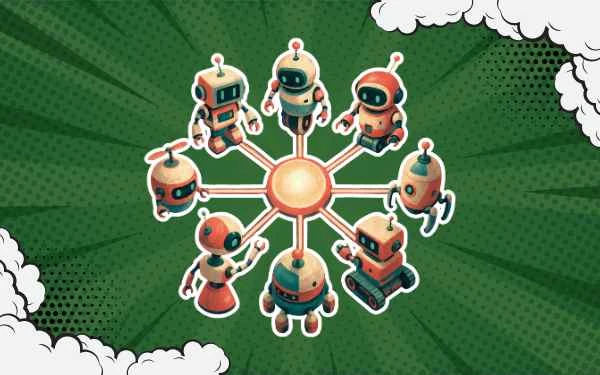
The Agentic Engineering Suite includes a growing catalog of specialized agents, such as:
- QA Agent for automated testing and quality assurance
- BA Agent for requirements gathering and documentation
- Code Generation Agent for writing new code
- Code Conversion Agent for translating legacy systems across languages and frameworks
- Architect Agent for system design insights
- Maintenance Agent for diagnostics and issue detection
- CI/CD Agent for orchestrating build-to-release pipelines
Together, these agents handle tasks ranging from technical specification translation and repository analysis to autonomous build orchestration.
In practice, that means AI agents can analyze legacy repositories, generate modernization plans, rewrite code, test outputs, and push builds through CI/CD pipelines—with humans supervising checkpoints rather than manually executing each step.
Why It Matters: From Copilot to Autonomous Engineering
The broader industry trend is clear: AI is moving from assistant to operator.
First-generation developer tools focused on code suggestions and autocomplete. Now, vendors are experimenting with autonomous task execution—where AI agents perform structured workflows with minimal prompting.
SoftServe’s approach formalizes that evolution. Rather than deploying isolated AI tools, the company proposes a delivery methodology where people, processes, and AI agents operate as a unified system.
Serge Haziyev, SoftServe’s CTO of Advanced Technologies, framed it as aligning strategy, execution, and metrics around agentic engineering to accelerate transformation.
The key differentiator is orchestration. The agents don’t just act independently—they coordinate through shared logic and contextual awareness.
Modular, Cloud-Agnostic, and Enterprise-Friendly
The suite is designed with enterprise constraints in mind.
Modular architecture:
A composable framework allows reusable agents to be dynamically chained across workflows.
Technological specificity:
Organizations can run agents standalone, leverage open-source frameworks, or integrate via MCP into preferred ecosystems.
SoftServe highlights strategic partnerships with:
- NVIDIA
- Amazon Web Services
- Google Cloud
- Microsoft Azure
Adaptive deployment:
Agents can run as CLI processes or API calls across cloud, on-premises, or hybrid environments—critical for enterprises with regulatory or data residency requirements.
That flexibility matters in highly regulated industries where fully autonomous development may not be feasible, but partial automation can still yield productivity gains.
Where Agentic Engineering Makes Sense
SoftServe acknowledges that not every environment is suited for fully autonomous workflows. The suite is best applied in scenarios such as:
- Large backlogs of repetitive development tasks
- Greenfield product launches at scale
- Modernization of legacy systems
- Innovation-friendly or lower-regulated industries
- AI governance-driven transformation initiatives
In other words, environments where structured automation can replace predictable manual effort without introducing unacceptable compliance risks.
The Talent Implication: Intelligence Engineers
A notable element is the introduction of “Intelligence Engineers”—human specialists tasked with configuring, supervising, and validating agent outputs.
As AI absorbs repetitive tasks, roles shift toward orchestration, oversight, and quality assurance. This mirrors broader enterprise AI adoption trends, where governance and supervision are as critical as automation.
Rather than eliminating engineering teams, the model reframes them.
Competitive Landscape: Platform vs. Tool
The AI-for-development market is increasingly crowded, from code copilots to autonomous DevOps platforms. What distinguishes SoftServe’s approach is its positioning as a delivery framework embedded within a consulting and digital services model.
Instead of selling standalone tooling, SoftServe is packaging agentic engineering as a service-backed transformation offering.
That may resonate with large enterprises that need methodology, governance alignment, and change management—not just AI capabilities.
The Bottom Line
SoftServe’s Agentic Engineering Suite represents a significant step toward fully automated software lifecycles—where AI agents handle planning, coding, testing, and deployment under human supervision.
The promise of up to 90% manual effort reduction is ambitious. But even partial realization could dramatically accelerate modernization initiatives and reduce time-to-market for new digital products.
As enterprises grapple with legacy debt, AI governance mandates, and pressure to innovate faster, agentic engineering may become less of an experiment—and more of a competitive necessity.
Power Tomorrow’s Intelligence — Build It with TechEdgeAI