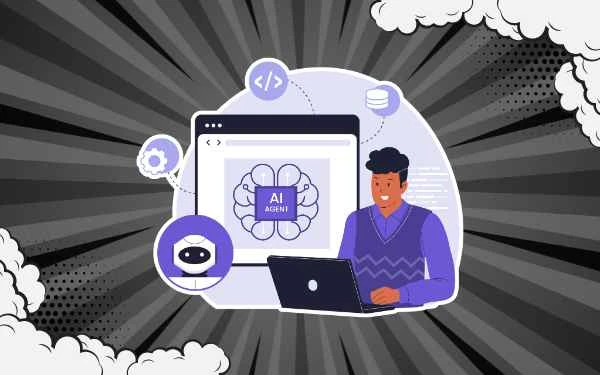








Simplilearn, in partnership with UC Santa Barbara Professional and Continuing Education (UCSB PaCE), has unveiled a 20‑week, live‑online Full Stack Development Program that embeds Generative AI throughout the curriculum. Aimed at working professionals, the course blends MERN‑stack training with AI‑assisted coding, testing and deployment tools, promising faster delivery of production‑ready web applications.
What the program delivers
The new offering replaces the traditional boot‑camp model with a paced, 10‑hours‑per‑week schedule that covers front‑end (React), back‑end (Node.js, Express), databases (MongoDB, SQL), API design, authentication, and DevOps fundamentals (Docker, Kubernetes, AWS). What sets it apart is the systematic integration of Generative AI assistants—Microsoft Copilot, Replit’s Ghostwriter, and custom prompt‑engineered workflows—into each development stage. Learners practice “vibe coding,” a term the instructors use for AI‑augmented code generation that iteratively refines snippets based on contextual prompts.
Why AI‑first full‑stack matters
According to a recent Gartner survey, 68 % of enterprise developers plan to rely on Generative AI for at least half of their coding tasks by 2027. Early adopters report productivity lifts of 10‑30 %, a range echoed by Forrester’s “AI‑Driven Development” study. The Simplilearn‑UCSB program translates those gains into a structured learning path, giving professionals the fluency to harness AI without sacrificing core software engineering principles.
Competitive context
Several cloud providers—Google Cloud’s “Vertex AI Studio,” Amazon’s “CodeWhisperer,” and Microsoft’s “GitHub Copilot for Business”—offer AI‑enhanced developer tools, but few pair them with a full‑stack certification. Coursera and Udacity provide AI‑focused modules, yet they often remain separate from hands‑on MERN projects. By embedding AI into a cohesive, portfolio‑driven curriculum, Simplilearn positions itself between niche AI tool training and broad‑spectrum bootcamps, targeting enterprises that need immediate upskilling of existing teams.
Implications for enterprise teams
Marketing and product squads increasingly demand rapid prototyping of web experiences. The program’s focus on end‑to‑end delivery—design, code, test, deploy—means graduates can shorten feature cycles, reduce reliance on external agencies, and maintain tighter alignment with brand guidelines. Moreover, the inclusion of prompt‑engineering and AI‑assisted testing equips teams to automate repetitive QA tasks, freeing senior engineers to focus on architecture and innovation.
Learning experience and eligibility
The course blends live virtual instruction with on‑demand recordings, ensuring continuity for professionals across time zones. A dedicated cohort manager provides weekly check‑ins, while three capstone projects simulate real‑world product launches. Applicants must hold a bachelor’s degree (minimum 50 % marks), two years of work experience, and a foundational grasp of programming concepts. Successful candidates can commence within two weeks of fee confirmation, a timeline that aligns with fast‑track corporate training budgets.
Strategic partnership benefits
UCSB PaCE contributes academic rigor and an accreditation framework, while Simplilearn supplies an immersive delivery model proven across 150 + countries. The collaboration mirrors a broader industry trend where universities partner with ed‑tech firms to produce “industry‑ready” credentials that carry both academic and market weight.
Future outlook
As AI continues to reshape software engineering, the demand for developers who can navigate both code and AI prompts will intensify. Programs that blend deep technical stacks with Generative AI fluency—like this new offering—are likely to become the de‑facto standard for enterprise upskilling, especially as firms adopt AI‑first product strategies across cloud platforms such as Google Cloud, AWS, and Microsoft Azure.
Market Landscape
The enterprise AI training market is projected by IDC to reach $12 billion by 2028, driven by a talent shortage that Gartner quantifies at 1.5 million unfilled AI roles globally. Traditional bootcamps have struggled to keep pace with the rapid evolution of Generative AI tools, prompting a shift toward hybrid curricula that marry core engineering with AI augmentation. Cloud providers are embedding AI assistants directly into their development environments, creating a competitive pressure for education vendors to integrate these capabilities into their courses. Simplilearn’s partnership with UCSB PaCE reflects a strategic response: leveraging university credibility to differentiate its catalog while delivering the hands‑on AI tooling that enterprises now demand.
Top Insights
- Generative AI can boost developer productivity by up to 30 %, making AI‑augmented full‑stack training a high‑ROI investment for enterprises.
- The program’s 20‑week, 10‑hour‑per‑week model aligns with corporate learning budgets and reduces time‑to‑skill compared with traditional bootcamps.
- By combining MERN‑stack mastery with AI‑assisted workflows, graduates can deliver production‑ready applications faster, directly benefiting marketing‑driven product cycles.
- UCSB’s academic accreditation paired with Simplilearn’s global delivery creates a hybrid credential that satisfies both HR compliance and market relevance.
- As cloud giants embed AI tools into their platforms, training programs that teach prompt engineering and AI‑driven DevOps will become essential for maintaining competitive advantage.