






Continuous glucose monitoring has already changed diabetes care by replacing isolated finger-stick readings with a near-continuous picture of how glucose behaves throughout the day. The next challenge is figuring out what to do with all that data.
SIBIONICS is betting that the answer lies beyond glucose itself.
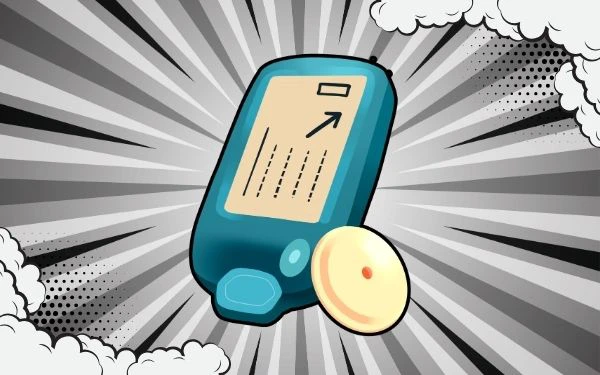
The medical technology company is positioning its GS3 continuous glucose monitoring (CGM) system as part of a broader technology platform that could eventually connect glucose and ketone sensing, artificial intelligence, insulin delivery, and other diabetes technologies.
The strategy was outlined at the symposium “Beyond Glucose: The Integrated Future of CGM, CKM, and AI in Diabetes,” jointly hosted by SIBIONICS and Air Liquide Healthcare.
The event brought together clinicians and diabetes specialists to examine where continuous monitoring is heading—and, increasingly, whether the next breakthrough will come from better sensors, better software, or the combination of both.
SIBIONICS’ answer appears to be the latter.
The unusual technology history behind GS3
The engineering story behind GS3 starts somewhere that might seem unrelated to glucose monitoring: the brain-computer interface field.
SIBIONICS has worked on high-complexity biosensing technologies, including a retinal prosthesis designed to provide limited visual perception for people with profound vision loss associated with outer retinal degenerative diseases such as retinitis pigmentosa.
A retinal prosthesis and a glucose sensor obviously serve very different medical purposes.
The underlying engineering challenge, however, has some important similarities.
Both depend on accurately sensing biological signals, maintaining stable signal acquisition, and processing those signals reliably enough to turn complex physiological information into something useful.
SIBIONICS says it has translated that engineering experience into a more accessible medical technology platform for continuous glucose monitoring.
The result is the GS3, a factory-calibrated, 14-day CGM sensor with a 2.9-millimeter profile.
For users, that translates into a relatively small device worn on the body for two weeks at a time.
For the company, the sensor represents something larger: a foundation for an expanding biosensing platform.
And that distinction is important.
The future of diabetes technology may not be defined by a single sensor. It could be defined by how different streams of physiological data are connected.
From monitoring glucose to understanding metabolism
Traditional glucose monitoring answers a relatively narrow question: What is the glucose level right now?
CGM expands that question.
Instead of a handful of measurements, users can see trends—whether glucose is rising, falling, remaining stable, or changing in response to meals, exercise, medication, stress, and other factors.
But more data creates another problem.
Information isn’t the same thing as insight.
A person can be presented with hundreds or thousands of glucose readings and still have difficulty understanding which patterns actually matter.
That’s where the next generation of diabetes technology is likely to focus.
At the SIBIONICS symposium, speakers examined the emerging role of both continuous glucose monitoring and continuous ketone monitoring (CKM), as well as the potential for AI to interpret those data streams.
The direction is clear: move from displaying physiological measurements to helping users and clinicians understand what those measurements mean.
Clinicians are looking beyond the glucose graph
The symposium was chaired by Professor Sofianos Andrikopoulos, Group CEO of the Australian Diabetes Society.
Three speakers brought different perspectives to the discussion.
Professor David O’Neal of the University of Melbourne and Deputy Director of the Australian Centre for Accelerating Diabetes Innovations reviewed emerging clinical evidence surrounding continuous glucose and ketone monitoring.
Associate Professor Shannon Lin, a diabetes and nutrition specialist at the University of Technology Sydney, explored how CGM could move beyond simply making glucose data visible toward more personalized, predictive, and actionable support.
Professor Wei Qiang, Associate Chief Physician and Deputy Director of Endocrinology and Metabolism at the First Affiliated Hospital of Xi’an Jiaotong University, discussed an integrated, AI-driven ecosystem combining sensing, context, and learning.
Together, those perspectives highlight an important change in how continuous monitoring is being discussed.
The sensor is increasingly becoming just the first layer.
The real value could come from what happens to the information after it has been collected.
AI could become the interpretation layer
The diabetes technology market is already full of dashboards, trend arrows, alerts, reports, and graphs.
The next challenge is making those interfaces genuinely useful.
AI could potentially act as an interpretation layer between raw physiological data and human decision-making.
For example, an AI system could identify recurring glucose spikes, correlate them with meal information, recognize patterns over time, and surface observations that might otherwise be difficult to spot.
That doesn’t necessarily mean handing medical decisions over to an algorithm.
In fact, feedback from diabetes educators at the SIBIONICS booth emphasized the opposite.
During the congress, physicians and diabetes educators were able to experience GS3 and discuss its glucose-management capabilities. In anonymized interviews, certified diabetes educators described the sensor as small, lightweight, comfortable, and easy to set up.
They also identified potential applications for AI-supported spike detection, simpler meal logging, and food analysis that connects glucose trends with meal context.
Those use cases are less flashy than the idea of an autonomous AI doctor—but potentially much more practical.
If a system can make a patient’s existing data easier to understand, it may improve the usefulness of monitoring without attempting to replace clinical expertise.
The meal problem is still a data problem
Food is one of the most difficult pieces of the diabetes-management puzzle.
Patients don’t just eat “carbohydrates.” Meals combine carbohydrates, protein, fat, fiber, portion size, preparation methods, and timing. Individual glucose responses can vary considerably.
That makes food logging both valuable and tedious.
An AI-assisted system could potentially reduce some of that friction by helping users identify foods, estimate relevant nutritional information, and connect meals with subsequent glucose responses.
The goal would not simply be to produce a better food diary.
It would be to build a clearer picture of cause and effect.
A user might see that a particular meal repeatedly produces a significant glucose increase, for example, or that a certain combination of foods produces a different response at different times of day.
This is where personalization becomes important.
Generic dietary advice is relatively easy to deliver.
Personalized feedback based on an individual’s actual physiological response is considerably more useful—provided the underlying data and interpretation are reliable.
Diabetes educators at the event highlighted the importance of personalisation, clear carbohydrate estimates, and clinically useful event timelines.
Those details may sound mundane.
They’re not.
In healthcare technology, usability often determines whether a sophisticated system becomes part of someone’s routine or gets abandoned in a drawer.
Small sensors, bigger ecosystems
GS3’s physical profile—2.9 millimeters—is one piece of that usability equation.
A wearable sensor that is uncomfortable, complicated to apply, or intrusive is unlikely to become a seamless part of everyday life.
SIBIONICS says GS3 is factory calibrated and designed for 14 days of continuous use.
The broader ambition, however, goes well beyond making the sensor smaller or easier to wear.
The company plans to integrate its sensing platform with continuous ketone monitoring, insulin delivery, AI, and other diabetes technologies.
That would create a much broader ecosystem.
Instead of treating glucose monitoring as a standalone product, SIBIONICS is positioning sensing as an infrastructure layer that can feed multiple applications.
That strategy mirrors a wider trend across digital health.
Hardware companies increasingly need software ecosystems to differentiate their devices. Software companies need reliable physiological data to make their algorithms useful.
The result is a convergence of medical devices, cloud platforms, AI, analytics, and connected therapies.
The companies that can connect those pieces effectively could have an advantage over those selling isolated devices.
Why ketone monitoring matters
The move from CGM toward CKM is particularly interesting because glucose and ketones provide different pieces of metabolic information.
Glucose monitoring tracks blood sugar dynamics.
Ketone monitoring can provide additional information about the body’s metabolic state, particularly when glucose availability and insulin activity are altered.
Combining the two could potentially give clinicians and patients a richer picture than either signal alone.
It also creates more data for AI systems to interpret.
That is both an opportunity and a challenge.
More physiological information can improve context, but only if systems can distinguish meaningful signals from noise and present them in a way users can understand.
The ultimate objective isn’t to create the world’s most complicated health dashboard.
It is to reduce uncertainty.
The real AI opportunity may be decision support
The strongest message from the diabetes educators’ feedback was that AI should extend education and decision support rather than replace professional care.
That distinction is increasingly important across healthcare.
AI can be very good at recognizing patterns across large quantities of information. It can help organize data, surface anomalies, summarize trends, and personalize information.
But healthcare decisions often depend on context that isn’t fully captured by a sensor.
A glucose spike isn’t automatically a problem.
A trend needs context.
A patient’s medication, health status, diet, activity level, and clinical history can all affect how a particular measurement should be interpreted.
That means the most credible AI-driven healthcare systems are likely to be those that augment clinicians and patients rather than presenting themselves as autonomous replacements for them.
For SIBIONICS, that could mean using AI to make its sensor data more useful without obscuring where clinical judgment remains necessary.
From data visibility to predictive support
The progression of diabetes technology can be viewed as a series of increasingly sophisticated layers.
First came measurement.
Then continuous measurement.
Then visualization and alerts.
The next step is interpretation.
After that comes prediction and, potentially, automated action.
That final stage is where things become particularly interesting.
If a system can reliably recognize a pattern before a significant glucose event occurs, it could potentially provide earlier and more personalized support.
Connect that system to insulin delivery or other interventions, and the technology moves closer to a closed-loop ecosystem.
SIBIONICS is signaling interest in that broader direction by planning integration with insulin delivery and AI.
But moving from monitoring to intervention also raises the bar for safety.
A device that reports a measurement can be evaluated differently from a system that makes recommendations or automatically changes therapy.
As more technologies become connected, reliability, cybersecurity, clinical validation, regulatory oversight, and human control become increasingly important.
The upside is potentially substantial.
So is the responsibility.
SIBIONICS wants the sensor to be the starting point
The company’s roadmap suggests that GS3 isn’t intended to be the endpoint of its CGM strategy.
Instead, it serves as an entry point into a broader sensing platform.
That approach could allow SIBIONICS to expand from glucose monitoring into a more comprehensive diabetes-management ecosystem.
The potential architecture looks something like this: sensors collect physiological information; AI provides interpretation; software adds contextual information such as meals and activity; clinicians and patients receive actionable insights; and connected therapeutic systems can eventually respond.
That sounds straightforward on paper.
Building it reliably is anything but.
Every additional layer introduces integration challenges.
Sensors have to produce trustworthy measurements. Software has to process those measurements correctly. AI systems need to interpret patterns without overreaching. Data needs to move securely between devices and platforms. And healthcare professionals need confidence that the resulting information is clinically meaningful.
The technical difficulty increases as the system becomes more interconnected.
That’s also why SIBIONICS’ experience with high-threshold biosensing technologies could be strategically relevant.
The company’s work in retinal prostheses isn’t the same as building a CGM ecosystem, but it demonstrates experience with the broader engineering challenge of capturing biological signals and translating them into useful information.
The competitive race is shifting
The CGM market has traditionally been dominated by companies competing on sensor accuracy, wear time, size, connectivity, and ease of use.
Those factors remain important.
But the competitive landscape is increasingly expanding beyond the sensor itself.
Software, AI, analytics, interoperability, and integration with other medical technologies can become differentiators.
The question is no longer simply, “How accurately can this device measure glucose?”
It is increasingly becoming, “What can the ecosystem do with that measurement?”
That’s a much bigger competitive field.
It also creates opportunities for companies that can combine hardware expertise with software and AI capabilities.
For users, the ideal outcome would be fewer fragmented applications and less manual data management.
For clinicians, it could mean clearer timelines and more useful patient information.
For healthcare providers, it could potentially mean better monitoring and more efficient use of clinical resources.
But again, the technology has to prove that it can deliver those benefits consistently.
The long-term vision: a connected metabolic ecosystem
SIBIONICS’ stated roadmap points toward a future where glucose, ketones, insulin delivery, AI, and other diabetes technologies operate as connected components rather than separate products.
That is arguably where digital diabetes care is heading.
The sensor becomes the data collection layer.
AI becomes the analysis and personalization layer.
Software provides context.
Therapeutic devices provide intervention.
Clinicians provide oversight and expertise.
Patients remain at the center of the system.
If those pieces can communicate effectively, the traditional gap between monitoring and action could shrink.
Instead of reviewing what happened after the fact, patients and clinicians could potentially receive earlier insights into what is happening and why.
The value of that model would not come from collecting more data for its own sake.
It would come from shortening the path from data to understanding—and from understanding to action.
That’s a much more demanding proposition than simply launching another CGM sensor.
It is also a potentially more important one.
What comes next
SIBIONICS is using GS3 as a foundation for a broader medical technology strategy that combines biosensing with AI and connected diabetes care.
The company’s background in complex biosensing technologies, including retinal prosthesis development, provides an unusual starting point for that strategy. Its current focus on CGM makes the technology more accessible to a much larger patient population, while its roadmap points toward ketone monitoring, insulin delivery, and increasingly intelligent software.
The immediate opportunity is practical: make continuous glucose data easier to collect, easier to understand, and more useful in everyday diabetes management.
The longer-term opportunity is considerably bigger.
If glucose and ketone sensors can be combined with contextual information, AI interpretation, and connected therapies, diabetes management could become increasingly predictive and personalized.
But the industry’s biggest challenge will remain the same: turning impressive technology into tools that work reliably in the messy reality of everyday healthcare.
For SIBIONICS, that means GS3 has to be more than a small, comfortable, 14-day sensor.
It has to be the beginning of an ecosystem.
And if the company’s roadmap succeeds, the future of CGM may look considerably less like a glucose graph—and more like an intelligent, connected metabolic management platform.
Power Tomorrow’s Intelligence — Build It with TechEdgeAI