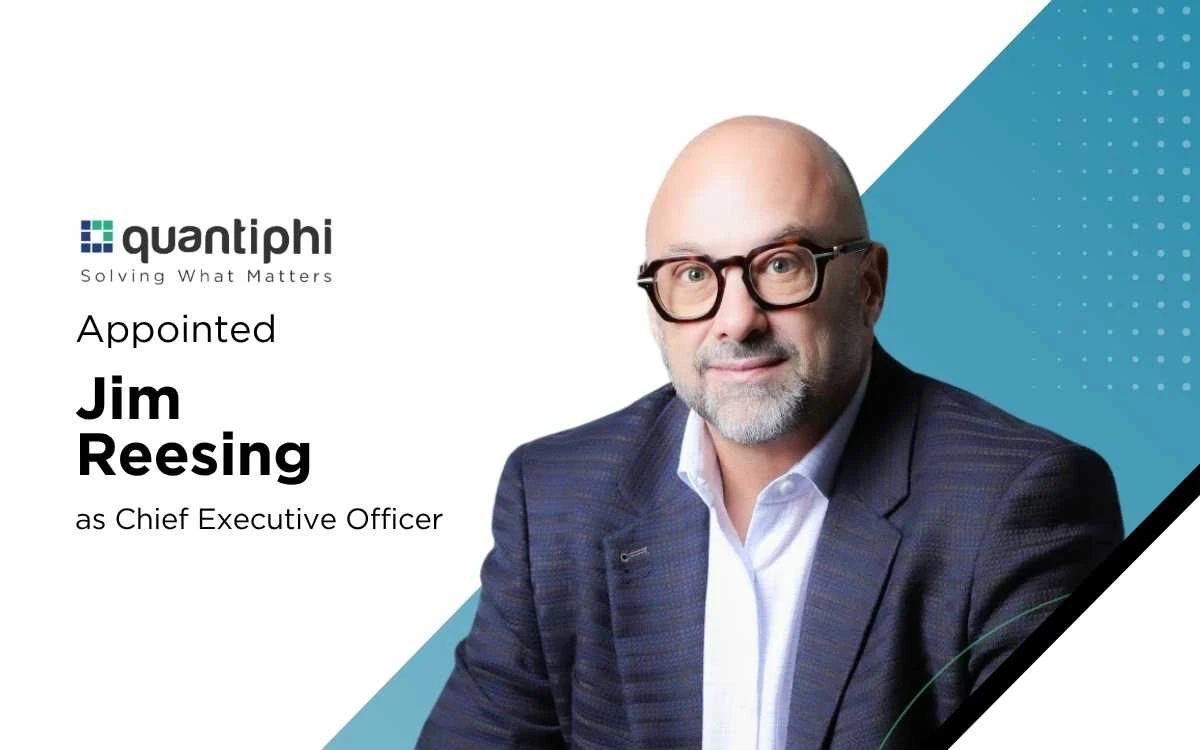
Quantiphi appointed Jim Reesing as its new chief executive officer, a move the AI‑focused services firm says will power the next phase of global expansion. Reesing, a veteran of Accenture, IBM and other large‑scale transformation outfits, takes the helm as Quantiphi doubles down on AI‑native services for Fortune‑500 enterprises seeking measurable business outcomes.
A leadership change that signals scale
The Marlborough‑based company, founded in 2013 on the premise that artificial intelligence would reshape the enterprise, has grown into a trusted partner for data, AI and digital engineering initiatives. By naming Reesing—who spent the last several years steering AI‑enabled “Enterprise Reinventions” at Accenture—as CEO, Quantiphi signals a clear intention to move beyond boutique consulting into a full‑stack, globally scaled AI platform provider.
Reesing’s track record includes leading complex, multi‑year transformation programs across finance, health care and manufacturing. At Accenture, he oversaw AI-driven automation that reduced client operating costs by double‑digit percentages. His experience in building and managing large delivery organizations aligns with Quantiphi’s ambition to serve more than 100 enterprise customers by 2027.
What the technology does
Quantiphi’s core offering blends proprietary AI models, data engineering pipelines, and cloud‑native deployment frameworks. The company’s “AI‑native services” layer abstracts model training, inference scaling and governance into a managed service that can be integrated with major cloud platforms such as Google Cloud, Amazon Web Services, and Microsoft Azure. In practice, a retailer can feed point‑of‑sale data into Quantiphi’s platform, receive real‑time demand forecasts, and automatically trigger inventory replenishment without writing custom code.
The firm also provides end‑to‑end large language model (LLM) solutions that can be fine‑tuned on proprietary corporate data, enabling AI agents to handle internal help‑desk tickets, generate marketing copy, or draft regulatory reports. By handling the underlying infrastructure—GPU clusters, model versioning, and security compliance—Quantiphi lets enterprise teams focus on business logic rather than ML ops.
Why the announcement matters
The AI services market is entering a rapid growth phase. Gartner predicts worldwide AI‑augmented enterprise software spending will exceed $500 billion by 2025, a 30 % CAGR from 2022. Yet only a fraction of that spend is captured by firms that can deliver production‑grade AI at scale. Quantiphi’s leadership shift positions it to capture a larger slice of this spend by offering an integrated stack that rivals the likes of IBM Watson, Microsoft Azure AI, and Google Vertex AI.
Reesing’s comment that “Quantiphi has built something rare; deep technical credibility, exceptional customer trust and strong momentum at exactly the right moment in the AI market” underscores a strategic inflection point. As frontier AI labs accelerate the release of foundation models, enterprises are moving from pilot projects to full‑scale adoption. Companies that can bridge the gap between research‑grade models and regulated, production environments will dominate the next wave of AI spend.
Industry impact and competitive comparison
Quantiphi’s approach differs from pure‑play cloud AI platforms that focus on model hosting. Its services layer adds data preparation, model governance, and domain‑specific customization—areas where competitors like AWS SageMaker or Azure Machine Learning often require additional third‑party tooling. By embedding best‑practice AI ethics and compliance frameworks, Quantiphi also addresses regulatory concerns that have slowed adoption in finance and health care.
For enterprise enterprise marketing teams, the practical implication is faster time‑to‑value for generative AI campaigns. Instead of building a custom LLM pipeline, marketers can leverage Quantiphi’s pre‑tuned language models to generate localized ad copy, personalize email subject lines, and even produce short video scripts—all while maintaining brand guidelines enforced by the platform’s governance layer.
How it reshapes enterprise AI adoption
- Speed: Quantiphi’s managed AI stack reduces deployment cycles from months to weeks, enabling rapid experimentation and iteration.
- Scale: Cloud‑native architecture supports elastic scaling on GPU‑optimized clusters, handling peak inference loads without over‑provisioning.
- Governance: Integrated model‑risk and data‑privacy controls meet GDPR, CCPA, and industry‑specific regulations out of the box.
- Integration: Seamless connectors to Salesforce, Adobe Experience Cloud, and SAP streamline data flow between legacy ERP and AI services.
- Talent: By abstracting low‑level ML ops, the platform allows existing data analysts and marketers to become “AI‑enabled” without hiring deep‑learning engineers.
Market Landscape
The AI services sector is crowded, with incumbents such as IBM, Accenture, and Deloitte offering consulting‑driven AI projects, while cloud providers push platform‑as‑a‑service solutions. Quantiphi sits at the intersection, delivering a productized service that can be consumed like SaaS yet retains the customizability of a consulting engagement. IDC estimates that by 2026, 70 % of AI projects will be delivered through hybrid models that combine platform services with specialist consulting—a trend that directly benefits firms like Quantiphi.
The company’s founders will remain active in product innovation and client relationships, ensuring continuity while Reesing focuses on scaling operations, expanding into APAC, and deepening partnerships with the major cloud ecosystems. This dual‑leadership model mirrors the successful growth strategies of companies such as Snowflake, which paired founder vision with seasoned CEOs to accelerate global expansion.
Top Insights
- Leadership shift signals scaling: Jim Reesing’s appointment aligns Quantiphi with enterprise‑grade AI delivery, targeting $500 M ARR by 2027.
- Hybrid AI model gains traction: IDC projects 70 % of AI initiatives will blend platform services with consulting expertise, favoring firms that offer both.
- Enterprise marketing gets a boost: Quantiphi’s LLM layer lets marketers generate compliant, brand‑consistent content at scale, shortening campaign cycles.
- Competitive edge through governance: Built‑in compliance differentiates Quantiphi from pure cloud AI platforms, especially for regulated industries.
- Global expansion on the horizon: Reesing’s experience in APAC markets positions Quantiphi to capture emerging AI spend in Asia‑Pacific.
Power Tomorrow’s Intelligence — Build It with TechEdgeAI