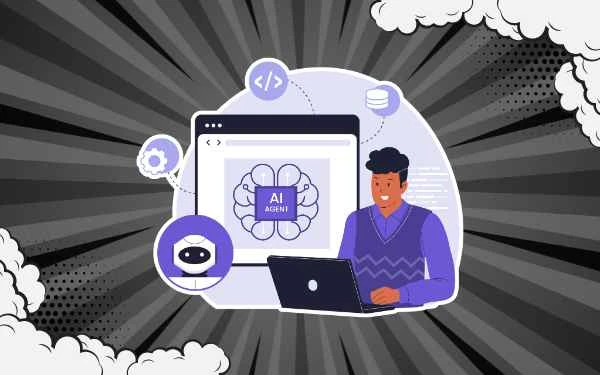









AI assistants are becoming increasingly capable of performing work, but their usefulness inside enterprises often depends on whether they can access the systems where that work actually happens. Process Street is addressing that gap with a hosted Model Context Protocol (MCP) server that lets AI assistants and other compatible applications interact with workflows, tasks, users and operational data without requiring companies to build custom integrations against its API.
The next challenge for enterprise AI may not be intelligence.
It may be context.
An AI assistant can draft an email, summarize a document or answer a question. But asking it to actually perform operational work requires access to the systems, procedures and permissions that define how a company operates.
Process Street is attempting to solve part of that problem by making its compliance and operational workflows accessible through the Model Context Protocol (MCP).
The company has launched a hosted MCP server at mcp.process.st, available across its plans, allowing compatible AI assistants and applications to interact with Process Street workflows, workflow runs, tasks, users and data sets.
The significance is less about another AI integration and more about how enterprise software could become accessible to AI agents.
Turning documented processes into AI-accessible context
MCP is an emerging open standard for connecting AI applications with external tools and data sources.
Before an integration such as this, organizations wanting an AI assistant to work with Process Street workflows would generally need to build and maintain a custom connection using the platform’s API.
Process Street’s MCP server removes much of that integration work.
The server exposes most Process Street API endpoints as tools, allowing supported AI applications to create and manage workflow runs, assign tasks, search data sets, generate reports and summaries, and analyze operational information through natural-language interactions.
That creates a different relationship between an AI assistant and business software.
Instead of simply asking an AI system for information about a process, a user can potentially ask it to interact with the process itself.
From asking questions to taking action
Process Street’s examples illustrate the difference.
A connected assistant could be asked to create a new run of a Quarterly Access Review workflow and assign it to the compliance manager if one has not already been created.
It could search recent Client Onboarding workflow runs and identify bottlenecks caused by incomplete tasks.
It could also search vendor records and flag vendors that have not been reviewed within the previous six months.
These are not traditional chatbot functions.
They are examples of AI-assisted operations, where the assistant acts as an interface to existing business processes.
The value comes from connecting the AI to the organization’s actual workflows rather than asking employees to copy operational information into a separate AI application.
Permissions become critical when AI can act
Giving an AI agent access to enterprise systems creates an obvious security question: what is the agent allowed to do?
Process Street is taking an inheritance approach.
The MCP server follows the permissions users already have in Process Street. Admins, Builders and Users can access the server, but each role remains restricted to the resources their existing Process Street permissions allow.
That is an important architectural choice.
Rather than creating a completely separate permission framework specifically for AI, the system uses the access controls already governing the underlying platform.
For organizations experimenting with AI agents, that can reduce one of the major concerns around agentic automation: an assistant becoming more powerful than the employee operating it.
Process Street says the MCP integration does not require data to be moved out of the platform to make it available.
Organizations using SAML SSO are not currently supported, however, leaving an integration gap for some enterprise environments.
Why MCP matters for enterprise software
The rise of MCP reflects a broader change in how software is being consumed.
Traditional enterprise applications are designed primarily for people to navigate through dashboards, forms and menus.
AI agents introduce another interface.
An agent may need to search a system, retrieve information, execute a workflow, update records and return the result to a user — potentially without the user ever opening the underlying application.
For that model to work, business software needs standardized ways to expose its capabilities.
MCP is emerging as one approach to that problem.
Process Street’s implementation puts its workflow platform into that growing ecosystem, alongside AI clients such as Claude, ChatGPT, Microsoft Copilot Studio and other MCP-compatible applications.
One-click connections are available for Claude, ChatGPT and Copilot Studio, while other MCP clients can connect using a Process Street API key and bearer-token authentication.
Compliance makes operational context more important
Process Street’s focus on compliance operations makes this development particularly interesting.
Compliance processes often contain clearly documented procedures, recurring reviews, approval requirements and audit trails — exactly the kinds of structured operational information that AI agents need if they are going to perform useful work.
But compliance is also an environment where uncontrolled automation can create significant risk.
An agent that completes the wrong workflow, changes a record without authorization or acts on outdated information can create problems that are difficult to unwind.
That makes permission inheritance and traceability important parts of the AI architecture, not optional features.
Process Street maintains ISO 27001 and SOC 2 Type II certifications and says it is compliant with HIPAA and GDPR, adding to the company’s broader security and compliance positioning.
The emerging distinction: AI that works vs. AI that works here
The company’s underlying argument is that enterprise AI adoption has reached a new bottleneck.
General-purpose models already have broad capabilities. What they often lack is knowledge of how a particular company actually operates.
That knowledge may live in workflow templates, task assignments, customer records, approval chains and operational history.
Connecting AI to that context can make the difference between a system that produces a plausible answer and one that can participate meaningfully in an organization’s processes.
This is where MCP could become strategically important.
Rather than every software vendor building a different integration for every AI assistant, standardized protocols can potentially reduce the complexity of connecting business applications to an expanding ecosystem of AI clients.
AI agents need guardrails, not just connections
There is also a larger lesson in Process Street’s launch.
Giving AI access to enterprise systems is only the beginning.
Companies will need to determine which actions agents can perform, which require human approval, how permissions are inherited, how activity is logged and how organizations can reconstruct what happened when something goes wrong.
The most useful enterprise AI systems are therefore unlikely to be defined solely by model capability.
They will be defined by context, access, controls and accountability.
Process Street’s MCP server addresses the first two parts by making operational workflows accessible through a standardized interface while preserving existing permissions.
The broader industry challenge will be building the governance layer around that capability.
Enterprise software is becoming agent-accessible
Process Street’s move signals a shift in enterprise application architecture.
For decades, software was built primarily around human users interacting with screens.
Increasingly, another user is entering the picture: the AI agent.
That does not necessarily make the traditional interface obsolete. Instead, it adds a new access layer through which AI can retrieve information and perform actions on behalf of people.
For compliance teams, operations managers and other business users, the potential benefit is straightforward: interact with complex workflows through the tools they already use for AI, without rebuilding the underlying operational system.
The more important question now is how many other enterprise platforms will make their data and workflows similarly accessible — and whether they can do so without sacrificing the controls that made those systems trustworthy in the first place.
Market Landscape
Enterprise AI is moving from conversational assistance toward agentic operations, creating demand for standardized connections between models and business software.
Key trends include:
- Model Context Protocol: Open standards such as MCP are creating a common mechanism for AI applications to discover and use external tools.
- AI agents in business operations: Agents are increasingly expected to retrieve information and perform actions rather than simply generate text.
- Permission-aware AI: Enterprise deployments require AI access to follow existing identity and authorization policies.
- Workflow automation: Business-process platforms are becoming potential execution layers for AI agents.
- Grounded enterprise AI: AI systems need access to company-specific procedures and operational data to produce useful, context-aware results.
- AI governance: Auditability, approval mechanisms and action logging are becoming critical as AI gains the ability to modify enterprise systems.
The competitive advantage is shifting from simply having an AI model to having an AI system that can safely operate inside the enterprise environment.
Top Insights
- Process Street is making workflows accessible to AI agents, allowing compatible assistants to interact with operational processes rather than simply retrieve information.
- MCP reduces custom integration work, giving AI applications a standardized pathway into Process Street’s workflows and data.
- Existing permissions carry over to AI interactions, addressing a central enterprise concern as agents gain the ability to perform actions.
- Compliance is a natural test case for agentic AI, because documented workflows, recurring reviews and operational records provide structured context for automation.
- Enterprise AI is moving toward action, with the emerging priority becoming systems that can understand company context and safely execute work.
Power Tomorrow’s Intelligence — Build It with TechEdgeAI