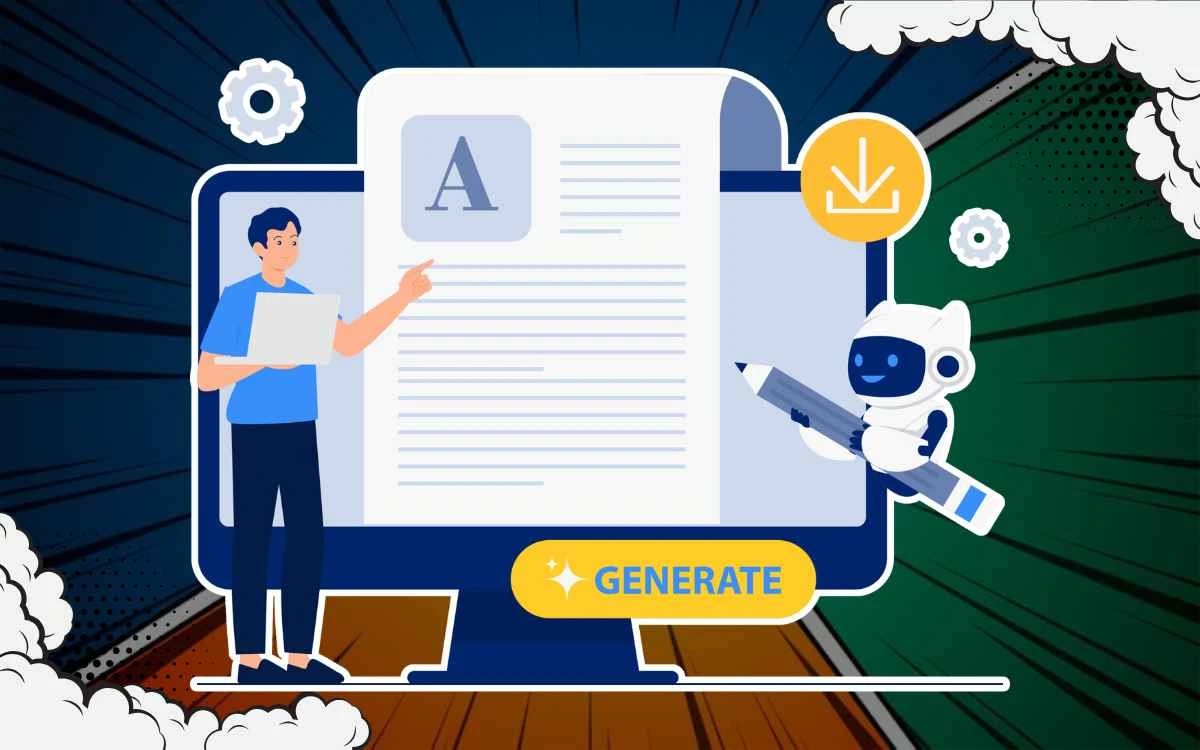









MuseSpark AI has launched a unified artificial intelligence platform offering access to more than 400 AI models through a single API key, billing account and creative workspace. The platform brings together video-generation, image-generation and large language models, including Seedance 2.5, Wan 3.0, GPT Image 2.6 and MiniMax H3. The company says its routing and access infrastructure can reduce model usage costs by approximately 40% compared with accessing providers directly. The launch targets developers, enterprises, designers and independent creators seeking to simplify access to an increasingly fragmented AI model ecosystem.
MuseSpark AI Launches Unified Platform for 400+ AI Models
The rapid expansion of generative AI has created a new infrastructure challenge for developers and businesses: accessing, evaluating and managing models from multiple providers without building separate integrations for each service.
MuseSpark AI has entered this market with a platform designed to consolidate more than 400 AI models behind one API key, a unified billing system and a visual creative workspace. Its catalog covers video generation, image creation and language models, with support for technologies including Seedance 2.5, Wan 3.0, GPT Image 2.6 and MiniMax H3.
The launch reflects growing demand for model-agnostic AI infrastructure as organizations increasingly experiment with different generative AI systems rather than relying on a single provider.
MuseSpark’s proposition is straightforward: instead of maintaining separate accounts, payment arrangements, API credentials and usage limits across multiple model providers, customers can access a broad catalog through one platform.
Unified API Targets AI Integration Complexity
For developers, integrating multiple AI models can create operational overhead beyond the initial API implementation. Each provider may have different authentication requirements, usage restrictions, pricing structures, documentation and service-level characteristics.
MuseSpark AI aims to reduce this fragmentation through a unified API interface. Developers can access supported models through a common integration layer while the platform manages the underlying provider connections.
The company says its catalog expands as new models become available, potentially reducing the engineering work involved in adopting newly released generative AI technologies.
This approach is particularly relevant to applications that combine several AI capabilities. A creative platform, for example, might use one model for generating video, another for producing images and a language model for writing scripts or interpreting instructions.
A centralized access layer can simplify these workflows, although actual integration compatibility, feature parity and model-specific parameters remain important considerations when moving between providers.
MuseSpark Claims Approximately 40% Lower Model Costs
Pricing is a major part of MuseSpark AI’s positioning. The company claims its access and routing infrastructure makes model execution approximately 40% less expensive than purchasing access directly from individual providers.
If sustained across production workloads, that difference could affect how businesses allocate AI budgets. Teams running high-volume image, video or language-generation applications could potentially experiment with more models or increase usage without proportionally increasing infrastructure expenditure.
However, the claimed savings need to be evaluated against individual provider pricing, model versions, output quality, usage limits and any additional platform charges. The announcement does not provide a detailed independent pricing comparison or methodology supporting the 40% figure.
The platform’s consolidated billing model also addresses a practical procurement issue. Organizations experimenting with several AI services often have to reconcile multiple invoices, subscriptions and payment arrangements. A single billing relationship could simplify financial administration.
For smaller development teams and independent creators, consolidated access may also lower the administrative barriers associated with experimenting across providers.
An Infinite Canvas Extends Access Beyond Developers
MuseSpark AI is also positioning itself as a creative workspace rather than exclusively an API infrastructure provider.
Its infinite canvas allows users to interact with AI models directly through a visual environment, without requiring command-line tools or programming knowledge. The company compares the experience with creative AI workspaces such as TapNow and LiblibTV.
Designers, marketers and independent creators can access the same model infrastructure and pricing arrangements as developers. This approach could make it easier for creative teams to compare image and video-generation models, experiment with different outputs and develop production workflows without building custom integrations.
The shared infrastructure behind the API and canvas is an important part of the proposition. Rather than maintaining separate product tiers with different model access, MuseSpark says both interfaces operate through the same service and pricing structure.
This positions the platform across two customer groups: developers seeking a consolidated AI API and non-technical users looking for a centralized generative AI workspace.
Model Evaluation and Reliability Become Differentiators
Access to hundreds of models does not automatically make choosing the right one easier. Different models can produce significantly different results depending on the task, output requirements, processing costs and performance expectations.
MuseSpark AI says it conducts ongoing model evaluations and publishes assessments covering practical performance, suitable use cases and pricing changes. Its evaluations also include cost per unit of output rather than relying exclusively on headline benchmark scores.
That distinction matters for production applications. A model with a strong benchmark result may not necessarily offer the best economics for generating large volumes of video, images or text.
The platform also describes infrastructure designed to route around failing endpoints and maintain a consistent interface as underlying providers change model versions or pricing.
For businesses deploying AI-powered applications, endpoint availability and integration stability can influence operational costs just as much as model quality.
MuseSpark additionally says its API operates within a secure sandbox with data isolation. These are relevant enterprise requirements, although organizations evaluating the service will need technical documentation covering encryption, retention policies, access controls, data residency and third-party processing arrangements.
Enterprise AI Infrastructure Is Shifting Toward Cost Optimization
The market opportunity extends beyond convenient access to multiple models. AI spending is increasingly tied to the economics of running models at production scale.
According to Gartner’s July 2026 forecast, worldwide spending on AI models and platforms is projected to reach $64.3 billion in 2026, representing 63.4% growth over 2025. Gartner also forecasts 117% growth in spending on generative AI models. Gartner
As organizations expand model usage, centralized access, cost monitoring, model evaluation and routing become more relevant to enterprise AI infrastructure decisions.
The challenge for platforms such as MuseSpark is demonstrating that lower access costs do not come at the expense of model availability, output quality, security or transparency.
The company has announced global availability, English-language documentation and support, and consistent model pricing across countries. It has not disclosed detailed independent benchmarks, customer adoption figures or service-level commitments.
Ultimately, MuseSpark AI’s success will depend on whether it can turn a large model catalog into dependable infrastructure that organizations can use in real production environments.
Its launch reflects a wider development in the AI ecosystem: as model choice expands, the infrastructure connecting, evaluating and operating those models may become as important as the models themselves.
Market Landscape
MuseSpark AI enters a growing market for unified AI infrastructure, model aggregation and generative AI application development.
Key market developments include:
- Multi-model AI infrastructure: Businesses increasingly need access to different models for text, image, video and reasoning tasks.
- AI API aggregation: Unified APIs can reduce integration complexity and simplify billing across model providers.
- Inference cost optimization: Production workloads are increasing demand for transparent pricing, efficient routing and predictable model consumption.
- Multimodal AI development: Video and image generation are expanding beyond specialist studios into marketing, content production and enterprise workflows.
- Model evaluation: Businesses need practical comparisons covering output quality, latency, reliability and cost per generated unit.
Gartner’s 2026 market forecast reinforces this opportunity, particularly as generative AI model spending accelerates. Gartner+1
MuseSpark’s competitive positioning will depend on its ability to combine model availability, consistent API performance, security and measurable cost advantages.
Top Insights
- MuseSpark AI consolidates access to more than 400 video, image and language models through one API key and billing account.
- The company claims approximately 40% lower model execution costs compared with direct provider access, although independent verification remains necessary.
- An infinite canvas extends the platform beyond developers, targeting designers, marketers and independent creators through a visual AI workspace.
- Model evaluations covering practical performance and cost per output aim to simplify model selection for production applications.
- Endpoint routing, sandboxing and data isolation are central to MuseSpark’s proposition for developers building production-grade AI applications.
Power Tomorrow’s Intelligence — Build It with TechEdgeAI