








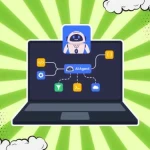

MirrorShip has launched the MirrorShip Intelligence Platform (MIP), an enterprise AI data platform designed to connect real-time analytics, business-defined metrics and AI agents. The platform combines data infrastructure, a semantic layer and conversational analytics with centralized governance, aiming to help organizations generate answers that reflect established business definitions and access permissions. The launch addresses a growing enterprise AI challenge: enabling agents to analyze company data without producing inconsistent metrics, unauthorized results or queries that cannot be traced and validated.
MirrorShip Targets Enterprise AI With Governed Data Analytics
MirrorShip has introduced the MirrorShip Intelligence Platform (MIP), expanding its real-time analytics foundation into a platform for AI-assisted business intelligence. The system combines data processing, business semantics and data agents to help enterprises query information using defined metrics and governed access controls.
The announcement reflects a broader shift in enterprise AI development. As organizations move beyond chatbots toward agents that retrieve information and perform analytical tasks, generating a technically valid database query is not enough. An agent must also understand what a business metric means, which tables contain the relevant information and whether the user is permitted to access the underlying data.
MIP is designed around those requirements. Instead of relying exclusively on a general-purpose language model to interpret business questions, it uses a dedicated semantic layer to define metrics, dimensions, relationships and calculation rules. MirrorShip says the platform also supports traceable query execution and human feedback to help users inspect and refine analytical results.
The company has not disclosed independent benchmarks, customer adoption figures or quantified improvements in analytical accuracy. Its commercial proposition rests on combining existing analytics infrastructure with the context and controls required for enterprise AI applications.
Three Layers Connect Data, Semantics and Agents
MIP comprises three primary components: MirrorData, MirrorMind and MirrorPilot. MirrorControl provides governance and operational management across the platform.
MirrorData supplies the data foundation for reporting, applications and agent workloads. Its MirrorBase real-time analytics engine is built primarily on StarRocks, while MirrorLake provides open lakehouse storage. The platform supports queries across native tables and lakehouse formats, including Apache Paimon, Apache Iceberg and Apache Hive.
It also combines structured filtering, full-text search and vector search. This allows applications to work with conventional database fields alongside textual information and semantic similarity, potentially supporting analytical tasks that span multiple data types.
MirrorMind addresses a different problem: business meaning. Its Semantic Views define how metrics and dimensions relate, how calculations should be performed and which business rules apply. Knowledge Context supplements those definitions with terminology, documentation and analytical methods.
This distinction matters because enterprise data often contains multiple fields that appear mathematically interchangeable but represent different business concepts. Revenue, booked value, recognized revenue and budget allocation, for example, may all be stored as numeric amounts but cannot necessarily be aggregated in the same way.
A semantic layer gives an AI agent an established definition to follow instead of requiring it to infer the correct calculation from column names alone.
MirrorPilot Brings Conversational Access to Business Data
MirrorPilot provides the data agent and the environment for executing and delivering agent-based analytics. Users can submit questions through a conversational interface or access the platform’s capabilities through APIs integrated into existing business intelligence tools and applications.
The objective is to let employees interact with business data using natural language while preserving the analytical rules that underpin established reporting.
During the launch, MirrorShip product lead Yingting Dong demonstrated how the platform could combine image similarity, text descriptions and date filters in a single SQL query for a simulated after-sales workflow.
Another demonstration showed how a Semantic View guided an agent toward the appropriate budget metric rather than summing unrelated amount fields in a raw database table.
These examples illustrate two different requirements for AI analytics: retrieving relevant information across data types and calculating business metrics consistently. They do not, by themselves, establish how the system performs across large production datasets or complex enterprise environments.
The distinction between a demonstration and production performance is important. Natural-language analytics can fail when source data is incomplete, metric definitions conflict or a question is ambiguous. Semantic definitions can reduce some of those risks, but they cannot automatically resolve every data-quality problem.
Governance Becomes Part of the AI Data Stack
MirrorControl provides access controls, resource isolation, auditing and observability for agent analysis. These capabilities are intended to help organizations manage how AI agents interact with business information and track the analytical processes behind their responses.
Governance is particularly important when agents are integrated into business applications used by employees with different permissions. A system must apply the relevant access rules to the data it retrieves, not simply generate a plausible answer from whatever information is available.
Traceability also matters when analytical outputs influence financial planning, sales performance reviews, inventory decisions or customer operations. Organizations need ways to inspect the queries and calculations behind an answer rather than treating a language model’s response as inherently reliable.
MirrorShip’s approach places these controls alongside its data and agent capabilities. However, the announcement does not detail its authorization architecture, audit-retention policies, model choices or support for specific enterprise identity and compliance standards. Those details will be important for organizations evaluating the platform for sensitive workloads.
Competition Centers on Context and Reliability
MIP enters a competitive market that includes established data platforms, cloud analytics services and enterprise AI assistants. Microsoft, Google, Salesforce and other technology providers are incorporating natural-language interfaces and AI agents into business software, while data infrastructure vendors are developing tools to connect models with governed enterprise information.
MirrorShip’s differentiation is its integrated combination of real-time analytics, an explicit semantic layer and data agents. Its use of StarRocks and open lakehouse formats also places it within a broader ecosystem of distributed analytics and data lakehouse technologies.
The approach addresses a key limitation of general-purpose AI assistants: a model may understand a question linguistically without knowing how a particular organization defines its metrics or structures its data.
Still, a unified platform must demonstrate that its semantic definitions remain consistent as data sources change, that queries perform well at scale and that agents respect access boundaries under real workloads. Integration with existing BI tools and applications will also influence adoption.
MirrorShip’s launch signals an effort to make enterprise AI analytics more inspectable and governed. Whether MIP gains traction will depend on evidence of accuracy, operational reliability, integration flexibility and measurable value in production—not conversational interfaces alone.
Market Landscape
Enterprise AI is moving toward systems that combine language models with structured data, business context and controlled execution. Retrieval-augmented generation, semantic layers and data agents are increasingly relevant because enterprises need answers grounded in their own records and metric definitions.
MirrorShip’s MIP combines real-time analytics, open lakehouse support, semantic views and governed agent workflows. It competes in a wider ecosystem that includes cloud data platforms, BI vendors and enterprise AI assistants from Microsoft, Google and Salesforce.
The main differentiators are likely to be analytical correctness, query performance, data-access enforcement, auditability and compatibility with existing systems. MIP’s production value remains to be established through independent testing and customer results.
Top Insights
- Governed analytics: MIP connects AI agents to enterprise data through defined metrics, access controls and traceable query execution.
- Semantic context: MirrorMind defines business metrics, relationships and calculation rules to reduce errors caused by ambiguous database fields.
- Multiple data types: MirrorData combines real-time analytics, lakehouse storage, structured filtering, full-text search and vector search.
- Agent-based access: MirrorPilot supports conversational analytics and APIs for integration with existing BI tools and business applications.
- Enterprise controls: MirrorControl provides access management, resource isolation, auditing and observability, although detailed security specifications remain undisclosed.
Power Tomorrow’s Intelligence — Build It with TechEdgeAI