







Huawei used HUAWEI CONNECT 2026 in Shanghai to outline how wide-area networks will need to evolve as AI agents, distributed computing and real-time AI workloads increase demand for bandwidth, deterministic performance and security. The company also released an Intelligent WAN white paper with GlobalData and detailed its Stellar AI WAN approach for building network infrastructure around the requirements of the agentic AI era.
AI infrastructure discussions increasingly focus on GPUs, accelerators, data centers and storage, but the network connecting those systems is becoming an equally important part of the AI stack.
At HUAWEI CONNECT 2026 in Shanghai, Huawei brought that issue to the foreground with a session focused on Intelligent WANs, arguing that conventional wide-area networking architectures need to evolve as AI workloads become more distributed and autonomous.
The September 17 session brought together infrastructure managers, industry representatives and networking experts to examine how networks can provide the bandwidth, security, latency control and operational intelligence required by AI systems. Huawei and GlobalData also released the Intelligent WAN White Paper in AI Era, covering WAN trends, target architecture and an evolution roadmap for AI-era connectivity.
AI Changes the Requirements for Wide-Area Networks
The underlying issue is that AI workloads do not behave like traditional enterprise applications.
As organizations deploy AI inference, agents and distributed computing resources, network traffic can become more dynamic and less predictable. Huawei executives at the event argued that networks need to support real-time data movement, deterministic performance and greater visibility across distributed infrastructure.
Dustin Kehoe, Head of AMEA Tech Research at GlobalData, described AI workloads as a driver for modernization of WAN architectures, particularly as computing moves closer to data sources. His assessment points toward more distributed and edge-enabled infrastructure, where processing can happen closer to users or devices instead of sending every workload to centralized data centers.
That creates a networking challenge: WAN infrastructure needs to connect distributed compute resources while maintaining predictable performance.
Agentic AI Changes Network Traffic Patterns
Huawei’s Ado, CEO of its Wide Area Network Domain, highlighted a deeper change associated with agentic AI.
According to Huawei, network connections are shifting from being primarily human-driven to agent-driven, while traffic patterns can move from conventional download-heavy behavior toward significantly greater uplink activity. Network experience assurance also needs to expand beyond individual applications toward the complete workflow executed by an AI agent.
This is an important distinction for AI infrastructure.
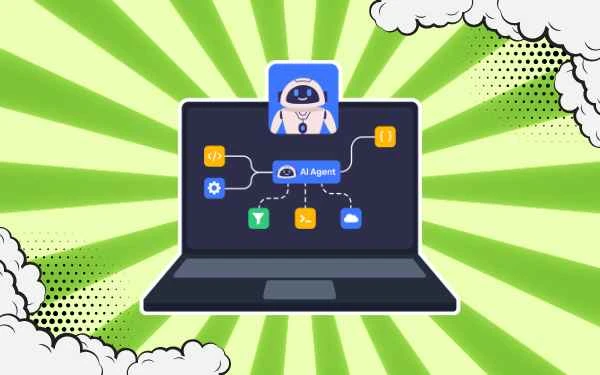
An AI agent may need to retrieve information, invoke multiple services, access enterprise data, call models and return results as part of one task. The network consequently becomes part of the execution path rather than simply a transport layer between users and applications.
This creates demand for more granular monitoring and flow-level traffic management, particularly when AI workloads depend on predictable latency or bandwidth.
Huawei’s Stellar AI WAN Targets Distributed Computing
Huawei presented its Stellar AI WAN Solution as part of that transition.
The company’s architecture is built around several capabilities, including converged ultra-broadband, multidimensional network awareness, security and resilience, and autonomous network operations.
The company’s September 17 announcement says the upgraded Stellar AI WAN is designed to address cross-region computing challenges involving efficiency, cost and security. Huawei says the solution can support lossless delivery of computing resources over distances exceeding 1,000 kilometers and uses a Starnet lossless algorithm to reduce packet loss across long-distance connections. These are Huawei-reported performance figures rather than independent benchmarks.
The architecture also includes an XH computing-network appliance designed to keep certain model layers local while transmitting high-dimensional vectors over the network. Huawei says this approach can keep raw data on-premises while reducing some of the computing infrastructure required at remote locations.
The broader concept is to treat networking and computing as increasingly interconnected resources.
Network Security Becomes an AI Infrastructure Layer
AI-era networking also introduces a larger security surface.
AI agents can access applications, databases and enterprise systems autonomously, increasing the importance of controlling what traffic can move between infrastructure components and where sensitive data can travel.
Huawei’s intelligent WAN strategy includes security at the device, link and network layers. The company’s broader Stellar AI Network architecture incorporates technologies such as built-in device security, quantum-resistant connectivity and traffic controls.
Huawei also separately introduced an AI firewall architecture at HUAWEI CONNECT 2026, arguing that conventional rule-driven security needs to evolve toward intent-aware protection as AI agents and compute clusters become more widespread.
Taken together, the announcements illustrate Huawei’s attempt to make security an intrinsic part of AI networking rather than a separate perimeter layer.
From Network Operations to Autonomous Infrastructure
Another major component of Huawei’s strategy is network autonomy.
Traditional network operations often rely on monitoring systems that alert engineers after failures occur. AI-native infrastructure can potentially move toward continuous observation, anomaly detection, prediction and automated remediation.
Huawei says its Stellar AI Network architecture is designed to support self-healing and more autonomous operations. Its September 19 update describes network-awareness technology capable of collecting more than 25 types of data at 100-millisecond sampling intervals to identify network anomalies. Again, these figures are company-reported.
The objective is to reduce the time between detecting a problem and restoring service.
For distributed AI infrastructure, that becomes increasingly important because a network fault can affect model serving, agent workflows or access to remote compute resources rather than simply interrupting conventional enterprise applications.
Optical Networks Become Part of the AI Foundation
Huawei also connected its WAN strategy with optical infrastructure.
At the event, the company outlined a national fiber target network based on technologies including 400G/800G, optical cross-connects, optical transport networking, quantum-key-distribution integration and intelligent optical network operations.
Huawei argues that high-capacity all-optical backbone infrastructure can provide the connectivity foundation required for increasingly distributed digital and AI services.
This reflects a broader AI infrastructure reality: scaling AI is not simply a question of adding more accelerators. Compute clusters, storage, data sources, edge systems and enterprise applications all depend on increasingly capable interconnects.
The WAN Becomes Part of the AI Stack
Huawei’s Intelligent WAN strategy ultimately reflects a shift in how infrastructure is being designed for AI.
The traditional network model largely treats connectivity as a stable utility sitting underneath applications. Agentic AI introduces workloads that are more distributed, dynamic and dependent on continuous interaction between models, data and software services.
Huawei’s proposal is to make the WAN more AI-aware, deterministic, secure and autonomous, with networking infrastructure able to understand traffic conditions, optimize resource delivery and increasingly participate in operational decisions.
The release of the GlobalData-backed Intelligent WAN white paper gives customers a framework for considering that transition, while Huawei’s Stellar AI WAN provides the company’s corresponding technology architecture.
As enterprises move from isolated AI pilots toward agentic systems operating across distributed environments, the network is becoming more than a connectivity layer. It is increasingly part of the infrastructure required to make AI applications responsive, resilient and scalable.
Market Landscape
AI infrastructure is increasingly being designed as a system spanning compute, storage, networking, security and operations rather than as isolated accelerator clusters.
Huawei’s HUAWEI CONNECT 2026 announcements reflect this broader architecture. The company’s upgraded Stellar AI Network combines AI Fabric, AI WAN and AI Campus components, while the WAN layer is designed around distributed computing, security and autonomous operations.
The shift toward agentic AI makes networking particularly important because agents can generate continuous interactions with models, applications, databases and other agents. This increases the importance of predictable latency, bandwidth, traffic visibility, security and automated network management.
Top Insights
- Huawei argues that agentic AI is changing WAN requirements as network connections increasingly support autonomous software agents and distributed computing workloads.
- Its Stellar AI WAN architecture targets cross-region AI computing with bandwidth optimization, network awareness, security and autonomous operations.
- Huawei and GlobalData released an Intelligent WAN white paper outlining WAN architecture and an evolution roadmap for the AI era.
- Optical technologies including 400G/800G and OXC are positioned as part of the high-capacity infrastructure required for distributed AI.
- The company’s approach treats networking as an active component of AI infrastructure rather than simply a transport layer.
Power Tomorrow’s Intelligence — Build It with TechEdgeAI