





AI Adoption has changed the way we think about it over the years. At the very beginning, the debate centered more on automation and cost. The current strategy is to focus on efficiency and work on valuable tasks.
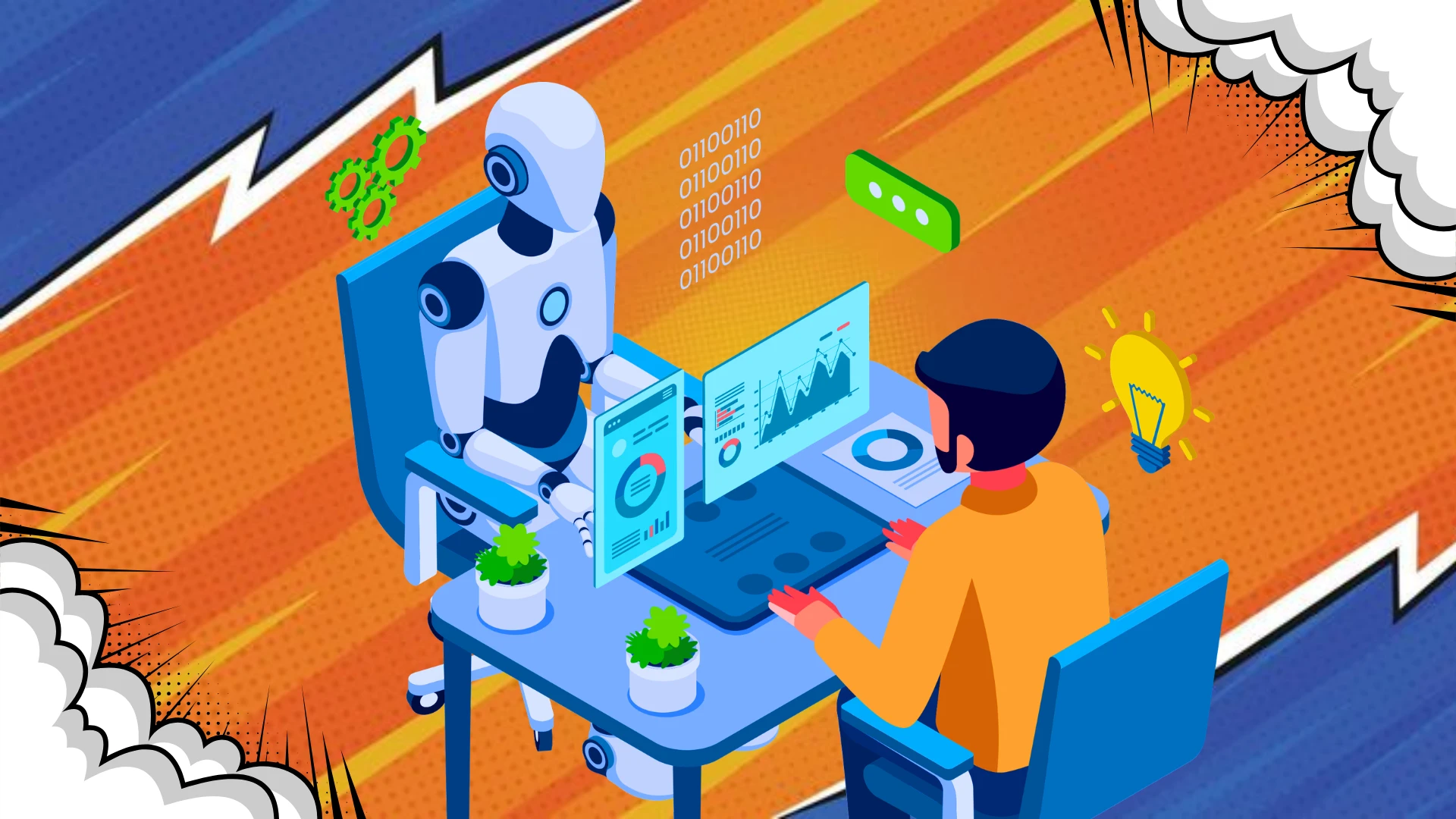
Businesses want to understand how AI and humans should cooperate to reach their goals. Despite the ability of AI to process data, humans have creativity and social skills.
In this article, we will explain the need for both AI and humans to achieve success.
Why “Human vs. AI” Debate Has Always Been Wrong
It has been going on for a long time, placing them against each other. But the real potential lies in collaboration.
Take, for instance, sales teams preparing to meet with customers. AI can recognize buying signals and review account history. It is the salesperson who understands customer issues, asks hard questions, and forms the relationship.
This kind of synergy becomes essential in an era where AI adoption is increasing. Businesses have realized that the best use of technology requires human input as well.
How Today’s Leaders Have Adopted AI Instead of Being Captured by It
Not for giving up the reins to AI, but for utilizing AI as a tool that helps achieve results.
1. Keeping Human Oversight on Customer Interactions
Although AI helps with faster response times and common queries, leaders know that crucial conversations with customers need human intervention.
Example: Customer care managers use AI for FAQs, while account managers talk to their customers about complex issues.
2. Encouraging Employees to Question AI’s Recommendations
The best leaders understand that an AI tool may sometimes make mistakes. They help employees test the system’s suggestions.
For instance, when a sales leader checks out the AI lead scores, they ask the sales team to verify them against customer communications.
3. Investing in People Alongside Technology
Businesses spend money on purchasing tools, but smart leaders spend money on their employees.
Example: The company uses AI tools for managing projects and teaches its employees about them.
4. Humans Determine the Strategy
The use of AI can aid in planning, but decision makers will still be accountable for priority setting, risk management, and company direction.
Example: When developing an annual plan, AI gives predictions, but the management makes decisions that best satisfy the needs of the customers.
Human Insights: It Cannot be Commoditized by AI
Insights come from experience, judgment, and empathy.
1. Human Insight Understands Context but Not Data
Although the AI can recognize the patterns, it cannot make sense of the context surrounding the pattern. The former recognizes the problem whereas the latter explains the problem.
Example: An analytics dashboard indicates decreasing engagement from a key customer. It raises a flag. The account manager, however, knows the client is undergoing an internal reorganization and has suspended the projects.
2. Human Intuition Leads to Problem Solving
Human insight can think about scenarios that currently do not exist. Innovation may begin with intuition rather than with data.
Example: An advertising team applies to AI to evaluate the marketing campaign. The creative solution to launch a new customer engagement strategy emerges from brainstorming and industry knowledge.
3. Human insight Helps Dealing with Uncertainty
Business decision-making is not always predictable. The management comes across cases where there is not enough information available.
Example: There could be unexpected risks while venturing into a new market. The management decides based on its experience, consumer behavior, and judgment.
Why is Black-Box AI Turning into a Business Risk?
The black-box model may generate risks which affect trust in making decisions.
Risk 1: No Responsibility
When the decision-making process is done by AI, it becomes difficult to identify whose responsibility it was in case of a failure.
Solution: Define the owner of an AI decision. Technology must help while keeping oversight with humans.
Example: A finance team makes decisions based on algorithms but leaves budget approval for the company’s executives.
Risk 2: Reduced Employee Trust
Employees might have some hesitance with AI recommendations and hence resist the Adoption process.
Solution: Stress on transparency and training. Assist the teams in comprehending where they can apply AI and when human insight is needed.
Example: A customer support business shows how AI prioritizes the support requests and allows its employees to use it.
Risk 3: Incorrect Suggestions
In addition to analyzing the data, the AI may also cause incorrect results.
Solution: Implement a review process involving both AI and human insight.
Example: A marketing team makes use of AI to understand audience patterns, but their suggestions are validated through customer responses and performance data.
How Humans Working with AI Win Out
The discussion has changed radically. A debate which once focused on man against machine has become one that asks the question, “How do we work with the strengths of both human and technology to make things happen?”
The key to Business Success is a blend of Humans and AI. Those who find the right balance will be flexible enough to adapt and form connections.