





HighLevel has connected its business operating platform to Meta’s Muse AI agent, allowing businesses to use agentic AI across customer information, conversations, calendars and workflows while keeping HighLevel as the operational layer.
HighLevel Turns Meta Muse Into a Business Workflow Layer
HighLevel is extending its AI infrastructure beyond its own native tools by connecting its platform to Muse, Meta’s new AI agent for small businesses.
The integration, which went live September 29, gives businesses a way to use Muse with information and workflows already managed through HighLevel, including customer records, conversations, calendars and lead-management processes.
The development is notable because it shifts the role of an AI agent from answering questions to interacting with the operational systems where business work actually happens.
Meta introduced Muse for Small Business with connectors for a range of third-party applications, including HighLevel, Shopify, Slack, Stripe, QuickBooks, Canva, Notion and others. Meta says Muse can use those connections to help businesses perform multi-step tasks rather than simply generate text or answer questions.
For HighLevel, the integration creates another route for agentic AI to reach business processes without requiring companies to move their customer data or rebuild existing workflows.
Connecting an AI Agent to Customer Operations
HighLevel is positioned as the infrastructure layer in the integration.
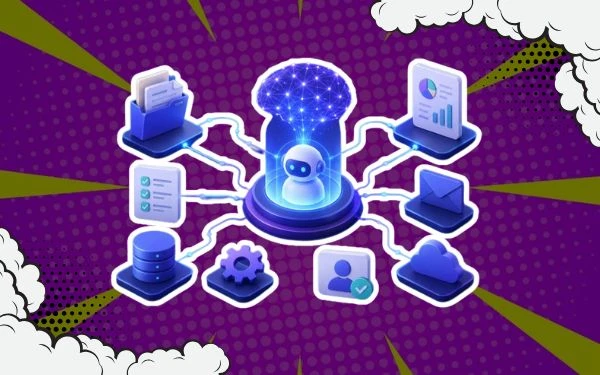
The platform already combines customer relationship management, conversations, calendars, lead management and automated workflows. Connecting Muse to those systems allows Meta’s agent to operate with business context that would otherwise remain distributed across separate applications.
Potential tasks include managing leads, coordinating and booking meetings, updating customer information and preparing for customer conversations.
The distinction is important. Conventional generative AI typically requires a person to copy information into a prompt, receive an answer and then carry out the resulting action. Agentic systems attempt to connect reasoning with tools so that the system can execute multiple steps on a user’s behalf.
Meta’s Muse is designed around that model. The company says users can give Muse a goal and connect the applications containing the information required to complete it. The agent can continue working after a user leaves the application and return when an action requires attention or approval.
Meta has also built approval and security controls into the system. According to Meta’s product description, users control which applications are connected and what access Muse receives, while actions such as publishing, sending or spending require approval.
HighLevel and Meta Deepen Their Relationship
The Muse connector is the second HighLevel-Meta collaboration announced within three months.
In June, Meta selected HighLevel as an early scheduling partner for Embedded Appointment Booking for Facebook Lead Ads. That integration allows prospects to book appointments through HighLevel calendars within the Facebook lead experience.
The latest development moves the relationship from lead capture and scheduling toward agentic business automation.
That progression mirrors a wider industry shift. Platforms are increasingly trying to become the infrastructure through which AI agents access business data and perform actions, rather than requiring users to operate every application independently.
HighLevel says its strategy is to allow businesses to use AI systems from different providers while keeping customer data and workflows connected through its platform.
That approach contrasts with a vertically integrated AI stack in which one vendor controls the model, agent and underlying business applications.
The Rise of Connected Business Agents
Meta’s decision to connect Muse to business applications places it within a rapidly expanding agentic AI market.
The company’s September 29 launch added business-focused skills and connectors to Muse, giving the agent access to operational information spanning marketing, commerce, finance, project management and customer relationships.
The development also puts Meta into a competitive field that includes OpenAI, Google, Microsoft and Anthropic, all of which are developing increasingly capable AI agents and tool-connected workflows.
OpenAI, for example, introduced its own always-on agent product called Dots on September 30, with capabilities designed around persistent task execution across applications.
The competitive distinction is increasingly moving away from the chatbot interface itself and toward what an agent can access, understand and execute.
For businesses, that means connectors and permissions can become as important as the underlying AI model. An agent that understands a customer but cannot update the CRM, schedule a meeting or modify a workflow has limited operational reach. An agent connected to those systems can potentially become part of the actual business process.
HighLevel Positions Itself as the Infrastructure
HighLevel’s role in the Muse integration is therefore less about providing another AI assistant and more about providing the infrastructure through which external intelligence can interact with business operations.
The company’s own AI products already include agents and automation across voice, conversations and workflows. The Muse connector extends that architecture to an external agent.
That creates a model in which the AI model or agent can change while the underlying customer and workflow infrastructure remains in place.
The approach could become increasingly relevant as companies adopt multiple AI agents rather than committing to a single provider. A business might use Meta’s Muse for certain tasks, another AI model for content generation and HighLevel’s native agents for customer engagement, while relying on the same operational data layer underneath.
The technical and commercial challenge will be managing permissions, data governance, reliability and accountability as more agents gain the ability to act on business systems.
For HighLevel, the Muse integration is an early example of that emerging architecture: the agent provides intelligence, while the business platform provides the context and systems in which that intelligence can act.
Market Landscape
Agentic AI is moving from conversational assistance toward tool-connected task execution. Meta’s Muse for Small Business connects business information and workflows across applications, while competitors including OpenAI are developing persistent agents capable of performing work across software environments.
This makes integrations, permissions and business-system connectivity increasingly important components of enterprise AI infrastructure. CRM, marketing automation and workflow platforms can serve as the operational layer through which agents access customer data and execute tasks.
Top Insights
- HighLevel’s Muse connector lets Meta’s AI agent interact with customer data, conversations, calendars and workflows already managed through HighLevel.
- The integration extends the companies’ relationship from Facebook lead scheduling into broader agentic business automation.
- Meta is positioning Muse around multi-step task execution, connecting the agent to applications that contain operational business context.
- HighLevel’s strategy allows external AI agents to work through its existing business infrastructure instead of requiring companies to rebuild their technology stacks.
- As agentic AI expands, connectors, permissions and workflow integration may become as important to business adoption as the underlying AI model.
Power Tomorrow’s Intelligence — Build It with TechEdgeAI