






GEEKOM is positioning its A5 2027 Edition as a compact desktop for professionals and small businesses that need more than basic office computing. Built around AMD’s eight-core Ryzen 7 7730U, the Mini PC combines expandable memory and storage, four-display support and a cooling system designed for extended operation, while also supporting cloud-based AI assistants and agentic productivity workflows.
GEEKOM Takes a Different Approach to the AI-Era Mini PC
The Mini PC market is increasingly being pulled in two directions.
On one side, manufacturers are competing to pack more CPU and GPU performance into increasingly small enclosures. On the other, the arrival of AI workloads is pushing the industry toward dedicated neural processing units (NPUs) and local inference.
GEEKOM’s A5 2027 Edition sits somewhere between those trends.
The company is pitching the new system as an all-day productivity machine rather than a dedicated AI workstation. Its hardware is centered on the AMD Ryzen 7 7730U, an eight-core, 16-thread processor, with configurations supporting up to 64GB of memory and as much as 7TB of combined storage.
GEEKOM says the system is designed for workloads ranging from heavy browser multitasking and video meetings to large spreadsheets, Photoshop, 2D design and light 4K video editing.
The more interesting proposition, however, is what happens when that conventional PC performance is combined with modern AI software.
Productivity is becoming an AI workload
For many office users, AI no longer means training machine-learning models. It means summarizing documents, researching information, drafting content, analyzing spreadsheets or automating repetitive tasks.
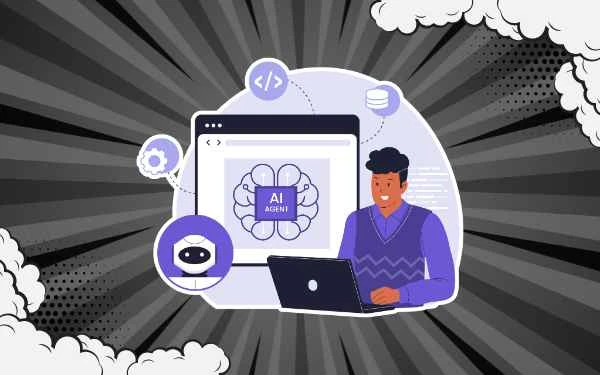
GEEKOM says the A5 can support these use cases through AI applications and emerging agentic workflows, including research, writing, content creation and data analysis.
That distinction is important.
The A5’s Ryzen 7 7730U is not part of AMD’s Ryzen AI processor family with a dedicated NPU. AMD describes an AI PC as a system combining CPU, GPU and NPU resources for local AI acceleration.
Consequently, the A5 should not be confused with newer NPU-equipped AI PCs designed specifically for local AI inference.
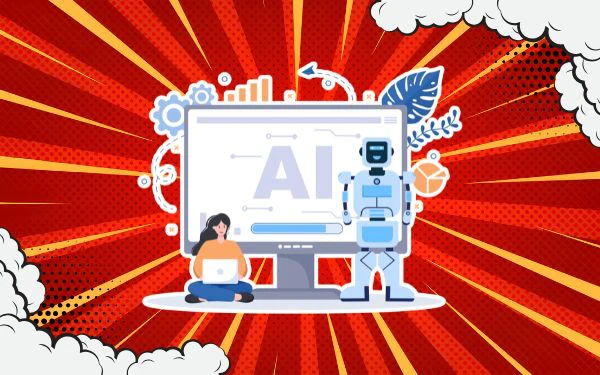
Instead, its AI proposition is primarily about running AI software effectively as part of a broader productivity workload, including cloud-based AI agents.
That could still be useful for businesses that do not need to run large models locally.
More memory and storage could matter more than AI branding
The A5’s strongest selling point may ultimately be its expandability.
GEEKOM lists two SO-DIMM slots supporting up to 64GB of DDR4 memory. Storage can be expanded across an M.2 2280 NVMe slot, an M.2 2242 SATA slot and a 2.5-inch SATA bay, allowing up to 7TB of combined capacity.
That configuration gives the machine a different value proposition from many ultra-compact PCs with soldered memory or limited storage expansion.
For a small business, the additional capacity can be used for large project files, media libraries, local backups, datasets or application installations.
It also extends the useful life of the machine.
Instead of replacing an entire desktop when storage or memory requirements increase, users can upgrade individual components.
That is particularly relevant as PC prices face pressure from memory and storage costs.
PC prices are entering a difficult period
The broader PC market is heading into a challenging 2026.
IDC forecasts global PC shipments will decline 11.3% in 2026, with average selling prices expected to rise 18.3% as a persistent memory shortage affects the market. The research firm does not expect meaningful relief from the shortage until the end of 2027.
Gartner is similarly forecasting a difficult year, saying worldwide PC shipments could fall 10.4% in 2026. It also expects PC prices to increase by 17% compared with 2025 and says business PC lifetimes could increase by 15% as buyers delay upgrades.
That environment makes upgradeability more strategically relevant.
A compact system that can accept additional RAM and storage may offer businesses a way to extend hardware investment rather than replacing machines as workloads grow.
Four displays turn the Mini PC into a workstation hub
Another element of the A5 is its multi-display capability.
GEEKOM says the system can drive up to four 4K displays through two HDMI outputs and two USB-C connections. It also includes 2.5GbE networking, Wi-Fi 6, Bluetooth 5.4 and an SD card reader.
That makes the device relevant beyond conventional home-office use.
A financial analyst can dedicate displays to spreadsheets, dashboards, communication and research. A developer can keep code, documentation, testing environments and monitoring tools visible simultaneously. A retail operator can use the system for digital signage or back-office applications.
The same compact form factor can also make the A5 suitable for environments where traditional towers are unnecessary.
Cooling becomes critical when Mini PCs run continuously
Small computers face an engineering trade-off: shrinking the enclosure reduces desk space, but it also limits the room available to move heat away from processors and other components.
GEEKOM addresses this with its IceBlast 3.0 cooling architecture, which combines a larger fan, copper heat pipe and dedicated copper cooling components.
The company positions the system for 24/7 applications such as offices, retail systems and digital signage.
That matters because sustained workloads are different from short benchmark bursts.
A Mini PC that performs well for a few minutes but throttles under extended workloads has limited value as an always-on business system. Thermal management, therefore, becomes part of the productivity proposition rather than merely a hardware specification.
Reliability is becoming a purchasing factor
GEEKOM says the A5 2027 Edition uses new SSDs, a reinforced internal metal frame and multi-layer motherboard protection. The company also says the device undergoes 339 validation checks covering areas such as durability, aging and thermal performance.
GEEKOM is backing that positioning with a three-year warranty and says the system is engineered for more than five years of service.
Those claims are company-reported rather than independent endurance results, but they highlight a larger trend in PC procurement.
As memory shortages and higher hardware prices encourage organizations to keep devices longer, reliability and serviceability become increasingly important.
Gartner expects business PC lifetimes to rise 15% by the end of 2026, partly because higher prices are encouraging buyers to delay replacements.
The AI PC market is moving beyond the cloud
The bigger strategic challenge for GEEKOM is that the PC industry is rapidly adding dedicated AI hardware.
Gartner previously forecast that AI PCs would account for 55% of worldwide PC shipments in 2026, after representing 31% of the market in 2025.
Intel and AMD both define AI PCs around a combination of CPU, GPU and dedicated NPU resources that can accelerate AI workloads locally. Local processing can reduce dependence on cloud connectivity and can help keep sensitive workloads on the device.
That creates a clear dividing line for products such as the A5.
The A5 is not trying to compete as an NPU-heavy local AI workstation. Its appeal is instead the ability to provide conventional computing headroom, substantial upgrade capacity and access to cloud AI tools in a compact chassis.
For many small businesses, that may be enough.
Competition is moving toward specialized mini workstations
The Mini PC market is becoming more competitive as Lenovo, ASUS, Minisforum, Beelink, HP, Dell and other vendors target users who want desktop-class capabilities without a traditional tower.
At the higher end, the market is also developing dedicated AI mini workstations.
Recent systems based on AMD’s newer Ryzen AI Max+ Pro processors, for example, are targeting local AI workloads with much larger memory configurations and dedicated AI acceleration.
That means GEEKOM’s opportunity is likely to remain strongest in the mainstream productivity segment.
The A5 does not need to replace an AI workstation to be useful. It needs to provide enough performance for everyday professional applications while offering the flexibility that compact PCs often lack.
The Mini PC becomes the always-on desktop
The A5 2027 Edition reflects an important shift in how compact computers are being positioned.
The Mini PC is no longer simply a smaller desktop for basic office tasks. It can serve as a multi-display productivity hub, creative workstation, digital-signage controller, business terminal or always-on automation device.
AI adds another layer to that proposition.
Even without a dedicated NPU, a sufficiently capable CPU, expandable memory, fast storage and reliable cooling can provide the foundation for cloud-based AI assistants and software agents.
The longer-term question is whether users will continue to prioritize general-purpose performance or increasingly demand dedicated local AI acceleration.
For now, GEEKOM is betting that there is still a large market for a different kind of productivity machine: small, upgradeable, quiet and designed to stay useful for years rather than chase every new AI hardware cycle.
Market Landscape
The global PC market is entering a period of premiumization and longer replacement cycles. IDC forecasts an 11.3% shipment decline in 2026 while Gartner expects a 10.4% contraction, with memory costs contributing to higher device prices.
At the same time, AI-capable PCs are becoming mainstream. Gartner forecast 143 million AI PC shipments in 2026, representing roughly 55% of worldwide PC shipments.
The competitive landscape is consequently separating into several segments:
- Mainstream Mini PCs: Compact productivity systems focused on price, expandability and everyday workloads.
- AI PCs: Systems with dedicated NPUs for local AI acceleration.
- Mini Workstations: Higher-performance compact systems targeting developers, creators and AI professionals.
- Enterprise Mini PCs: Systems optimized for manageability, reliability and commercial deployments.
- Edge/Always-On PCs: Compact systems used for digital signage, retail, automation and specialized business applications.
GEEKOM’s A5 sits primarily in the first and fourth categories, with AI positioned as a software capability rather than its defining hardware architecture.
Top Insights
- GEEKOM’s A5 2027 Edition combines Ryzen 7 performance with up to 64GB RAM, 7TB storage and four-display support in a compact chassis.
- The Mini PC is designed for sustained productivity and applications ranging from office multitasking to Photoshop, design and light 4K editing.
- Its AI proposition centers on cloud-based assistants and agentic applications rather than dedicated NPU-powered local AI inference.
- Expandable memory and storage could become more valuable as PC prices rise and organizations extend hardware replacement cycles.
- The Mini PC market is increasingly splitting between affordable productivity systems and more specialized NPU-equipped AI workstations.
Power Tomorrow’s Intelligence — Build It with TechEdgeAI