






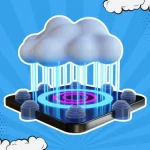

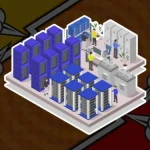

As data centers compete for increasingly constrained power capacity, energy management is becoming an AI infrastructure problem of its own. Hanwha says EnergyFluo™, an agentic AI energy management system developed by its TransGrid Energy business, has been named to Fast Company’s 2026 Next Big Things in Tech in the Applied AI category. The platform is designed to coordinate grid electricity, battery storage and on-site generation while adjusting facility loads to help operators run more IT capacity within existing power limits.
The AI data center race is creating a paradox: operators are installing more computing capacity while facing increasingly difficult limits on how much electricity facilities can draw.
EnergyFluo™, an agentic AI Energy Management System developed by TransGrid Energy, a Hanwha Group company, is designed to address that constraint by treating the data center’s power resources and loads as a coordinated system.
The technology has been selected for Fast Company’s 2026 Next Big Things in Tech list in the Applied AI category. The annual program recognizes technologies that the publication considers capable of having significant future impact.
Rather than focusing on increasing power generation alone, EnergyFluo is designed to optimize how available electricity is distributed across a facility. It analyzes operational data from grid connections, battery storage, on-site generation, cooling systems and IT loads, then uses machine learning, large language models and physics-based equipment models to determine how the facility can operate within its available power envelope.
That distinction is becoming increasingly relevant as AI workloads push data center rack densities higher.
Turning power management into an AI problem
Traditional data center energy management systems can monitor equipment and automate predefined controls. EnergyFluo is positioned differently, using agentic AI to analyze changing operating conditions and determine potential responses.
According to Hanwha, the system can autonomously monitor operations, investigate potential causes of problems and determine actions intended to optimize power consumption. Digitized operating procedures are combined with physics-based models to provide additional context around the equipment being managed.
The company says targeted operational cost savings range from 5% to 25%, depending on the configuration of an individual site.
Those figures are company targets rather than independently verified performance results, but the underlying market problem is broader. The International Energy Agency expects global data center electricity consumption to roughly double from around 415 TWh in 2024 to approximately 945 TWh by 2030 in its base case. AI is one of the major forces behind that increase.
As power availability becomes a constraint on new AI capacity, squeezing more useful compute from existing electrical infrastructure could become as important as building additional generation.
Orchestrating multiple power sources
EnergyFluo’s core proposition is to coordinate different sources of electricity rather than managing them independently.
A data center might simultaneously have access to grid power, batteries and on-site generation, while its IT and cooling loads fluctuate throughout the day. EnergyFluo is intended to evaluate these components together and determine how they can be orchestrated.
That could allow operators to shift or optimize certain loads when power availability changes, while preserving capacity for critical computing workloads.
The approach also fits into a broader movement toward software-defined energy infrastructure. AI data centers increasingly resemble complex energy systems in which power availability, cooling, compute utilization and storage need to be optimized together.
NVIDIA’s push toward 800VDC power architectures, for example, reflects a parallel effort to rethink how electricity moves through AI infrastructure as rack power rises. The Open Compute Project is also working with major technology companies on standardizing next-generation power architectures.
EnergyFluo approaches the problem from a different layer: rather than redesigning the electrical distribution system, it attempts to optimize the operation of the energy assets and loads already connected to it.
Human control remains part of the architecture
The system’s agentic capabilities also raise a familiar question for enterprise AI: how much autonomy should an AI system have when it is controlling critical infrastructure?
Hanwha says human operators remain in control of critical decisions. That human-in-the-loop approach is particularly significant for data center energy management, where an inappropriate control action could affect availability, equipment health or critical workloads.
The system’s safety credentials are another part of the company’s positioning. Hanwha says the technology became one of the first AI-enabled products globally to receive certification under UL 3115, the Outline of Investigation for Safety of AI-Based Products, in March 2026.
That certification does not eliminate the operational risks associated with autonomous systems, but it reflects the growing importance of safety frameworks as AI moves from recommendation engines into physical-world infrastructure.
Edge deployment points to a broader use case
Hanwha points to Prime Group’s adoption of EnergyFluo for a nationwide deployment of edge data centers as an example of the platform’s real-world application.
Edge facilities can introduce additional energy-management complexity because they may be geographically distributed and have different grid conditions, generation resources and operating profiles.
A centralized intelligent view could potentially help operators manage those differences without relying on isolated control systems at every location.
The broader opportunity extends beyond hyperscale AI campuses. Large-load facilities, industrial sites and other energy-intensive operations could also benefit from software capable of coordinating generation, storage and consumption.
AI infrastructure is becoming energy infrastructure
EnergyFluo’s recognition highlights a growing shift in the AI infrastructure market. The industry’s challenge is no longer simply how to build faster accelerators or larger data centers. It is increasingly about how to make power, cooling, storage and compute operate as a single system.
That creates a new role for agentic AI.
If AI agents can safely reason over equipment telemetry, operating procedures and physical-system models, they could move energy management beyond fixed automation toward more adaptive infrastructure.
The technology still faces practical questions around reliability, cybersecurity, interoperability and the boundaries of autonomous control. But as data center power constraints intensify, the ability to optimize existing electrical capacity could become an increasingly valuable component of the AI infrastructure stack.
EnergyFluo’s Fast Company recognition is therefore less about another AI application and more about where agentic AI could be headed next: into the operational systems that determine how much computing infrastructure can actually run.
Market Landscape
AI data center infrastructure is increasingly being shaped by power availability. The IEA expects global data center electricity consumption to approach 945 TWh by 2030 in its base case, while Gartner has also projected rapid growth in data center electricity demand as AI-optimized servers expand.
This is creating opportunities across several layers of the AI infrastructure stack, including advanced power distribution, battery storage, on-site generation, cooling optimization and software-defined energy management.
EnergyFluo sits at the intersection of AI agents, machine learning infrastructure and energy management, using AI to coordinate physical assets rather than simply assist human users. Its human-in-the-loop model also reflects the broader enterprise requirement for controlled deployment of AI in safety- and availability-critical environments.
Top Insights
- EnergyFluo applies agentic AI to energy management, coordinating grid power, batteries, generation and facility loads rather than optimizing individual assets separately.
- AI power constraints are becoming an infrastructure issue, increasing the value of software that can extract additional computing capacity from existing electrical resources.
- Physics-based models complement machine learning and LLMs, providing operational context that can help AI systems reason about physical equipment and facility conditions.
- Human operators remain responsible for critical decisions, reflecting the need for controlled autonomy when AI systems interact with physical infrastructure.
- Distributed edge data centers could be a major use case, where centralized intelligence can help coordinate facilities with different energy and operating conditions.
Power Tomorrow’s Intelligence — Build It with TechEdgeAI