







Elsevier and LG AI Research are using chemistry-specific AI vision technology to extract molecular structures and reaction information from images embedded in patents and scientific literature, making previously difficult-to-search chemistry more accessible through Elsevier’s Reaxys discovery platform.
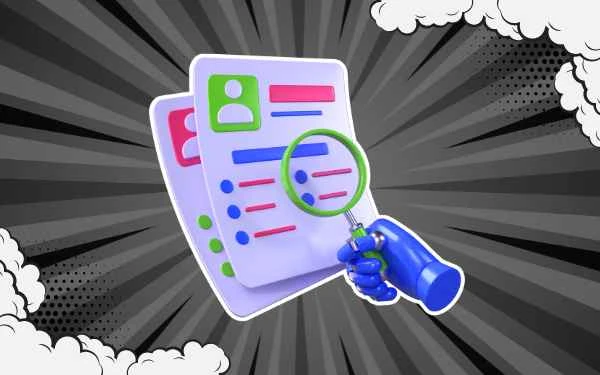
A large portion of the chemistry researchers need to find does not exist as searchable text. Molecular structures, reaction schemes and chemical drawings are frequently embedded in figures and scanned documents, leaving researchers to inspect images manually when conventional search cannot identify the underlying compounds.
Elsevier and LG AI Research are targeting that gap with a new collaboration that applies chemistry-specific AI vision to visual information inside scientific papers and patents.
The technology is being incorporated into Elsevier’s content extraction and curation processes for Reaxys, its chemistry discovery platform. The companies say the system can identify and structure chemical information from images at greater speed and scale, expanding the amount of chemistry that can be indexed and searched.
The distinction between ordinary optical character recognition and chemical image understanding is important. A conventional OCR system can recognize letters and numbers, but a chemical structure encodes information through atoms, bonds, stereochemistry and spatial relationships. Misinterpreting one bond or connection can effectively turn one molecule into another.
LG AI Research’s system combines molecule detection, reaction-diagram parsing and optical chemical structure recognition (OCSR) in a chemistry-specific vision model. According to the companies, the model is designed to process full document pages rather than relying exclusively on clean, isolated molecular diagrams.
That capability could be particularly relevant to patent intelligence, novelty searches, competitive intelligence and synthesis planning. Researchers trying to determine whether a compound has previously been disclosed may otherwise need to open individual documents and inspect figures manually.
Reaxys already provides a large structured chemistry knowledge base. Elsevier says the platform contains more than 341 million substances, 49 million bioactivities, 19,000-plus journals and content from 105 patent offices, giving the visual-extraction technology a substantial downstream repository into which newly identified chemical information can be incorporated.
The new capability is therefore less about generating chemistry from scratch and more about converting unstructured scientific evidence into machine-readable knowledge.
That distinction matters as AI becomes increasingly involved in scientific discovery. Generative AI and machine-learning systems can only reason effectively over chemical knowledge that can be represented computationally. If important molecular information remains trapped inside figures, models and search systems may effectively operate with an incomplete view of the available evidence.
Elsevier has already been adding AI capabilities to Reaxys. Its AI Search allows researchers to query chemistry literature using natural language, while the platform also supports AI-assisted synthesis planning and structured extraction from scientific documents.
Visual extraction extends that strategy further down the data pipeline.
Instead of asking an AI system to interpret a document after a researcher retrieves it, the new approach aims to identify chemical entities during the content-ingestion and curation process. Once extracted and validated, those structures can potentially become searchable data points that can be connected with reactions, properties, bioactivities, patents and other evidence.
The validation layer is especially important. Chemistry databases cannot afford to prioritize extraction volume at the expense of structural accuracy. A falsely identified molecule could lead researchers toward an incorrect prior-art result or an invalid synthesis pathway.
Elsevier and LG AI Research say extraction pipelines are benchmarked against existing Reaxys standards before deployment. LG AI Research has also published benchmarking for its chemistry vision technology, with the company reporting improved performance in extracting chemistry from complete document pages.
The companies are now extending the collaboration beyond individual substances. Reaction extraction is the next stage, with the goal of capturing reaction information from visual schemes and making additional reaction evidence available through Reaxys.
That could prove particularly valuable for AI-assisted synthesis planning. Reaxys already incorporates large volumes of reaction data and provides predictive retrosynthesis capabilities using models from specialist AI companies.
The broader market is moving in the same direction. AI is increasingly being used not only to generate hypotheses but also to organize the scientific information required to test them. McKinsey estimates that generative AI could create $60 billion to $110 billion in annual economic value for pharmaceutical and medical-product industries, including applications across research and discovery.
McKinsey has also estimated that AI could increase R&D throughput by up to 75% in chemicals and more than 100% in pharmaceuticals, illustrating why faster access to structured scientific evidence is becoming strategically important.
The competitive landscape includes specialized chemistry AI companies, scientific publishers, chemical databases and increasingly general-purpose foundation-model providers. Companies such as Google, Microsoft and NVIDIA are investing in AI infrastructure and scientific computing, while specialist platforms are differentiating themselves through proprietary datasets, domain-specific models and expert validation.
That gives Elsevier and LG AI Research a more specific opportunity: make the underlying evidence itself more machine-readable.
For chemists, the immediate benefit is potentially straightforward. A compound that previously existed only as a drawing in a patent or paper has a better chance of becoming part of a searchable knowledge graph.
For AI systems, the implications are broader. Better extraction means more structured training and retrieval data, stronger links between molecules and reactions, and potentially more complete evidence for computational chemistry workflows.
The real test will be whether the technology maintains chemical accuracy across the messy documents researchers encounter in practice. But if visual chemistry can be reliably transformed into structured data at scale, the boundary between the scientific literature and machine-readable chemistry becomes considerably smaller.
Market Landscape
Scientific AI is increasingly shifting from model development toward knowledge infrastructure. The value of an AI chemistry system depends not only on its reasoning capabilities but also on the quality, coverage and structure of the scientific data available to it.
Elsevier’s strategy combines a large curated chemistry corpus with AI search, extraction and synthesis capabilities. LG AI Research adds specialized computer vision designed around the unique semantics of chemical drawings.
The emerging competitive advantage is therefore likely to come from the combination of domain-specific AI + proprietary scientific data + expert curation + traceable evidence. Generic multimodal models can interpret images, but chemistry requires a much higher tolerance for structural errors.
Reaction extraction could be an especially important next step because structured reaction data can support retrosynthesis, synthesis optimization, chemical intelligence and AI-driven molecule discovery.
Top Insights
- Chemistry-specific AI vision can convert molecular structures embedded in patents and papers into searchable data for scientific discovery workflows.
- LG AI Research combines molecule detection, reaction parsing and optical chemical structure recognition in a specialized chemistry vision model.
- Elsevier is integrating visual extraction into Reaxys, which already connects substances, reactions, patents, bioactivities and scientific literature.
- Reaction extraction is the next planned collaboration stage, potentially expanding the evidence available for AI-assisted synthesis planning.
- The partnership highlights a broader shift toward building AI-ready scientific knowledge infrastructure rather than relying solely on larger general-purpose models.
Power Tomorrow’s Intelligence — Build It with TechEdgeAI