







Cohere has partnered with Singapore’s Centre for Strategic Infocomm Technologies (CSIT) to develop and evaluate AI applications for highly secure environments supporting national security operations. The collaboration will use Cohere’s enterprise AI models and North agentic AI platform, building on a pilot that demonstrated on-premises deployment and integration with existing systems. Planned applications include secure knowledge retrieval, automated analysis, report generation and agentic workflows. The partnership highlights the growing demand for AI systems that can operate inside sensitive government networks without surrendering control over data, infrastructure and governance.
Sovereign AI moves into national security environments
The adoption of generative AI across government agencies faces a different set of constraints from deployments in ordinary enterprise environments. National security organizations work with sensitive information, restricted networks and operational systems where data exposure, access control and reliability are central requirements. Sending information to a shared external AI service may not be an acceptable option.
Cohere’s partnership with CSIT addresses that deployment challenge. CSIT is an agency of Singapore’s Ministry of Defence and develops cybersecurity and secure digital solutions to support national security. Its work includes applied research in cybersecurity and the development of AI and data exploitation tools within its own secure cloud environment.
Under the agreement, CSIT will use Cohere’s enterprise-grade models and North, the company’s agentic AI platform, to advance AI applications within highly secure environments. The collaboration follows a successful pilot in which Cohere demonstrated that it could deploy and operate AI on premises while integrating with existing systems and workflows. The pilot provides a technical foundation for the next stage, but the partners have not announced that the proposed applications are already in operational use.
From knowledge retrieval to agentic workflows
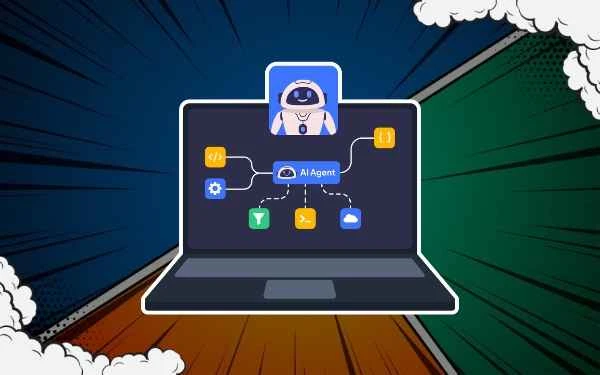
The partners are building and evaluating several potential applications, including secure knowledge retrieval, automated analysis and report generation, and agentic workflows intended to streamline national security operations.
Secure knowledge retrieval can help personnel locate relevant information across authorized internal sources. Automated analysis and report generation could assist with processing large volumes of material and preparing structured outputs. Agentic workflows may connect multiple steps in a task, allowing AI systems to coordinate activities across approved tools and processes.
These use cases reflect a shift from AI systems that primarily answer individual prompts toward platforms that can support more complex, multi-step work. In security-sensitive environments, however, the ability to perform those tasks must be balanced with strict controls over what information an agent can access and which actions it can take.
Cohere’s North platform is designed to support internal-data retrieval, customizable agents and workflow automation. Its documentation describes deployment options that include on-premises and air-gapped environments, with security, data and compliance controls.
The CSIT partnership will also explore how the platform can be shaped for the requirements of secure government networks. That makes the collaboration more than a conventional software deployment: it is also an evaluation of how enterprise AI capabilities can be adapted to a national security operating environment.
Governance and deployment flexibility take priority
Cohere identified several capabilities intended for government, defence and critical infrastructure organizations. These include fully on-premises deployment, centralized governance for agents and workflows, integration with existing systems, role-based access controls, model interoperability and performance designed for high-priority workloads.
The emphasis on deployment flexibility is particularly important. On-premises infrastructure can give organizations greater control over where data is processed and how AI systems connect to internal networks. It also places more responsibility on the deploying organization for infrastructure management, security operations and system maintenance.
Centralized governance is equally relevant as organizations introduce multiple agents and automated workflows. Administrators need mechanisms to manage policies, permissions and compliance requirements across those systems. Role-based access controls can help ensure that AI applications operate within the access boundaries already established for users and internal resources.
Cohere says the platform is designed to support thousands of users and mission-critical workloads. That is a stated design objective rather than a disclosed performance benchmark for the CSIT deployment. The announcement does not provide throughput figures, latency measurements, model configurations or details of the security testing conducted during the pilot.
Singapore becomes a strategic market for sovereign AI
The agreement adds to Cohere’s growing activity across Asia-Pacific. The company cites relationships with Fujitsu, LG CNS and Japan’s Digital Agency as part of its regional enterprise and public-sector footprint. It also says its APAC customer base expanded fivefold over the past year and plans to quadruple its regional presence by the end of 2027 through investment, partnerships and additional offices.
The partnership also follows Cohere’s announcement of a Defence AI Accelerator in Singapore, designed to help defence organizations and sovereign customers move AI projects from experimentation toward operational deployment. PR Newswire
For Singapore, the CSIT collaboration aligns with the agency’s existing focus on cybersecurity, AI, data engineering and secure digital infrastructure. For Cohere, it offers an opportunity to demonstrate how its models and agentic platform can operate in environments where deployment control and governance are as important as model capability.
The next measure of progress will be whether the partners can turn the pilot into dependable applications that meet operational security requirements. The announcement does not specify a deployment timeline, the models selected, or which workflows will reach production first. It also does not describe the level of human review required before AI-generated analysis or agent actions are used.
That distinction matters in national security settings. AI can help personnel retrieve and process information, but the reliability of outputs, authorization boundaries and human accountability remain essential. The partnership is an important step in testing how agentic AI can support sensitive operations while remaining within infrastructure and governance controls set by the organization.
Market Landscape
Sovereign AI is becoming a strategic priority for governments and regulated industries that need advanced AI capabilities without relying entirely on shared cloud services. National security agencies face additional requirements around classified information, network isolation, access management and operational continuity.
Cohere is competing in this market by emphasizing private deployment, enterprise governance and agentic workflows. Its partnership with CSIT illustrates how adoption is moving beyond model experimentation toward evaluating AI applications inside secure government infrastructure.
The broader challenge is operational rather than purely technical. Governments must establish how AI systems retrieve sensitive information, manage permissions, validate generated analysis and interact with existing systems. Successful deployments will depend on these controls as much as on model performance.
Top Insights
- Cohere and Singapore’s CSIT are expanding a successful on-premises AI pilot into a broader national security collaboration.
- Potential applications include secure knowledge retrieval, automated analysis, report generation and agentic workflows.
- North provides the agentic platform, with deployment flexibility for on-premises and air-gapped environments.
- Centralized governance, role-based access and model interoperability are central to the partnership’s secure AI strategy.
- The announcement does not disclose production timelines, model configurations or performance benchmarks for CSIT workloads.
Power Tomorrow’s Intelligence — Build It with TechEdgeAI