






Chunghwa Telecom is gaining recognition for an AI-powered customer service platform that combines speech recognition, generative AI, retrieval-augmented generation (RAG) and voice analytics. The Taiwanese telecom provider received Frost & Sullivan’s 2026 Customer Value Leadership Recognition in the AI-powered customer services industry, highlighting how its technology is being applied to contact-center operations across enterprise and government environments.
Customer service AI is moving beyond basic chatbots. Contact centers are increasingly becoming environments where speech recognition, generative AI and enterprise knowledge systems work together to help agents respond faster and turn customer interactions into structured business information.
Chunghwa Telecom is positioning its technology around that broader model with an intelligent customer service platform designed for government agencies and enterprises.
The company recently received Frost & Sullivan’s 2026 Taiwanese Customer Value Leadership Recognition in the AI-powered customer services industry. The recognition evaluates companies across business and customer impact, according to Frost & Sullivan, and cited Chunghwa Telecom’s AI capabilities, deployment flexibility and contact-center experience.
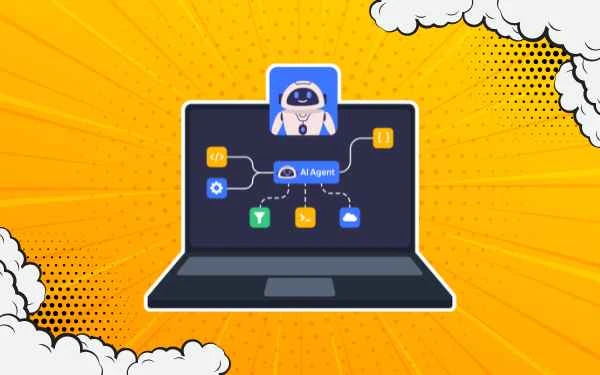
At the technology level, Chunghwa Telecom’s Intelligent Customer Service Solution combines three main components: AI Agent Assistant, AI Knowledge Copilot and DeepVoice. The system is designed to address operational problems such as lengthy response times, manual knowledge management and limited visibility into customer conversations.
One of the more important elements is the company’s focus on localized language processing. Chunghwa Telecom says its proprietary AI stack supports Mandarin, English and Taiwanese code-switching, a requirement that can be particularly relevant in multilingual customer-service environments.
The platform also incorporates generative AI and retrieval-augmented generation, allowing customer-service applications to work with enterprise knowledge rather than relying solely on the general knowledge embedded within an AI model. In a contact center, that architecture can potentially connect an AI assistant to approved organizational information while keeping responses grounded in relevant business content.
Speech technology adds another layer. Chunghwa Telecom’s speech recognition and voice analytics capabilities are intended to convert customer conversations into information that can be analyzed and used by service teams.
That makes the platform part of a larger enterprise AI trend: using AI not simply to automate customer interactions, but to augment employees and improve the information flowing through business processes.
The competitive landscape includes customer-service platforms from Salesforce, Microsoft, Google, Amazon Web Services, NICE and Genesys, many of which are incorporating generative AI, conversational intelligence and agent-assistance capabilities into contact-center software.
Chunghwa Telecom’s positioning is somewhat different because it combines AI technologies with telecom infrastructure and extensive experience operating customer-service environments. Its deployment options also include both on-premises and cloud models, which can be significant for public-sector organizations and regulated enterprises with specific data, security or governance requirements.
For enterprise technology teams, however, implementing contact-center AI involves more than selecting a capable model. Organizations need to consider integration with existing CRM and contact-center systems, knowledge quality, language performance, security, human oversight and how AI-generated recommendations are validated before reaching customers.
The Frost & Sullivan recognition does not establish that Chunghwa Telecom’s platform is universally superior to competing technologies. Instead, it provides third-party recognition of the company’s strategy and customer-value approach within the Taiwanese AI-powered customer-services market.
The development nevertheless illustrates how enterprise AI is becoming increasingly specialized. Rather than deploying generic generative AI across a business, organizations are building domain-specific systems around proprietary data, workflows, language requirements and operational constraints.
For contact centers, that evolution could make the combination of RAG, speech AI, voice analytics and agent assistance increasingly important as companies seek to improve service operations without removing human representatives from complex customer interactions.
Market Landscape
AI is reshaping the contact-center technology stack across conversational AI, agent assistance, knowledge management, speech analytics and automated quality monitoring.
Large enterprise technology providers including Microsoft, Salesforce, Google, Amazon Web Services, NICE and Genesys are developing AI capabilities for customer-service workflows. Telecom operators and regional technology providers are also building specialized platforms around local languages, infrastructure and regulatory requirements.
The shift toward generative AI introduces a new requirement: connecting models to reliable enterprise knowledge. RAG architectures can help organizations retrieve relevant information at inference time, while speech recognition and analytics provide structured data from customer conversations.
For regulated industries and government organizations, deployment architecture remains another consideration. On-premises and private environments can provide greater control over data and infrastructure, while cloud deployments can simplify scalability and maintenance.
Chunghwa Telecom’s strategy combines those elements with localized language capabilities, positioning its offering around organizations that need both AI functionality and control over how customer-service systems are deployed.
Top Insights
- Chunghwa Telecom’s AI customer-service platform combines generative AI, RAG, speech recognition and voice analytics for enterprise contact-center workflows.
- AI Agent Assistant and AI Knowledge Copilot are designed to help customer-service employees access information and respond more efficiently.
- Support for Mandarin, English and Taiwanese code-switching addresses localized language requirements that generic enterprise AI systems may not prioritize.
- On-premises and cloud deployment options give government and enterprise customers greater flexibility around infrastructure, governance and data requirements.
- Frost & Sullivan’s recognition highlights Chunghwa Telecom’s customer-value strategy rather than establishing a universal ranking of customer-service AI providers.
Power Tomorrow’s Intelligence — Build It with TechEdgeAI