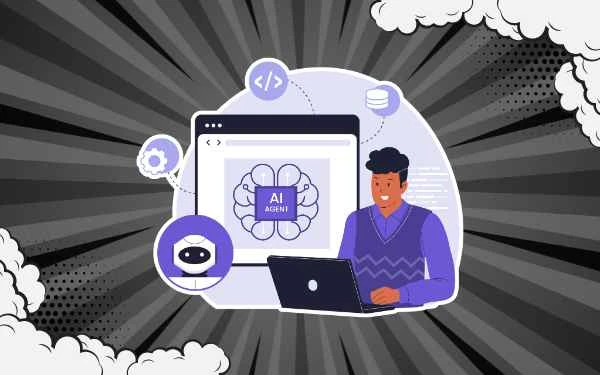









Buda AI’s new multi‑agent workspace—branded as “Agents as a Company”—promises to reshape how enterprises build, coordinate, and scale AI‑driven teams, offering a cloud‑native platform that consolidates strategy, execution, and data management in a single environment.
From isolated tools to a unified AI company
For years, organizations have cobbled together separate chatbots, coding assistants, and data‑scraping agents, shuffling between tabs and manually stitching outputs. Buda AI’s latest release tackles this fragmentation head‑on by introducing an Organizer‑plus‑Agents architecture. An “Organizer” acts as a human‑centric coordinator, delegating tasks to specialized agents—ranging from marketing strategy to financial modeling—while each agent runs inside its own sandboxed Cloud Computer equipped with:
- Terminal
- Browser
- Persistent Drive
How the platform works
The core of the service is a shared Drive that preserves files, decisions, and task history across sessions, eliminating the “cold‑start” problem that plagues most generative AI tools. Agents read and write to this common space, ensuring that every team member—human or artificial—operates from a single source of truth. The platform also supports leading large language models (LLMs):
- OpenAI
- Anthropic
- DeepSeek
- Kimi
letting enterprises pick the model that best fits a given workload without leaving the workspace.
Why it matters for enterprises
According to Gartner, 70 % of large enterprises will rely on AI‑augmented workflows by 2028, yet 55 % cite integration complexity as a primary barrier. Buda AI’s unified environment directly addresses that pain point, reducing the time to provision and orchestrate AI agents from weeks to minutes. The persistent memory and visible agent workstreams also improve auditability—a growing compliance concern as regulators tighten rules around AI decision‑making.
Comparative landscape
Competitors such as Microsoft’s Azure OpenAI Service and Google Vertex AI provide powerful model hosting but stop short of offering a built‑in coordination layer for multiple autonomous agents. Meanwhile, niche platforms like LangChain focus on developer‑centric orchestration, requiring significant custom code.
- Microsoft Azure OpenAI Service & Google Vertex AI – model hosting only
- LangChain – developer‑centric orchestration
Buda AI differentiates itself by delivering a ready‑to‑use “agents as a company” paradigm that blends low‑code orchestration with enterprise‑grade security and multi‑model flexibility.
Impact on marketing teams
Enterprise marketing teams stand to gain the most immediate ROI. A single Organizer can spin up a campaign‑planning agent, a copy‑generation agent, and an analytics agent that all share real‑time performance data. The shared Drive ensures that creative assets, audience insights, and budget allocations remain synchronized, cutting down on the back‑and‑forth that typically elongates go‑to‑market cycles. A Forster study predicts that AI‑enhanced marketing teams will see a 30 % lift in campaign efficiency within the first year of adoption.
Pricing and ecosystem
Buda AI rolls out three tiers—Free, Plus, and Pro—catering to startups and Fortune 500s alike.
- Free
- Plus
- Pro
An integrated AI Marketplace lets users import pre‑built agents, templates, and skill‑sets, accelerating deployment. The platform’s open APIs also make it straightforward to embed Buda agents into existing CRM stacks such as Salesforce or Adobe Experience Cloud.
Industry implications
If Buda AI’s model gains traction, we could see a shift from “point‑solution” AI deployments toward holistic AI enterprises that mirror traditional organizational structures. This could accelerate the move toward autonomous business units, where AI agents handle routine decision‑making while humans focus on strategic oversight. The approach aligns with IDC’s forecast that autonomous systems will generate $1.2 trillion in enterprise value by 2030.
Market Landscape
The AI automation market is projected to reach $75 billion by 2027, driven by demand for scalable, low‑code solutions that can be deployed across cloud and on‑prem environments. Major cloud providers continue to dominate model hosting, but a niche is emerging for platforms that layer orchestration and persistent state on top of those models. Buda AI’s emphasis on multi‑model support and a unified workspace positions it to capture a slice of this growth, especially among mid‑market firms seeking enterprise‑grade capabilities without the overhead of building custom pipelines.
Top Insights
- Buda AI’s “Agents as a Company” model consolidates fragmented AI tools into a single, auditable workflow.
- Persistent shared Drive eliminates cold‑starts, boosting efficiency for long‑running projects.
- Multi‑model support lets enterprises leverage the best LLM for each task without vendor lock‑in.
- Marketing teams can cut campaign rollout time by up to 30 % using coordinated AI agents.
- The platform’s marketplace accelerates adoption, offering pre‑built agents that integrate with Salesforce, Adobe, and other enterprise stacks.
Power Tomorrow’s Intelligence — Build It with TechEdgeAI