









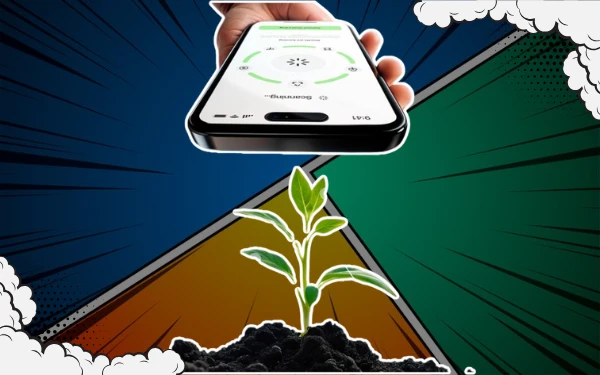
Botan has expanded its AI-powered plant identification service to the web, allowing visitors to identify plant species directly from a browser by uploading a photo. The new tool requires no registration or software installation and gives users an immediate species identification along with scientific and common names.
Plant identification is becoming another practical use case for computer vision, and Botan is bringing its recognition technology beyond smartphones with a new browser-based identification tool.
The company has added an AI plant identification feature to the main page of its website. Visitors can upload a photograph of a plant through a drag-and-drop interface and receive an identification result without creating an account or installing an application.
Botan says the web-based service uses the same underlying technology as its mobile application. Instead of relying on a single visual characteristic, the system evaluates multiple features visible in an uploaded photograph before matching the plant against its species database.
Those characteristics can include leaf arrangement and shape, vein patterns, flower petal type and count, branching structure, stems, bark and other observable botanical features. The approach is designed to give the identification system more visual information when determining which species most closely matches the submitted image.
The result includes the identified species along with its scientific and common names. Users can also select a “Read More” option to access a more detailed plant guide covering care requirements and environmental needs.
The web launch also changes how potential users can evaluate the service. Botan is offering one free identification through its website without requiring registration. After reaching the web limit, users can continue identifying plants through the company’s mobile application, which is available through Google Play and Apple’s App Store.
For Botan, moving plant identification into the browser is less about adding another interface and more about reducing the friction between discovering an unfamiliar plant and testing an AI recognition system. A user who encounters a plant outdoors, in a garden or in a houseplant collection can submit an image without first downloading an application.
The underlying technology reflects a broader application of AI image recognition. Modern computer-vision systems can classify objects by learning visual patterns across large collections of labeled images. In specialized domains such as botany, however, the problem is more difficult because different species can share similar characteristics, while the appearance of the same species can vary according to age, season, environment and image quality.
That makes plant identification a useful test of how specialized AI systems handle visual ambiguity. A photograph may contain only a leaf, part of a flower or an obstructed view of a stem rather than a complete specimen. Systems therefore need to extract whatever useful features are available and determine whether the available evidence is sufficient for a reliable match.
The move also places Botan within a growing category of consumer AI applications that combine image recognition with structured knowledge. Rather than simply returning a label, the platform connects identification with information about the plant’s care and environmental requirements.
That combination could make the technology more useful than a standalone image classifier. Identification is often only the first question a user has. Once a species is recognized, the next questions are likely to involve watering, sunlight, soil, temperature and other growing conditions.
The competitive landscape includes dedicated plant-identification applications as well as general-purpose visual AI tools. Services such as Google Lens can identify plants and other objects from images, while specialist applications can add botanical databases and care information. Botan’s web experience differentiates itself primarily through its focus on plant identification and its integration of identification with a dedicated plant guide.
The company’s decision to make the web tool available without registration also creates a low-commitment entry point. Users can test the recognition system first and decide whether the broader mobile experience is useful for repeated identification.
For AI developers, the more interesting trend is the specialization of visual AI. General-purpose multimodal models can interpret photographs across many categories, but specialized systems can combine visual recognition with domain-specific databases and contextual information.
Botan’s expansion from an app into the browser illustrates that shift. The company is taking a specialized computer-vision capability and packaging it as an immediately accessible web service, while retaining the mobile application as the destination for users who need more frequent plant identification.
Market Landscape
AI-powered image recognition is expanding from general-purpose visual search into specialized applications for healthcare, agriculture, retail, education and nature identification.
Plant recognition is a particularly accessible consumer use case because a smartphone photograph can provide enough visual information for an AI system to generate a likely species match. The market includes specialist applications such as Botan alongside broader visual-search platforms including Google Lens.
The competitive differentiator increasingly moves beyond recognition alone. Identification accuracy, species coverage, explanations, domain-specific knowledge and useful follow-up information can determine whether users continue using a specialized service.
Botan’s browser-based approach also reflects a broader trend toward zero-friction AI tools, where users can test a specialized model immediately without downloading software or completing an onboarding process.
Top Insights
- Botan brings its AI plant recognition technology from mobile devices to the browser, removing registration and installation requirements for initial testing.
- The system analyzes multiple botanical characteristics, including leaves, veins, flowers, branching, stems and bark, before producing a species match.
- Each identification provides scientific and common names, with additional plant-care information available through the platform’s detailed guides.
- The web experience offers one free identification, while continued use is directed toward Botan’s mobile application.
- Specialized visual AI increasingly combines image recognition with domain-specific knowledge rather than returning classifications alone.
Power Tomorrow’s Intelligence — Build It with TechEdgeAI