








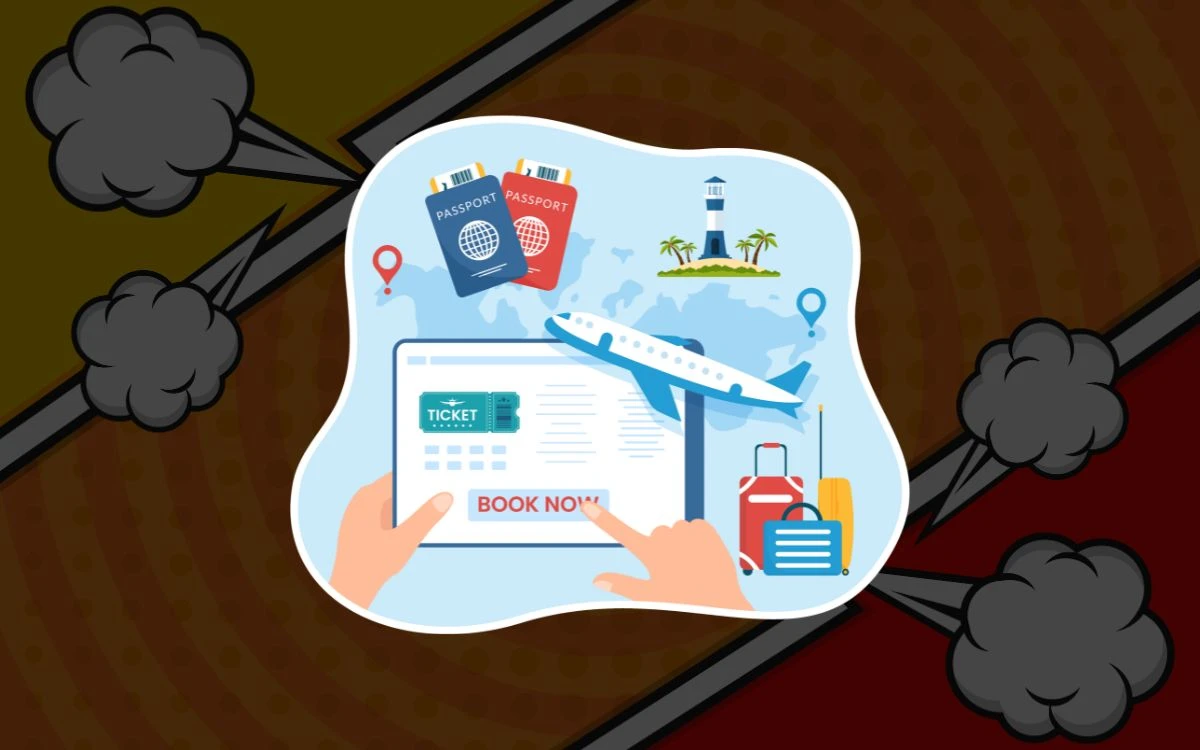
BizTrip AI is bringing its agentic corporate travel platform directly into ChatGPT and Claude, allowing business travelers to search, compare and book trips without leaving their AI assistant. The integration uses the Model Context Protocol (MCP) and its interactive app capabilities, highlighting a broader shift toward AI agents becoming interfaces for specialized enterprise software.
Corporate travel moves into the AI assistant
Corporate travel booking has traditionally required employees to open a dedicated online booking tool, enter dates and destinations, compare options and work through company travel policies. BizTrip AI is attempting to compress that workflow into a conversational interface.
The company has announced that its core trip-planning and booking experience is now available natively inside ChatGPT and Claude, enabling travelers to interact with its travel agent without switching to a separate website or application.
The technology behind the integration is Model Context Protocol (MCP), an open protocol designed to connect AI applications with external tools and data sources. BizTrip AI is specifically using MCP apps, which allow connected services to provide richer interactive experiences rather than returning only text.
That distinction is significant for enterprise AI. A conversational model can explain travel options, but completing a transaction requires structured information, interactive selections and an execution layer capable of carrying out the booking workflow.
From chatbot responses to executable applications
BizTrip AI says its MCP integration allows users to receive interactive travel results, compare options and complete booking flows inside the AI assistant.
The underlying agent is designed to interpret natural-language travel requirements and identify flights and hotels based on traveler preferences and corporate policies. Instead of manually filtering potentially hundreds of listings, users can describe requirements such as destination, timing and preferences conversationally.
The model can then act as the interface to BizTrip AI’s specialized travel capabilities.
This represents an important architectural development in enterprise AI: the language model becomes the entry point, while the connected application remains responsible for domain-specific functionality and transactions.
The approach also illustrates why protocols such as MCP are gaining attention in the AI developer ecosystem. Rather than building a completely separate integration for every AI interface, developers can expose capabilities through a standardized mechanism that AI applications can discover and use.
MCP expands the role of AI agents
MCP has emerged as an important piece of the emerging agentic AI stack because it gives AI applications a standardized way to interact with external tools, systems and information.
For products such as BizTrip AI, that creates the possibility of turning an AI assistant from a conversational layer into an operational workspace.
In this case, the workflow extends beyond asking an AI model for travel advice. The connected agent needs to understand user requirements, retrieve relevant inventory, apply company rules, present alternatives and support a booking transaction.
The result is closer to agentic workflow orchestration than conventional generative AI search.
The architecture also separates general-purpose reasoning from specialized business logic. ChatGPT or Claude provides the surrounding conversational environment, while BizTrip AI supplies the travel-specific agent, inventory access and booking capabilities.
Enterprise software becomes increasingly interface-agnostic
The BizTrip AI launch points to a larger change in how enterprise applications may reach users.
Employees increasingly interact with AI assistants during everyday knowledge work. If specialized applications can expose their functionality through those assistants, users may no longer need to navigate directly to individual SaaS interfaces for every task.
Travel is a particularly clear example because booking involves structured information and multiple constraints. An employee can express requirements conversationally while the connected application handles the specialized transaction.
The same architectural pattern could extend to other enterprise workflows such as procurement, scheduling, customer service, expense management and financial operations, although each domain introduces its own requirements around authorization, compliance and transaction security.
For software vendors, this creates a new question: whether their primary user interface remains their own application or becomes an AI assistant capable of invoking their underlying services.
Personalization and policy enforcement remain critical
BizTrip AI says its agent can surface personalized and policy-compliant options based on traveler preferences and company travel rules.
That layer is important because enterprise agents cannot simply optimize for convenience. Corporate travel decisions can involve spending limits, preferred suppliers, approval policies and other organizational constraints.
An agent that can execute bookings therefore needs access to the right business context and controls alongside its reasoning capabilities.
The company’s positioning around policy-aware travel also demonstrates the difference between a consumer-facing travel chatbot and an enterprise travel agent. The latter must operate within organizational rules while still providing a conversational user experience.
A test case for agentic enterprise software
BizTrip AI’s availability inside ChatGPT and Claude is ultimately less about travel search than about where enterprise software functionality resides.
The company’s integration demonstrates a model in which a specialized AI application can operate inside a general-purpose assistant while retaining its own domain-specific capabilities.
For enterprise technology buyers, the development raises practical questions around identity, permissions, data governance, transaction authorization and accountability. As more applications become accessible through AI agents, those infrastructure layers will become increasingly important.
For developers, meanwhile, MCP offers a potential route toward making software capabilities available across multiple AI environments without rebuilding the entire user experience for each platform.
BizTrip AI is therefore using corporate travel as an early example of a broader agentic software model: describe the task, let the AI coordinate the workflow, and complete the transaction inside the interface where the user is already working.
Market Landscape
Enterprise AI is moving from question-answering toward tool-using agents capable of executing multi-step workflows. MCP is part of this transition by providing a standardized mechanism for AI applications to connect with external tools and services.
The emergence of interactive MCP apps also changes the potential role of AI assistants. Rather than simply generating text, an assistant can become a front end for specialized software, while the connected application provides domain logic, data and transaction capabilities.
For enterprise deployments, the next challenges will include authentication, authorization, privacy, auditability and reliable execution.
Top Insights
- BizTrip AI is embedding corporate travel planning and booking directly into ChatGPT and Claude through MCP apps.
- The integration shifts AI travel assistance from text recommendations toward interactive, transactional workflows.
- MCP provides a standardized connection between AI assistants and specialized enterprise applications.
- BizTrip AI combines conversational travel requests with personalized options and corporate travel-policy constraints.
- The model illustrates how AI assistants could become new front ends for specialized enterprise software.
Power Tomorrow’s Intelligence — Build It with TechEdgeAI